

Classic Rock Bands That Launched The Most Successful Solo Careers
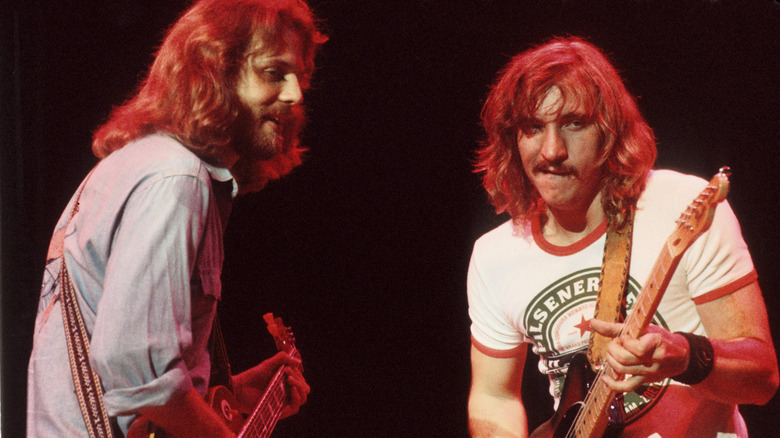
Some of classic rock's most iconic bands boasted such a wealth of talent that after the original group started to run its course, multiple members were able to start up successful solo careers. A combination of talent and enduring fan goodwill allowed those artists to become stars in their own right. And while it's fairly common for a singer or even a guitarist to mount an illustrious career away from their original band, it's rare for a group to foster multiple future superstars.
Many rock musicians left their first successful band to start other groups that also did well, and others still went on to form some of the best supergroups in history. But these bands — which also not so coincidentally are among the most popular and best-selling acts in music history, such as the Beatles and Fleetwood Mac — were for a time the home of multiple musicians who went on to land at least one single in the upper reaches of the Billboard charts. Here are five classic rock bands that generated the most solo-artist hit machines.
Fleetwood Mac
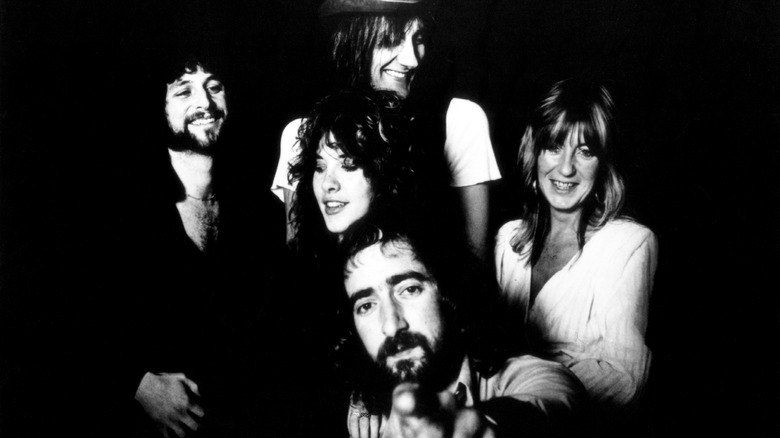
Across its many versions, Fleetwood Mac produced five notable solo acts, some of whom became household names. When it formed in the late '60s as a blues-inspired combo, guitarist Jeremy Spencer was among its earliest members. After exiting Fleetwood Mac in 1971, he took the Jeremy Spencer Band's "Cool Breeze" and "Travellin'" to the U.S. adult contemporary chart in 1979. One of Spencer's ostensible replacements in Fleetwood Mac, Bob Welch, departed the band in 1974 and then took a string of smooth soft rock songs, such as "Sentimental Lady," into the Top 40.
That soft rock environment was forged in part by the mid-1970s Fleetwood Mac lineup, and all three of the featured performers from that era recorded solo smashes in the 1980s. Lindsey Buckingham reached No. 9 in 1982 with "Trouble," while Christine McVie, who before Fleetwood Mac was a solo act under her pre-marriage name of Christine Perfect, had a 1984 Top 10 hit with "Got a Hold on Me."
Stevie Nicks, however, was the biggest star of them all. Her uniquely ethereal pop rock, which had brought a new dimension to Fleetwood Mac, then took Nicks as a solo artist to the Billboard Hot 100 no less than 14 times, notably with classic rock staples like "Edge of Seventeen (Just Like the White Winged Dove)" and "Stand Back."
The Beatles
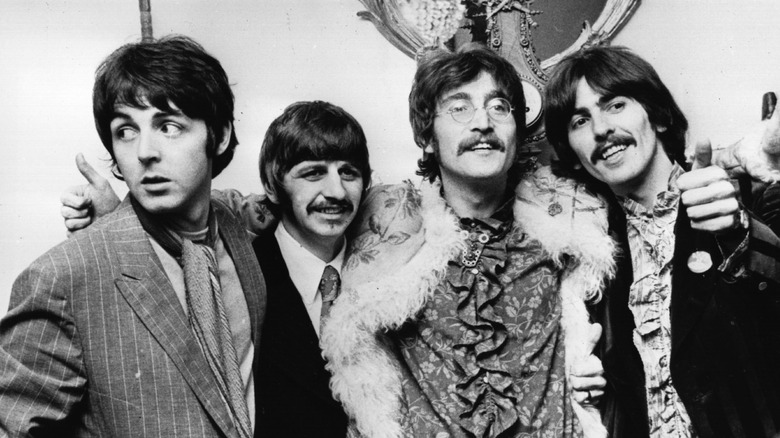
When the Beatles broke up in 1970, the '60s-dominating band was still extremely popular. The Fab Four took four singles to No. 1 in 1969 and 1970, and so heavy demand remained for whatever anyone associated with the band produced. Subsequently, the Beatles became the only act in Billboard history in which every member would eventually top the pop chart. After John Lennon hit the Top 10 with "Instant Karma (We All Shine On)" and "Imagine," he went to No. 1 in 1974 with "Whatever Gets You Thru the Night" and again in 1980 with "(Just Like) Starting Over."
The Beatles' other primary songwriter and front man, Paul McCartney, stormed the charts on his own, with his wife Linda McCartney, and as the front man of Wings. Among McCartney's nine No. 1 singles, facilitating his status as Billboard's 12th-most-successful artist ever, were "Band on the Run," "Silly Love Songs," and "My Love," a classic love song that held the No. 1 spot the longest in 1973.
But the first Beatle with a post-band No. 1 single was guitarist George Harrison. His meditative "My Sweet Lord" / "Isn't It a Pity" topped the charts in 1970, followed by two more No. 1 hits over the next two decades. The songs of drummer Ringo Starr also resonated: Between 1971 and 1975, Starr sang seven Top 10 hits, including the No. 1 singles "Photograph" and "You're Sixteen."
The Eagles
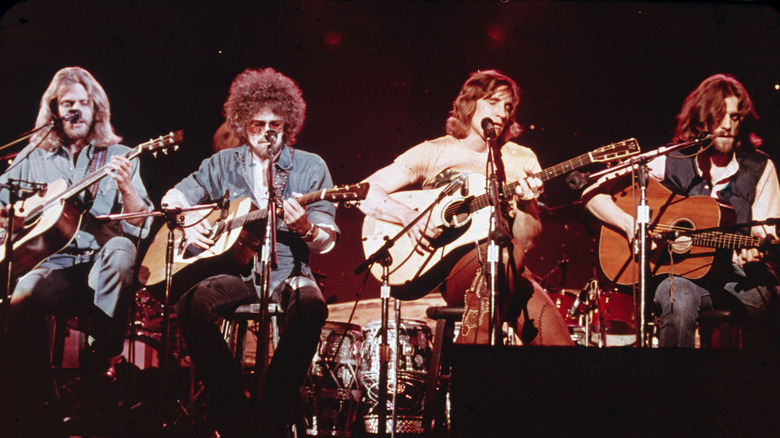
From 1971 to 1980, and across multiple lineup changes, seven musicians comprised the Eagles, and six of them proved they could go it alone. After the band succumbed to personal and professional tension and split up in 1980, the two primary vocalists – Don Henley and Glenn Frey, who sang most of the Eagles' best-known songs – went on to major solo careers. Henley was a pop and soft rock chart presence throughout the 1980s and early 1990s with high-charting hits such as "The Boys of Summer" and "Dirty Laundry," and Frey also hit it big in the '80s, particularly with "The Heat is On" and "You Belong to the City."
Late of the James Gang, Joe Walsh had a solo career going before, during, and after his time in the Eagles, earning a few Top 40 hits like "Rocky Mountain Way," while Randy Meisner, whose vocals headlined the Eagles' "Take it to the Limit," charted some pop hits in the early '80s, including "Hearts on Fire." Timothy B. Schmidt started making solo albums in the 1980s, and he landed his first and only Top 40 hit in 1987 when "Boys Night Out" made it up to No. 25. Even Don Felder recorded multiple LPs, including a couple in the 2010s, peaking at a somewhat respectable No. 43 in 1981 with "Heavy Metal (Takin' a Ride)."
The Edgar Winter Group
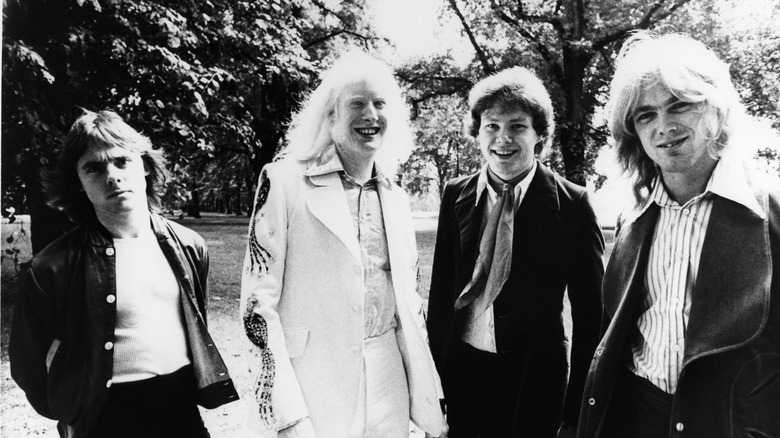
The Edgar Winter Group was a hard rock outfit of the early 1970s that showcased the talents of multi-instrumentalist Edgar Winter. It wound up scoring a No. 1 hit with the instrumental "Frankenstein" and became an undeniable incubator of the talents of three future stars. The combo's debut 1972 album, "They Only Come Out at Night," prominently featured guitarist and mandolin player Ronnie Montrose, who departed the band to build his own eponymous group, Montrose. The first, self-titled Montrose LP sold a million copies and introduced singer Sammy Hagar to hard rock fans.
When Montrose left the Edgar Winter Group, Winter brought in a replacement, Rick Derringer, formerly of the hit '60s rock band the McCoys. He then stepped out to make the 1973 classic rock radio staple "Rock and Roll, Hoochie Koo" and later became an in-demand producer and songwriter, responsible for Hulk Hogan's personal theme song, "Real American." The group also included Dan Hartman, a bassist and singer whose voice on the Edgar Winter Group's hit "Free Ride," and when he eventually went solo, he adopted a soft rock and synth pop sound, reaching the top 30 in the 1980s with "We Are the Young" and "I Can Dream About You."
The Runaways
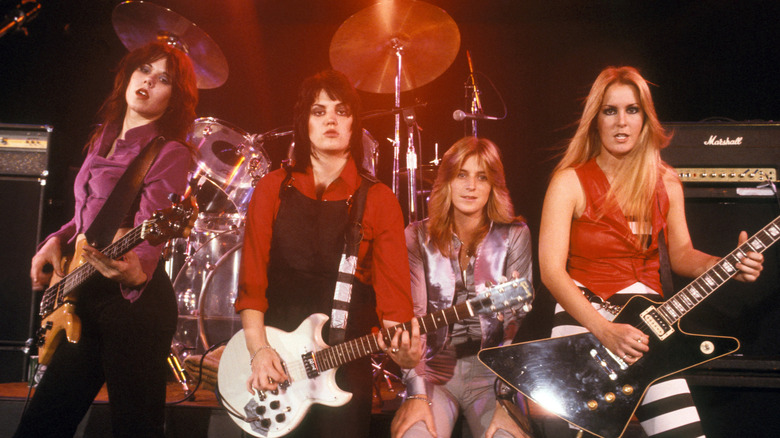
The Runaways left its mark on rock history as one of the first bands with an all-female lineup, but three of its members went on to greater success as solo artists. The band recorded four studio albums in the late '70s, none of which sold very well in the U.S. The group is probably best known for its minor hit "Cherry Bomb," a sinister, hard-rocking anthem of youth in revolt that exemplified the Runaways' rebellious image.
Original Runaways lead singer Cherie Currie left in 1977, and in 1978 released her first solo LP, "Beauty's Only Skin Deep. A year later, Currie re-emerged as half of a duo with sister Marie Currie, and they enjoyed a No. 95 hit with a cover of the '70s classic rock song "Since You've Been Gone."
Both of the Runaways guitarists — Joan Jett and Lita Ford — helped shape 1980s hard rock. Ford, marketed as a hair-metal adjacent performer, hit No. 12 in 1988 with "Kiss Me Deadly" and No. 8 in 1989 with the Ozzy Osbourne duet "Close My Eyes Forever." By far the most notable former Runaway, however, is Jett. Inducted into the Rock and Roll Hall of Fame, Jett fronted the Blackhearts and made many memorable '80s hits including "Little Liar," "I Hate Myself for Loving You," and "I Love Rock 'N Roll," the latter spending seven weeks at No. 1 in 1982.