

5 Barry Manilow Flop Songs We're Not Embarrassed To Love
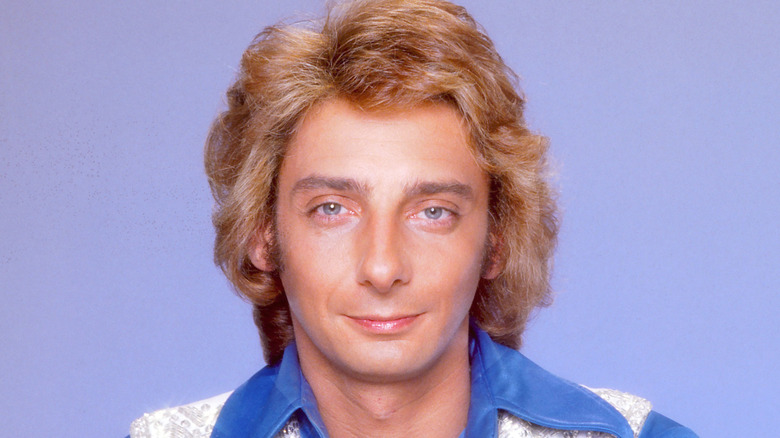
Though we think all of Barry Manilow's works are top-notch, we dug through his less-successful singles — affectionately known as his flops — and picked out five that we think deserved more acclaim. We find these songs to have every bit as much charm and musical finesse as the biggest Manilow hits. In our Manil-opinion, they're every bit as warm and catchy as his chart-toppers, even if they didn't catch fire. Had they been released during his peak, we think they'd have ranked with some of his most successful works.
Sadly, there's a bunch of underrated Barry Manilow tracks that never got close to the mainstream No. 1 spot. They may have wooed the Adult Contemporary (AC) chart, but they didn't fare as well on the Hot 100. This quintet of so-called flops is a set of secondary favorites we Stan-ilows still love to listen to. They may not be his biggest, but we love them, and we don't care who knows it.
If I Should Love Again
Diehards adored the orchestral swells, dramatic key changes, and cinematic arrangement of "If I Should Love Again," a 1981 Manilow single that came as musical tastes were shifting. This is absolutely a Manilow classic, one that should have gotten much more love than it was shown. At least the album that was named for it found purchase on the Billboard Hot 200 charts, spiking to a respectable No. 14 before starting its descent.
Maybe this single missing the Hot 100 is a case of Manil-overkill. Expecting a hit every single time may be pie-in-the-sky hopes even for a hitmaker. And while churning out material every year is a solid way to keep your work in the public eye (or ear), it's also a sure path to saturation.
A soaring love song like "If I Should Love Again," which was a return to form for Manilow, might have fared better had it came at an earlier time in his career when mainstream musical tastes were more open to sweeping ballads. We love it regardless, and so do Facebook users who commented on a post about the song, with one saying she cried the entire time he played it in concert, and another calling it "his all time best song ever!"
When October Goes
From the album "2 a.m. Paradise Café," his 1984 tribute to great American torch songs comes this aching Barry Manilow original, a stark and sure reminder of how talented a composer he is. The lyrics to "When October Goes" by legendary writer Johnny Mercer describe the passing of a life through wistful images of autumn turning into winter. Mercer's wife gave the pianist unused works from the legendary lyricist after his death, in hopes of the songwriter creating a tribute piece. Considering Mercer's legacy as the lyricist of classics like "Moon River" and "Summer Wind," having a composer of Manilow's talent conjure up a tune for this unfinished song was an inspired move.
"When October Goes" didn't make the Billboard Hot 100 when it was released in 1984, but it did dial in the No. 6 spot on the Adult Contemporary charts, which is pretty nifty. The melancholy that infuses the melody is a perfect match for the angst-laden lyrics: "And when October goes / The same old dream appears /And you are in my arms / To share the happy years / I turn my head away / To hide the helpless tears / Oh, how I hate to see October go."
If you can create a sorrowful tune that makes people want to hit replay, you've really made something special. And Manilow does that deftly here, which is why we refuse to let this one go, no matter what month it is.
Some Good Things Never Last
Manilow revisited "Some Good Things Never Last," a tune first recorded by fellow AC chart maven, Barbra Streisand, giving it his own Barry-fied spin. It's the sort of melancholy tune with a hopeful melody that makes the whole package more sophisticated than the sum of its parts. It appeared on his self-titled 1989 album and was released in 1990 as a U.K. single from his "Live on Broadway" album. Sadly, it only reached No. 79 on the charts across the pond; it didn't even get a release in the U.S., which stings to the Fan-ilows in the house.
Anyone who revisited the tune now would be stumped as to why it didn't show up in the U.S. as a single. Was there not enough emotion to stir soft rock lovers' collective heartstrings at the time? Or was there simply too much other exciting music pulling their attention away? Sure, it was a bit glossier than what fans were used to, closer to a Chicago-style mode than his usual arrangements. Maybe it felt a little too mechanized for his fans at the time. Give the guy credit for trying to keep up with the youngsters.
The prophetic title about the beloved singer's time having passed, this song is a timeless treasure that hardcore Mani-lovers refuse to let go of. We don't care what the messed-up truth of the music industry in the '90s meant for this one. We loved it then, and we love it now.
Keep Each Other Warm
By 1989, it seemed Barry Manilow was struggling to keep up with pop music trends. When he dropped "Keep Each Other Warm" as a single, it was warmly received (pun intended) by critics and hit No. 7 on the Adult Contemporary charts but didn't make a dent in the Hot 100. This was a sure sign that the guy who "writes the songs" was no longer a mainstream act. Having a more adult-oriented playground — and an older audience that was still picking up what he was putting down — may have signaled a shift in the musical tides, but that didn't mean songs like this one had lost their power to entertain.
The song was a cover of a not-hit by a British band called Bucks Fizz; their version was a Bee Gees-esque electro-tinged take that stopped rising when it hit No. 45 on the U.K. charts in 1986. So maybe the song itself wasn't destined for greatness. But something about Manilow applying his honey-smooth vocals to the otherwise ordinary pop tune turns it into a more intimate expression of musical sweetness. Its dependence on a more synthesized arrangement doesn't prevent it from sending genuine chills when the modulations kick in.
This is the Barry Manilow who adapted his big piano show-stage sound for a record-buying audience that was more fascinated by digital sounds than analog ones. It should have gotten much more love than it did. We'll just keep listening until we max out its Spotify stream count.
Hey Mambo
Okay ... so maybe the Bar-meister was taking too big a risk releasing a totally different song with a name so similar to the famous '50s Rosemary Clooney and Dean Martin standard. But it was the late-'80s, when brassy Latin pop was enjoying a big showing in the music biz. He did enlist big band ballers Kid Creole and the Coconuts and production team Emilio and the Jerks of Miami Sound Machine fame to lend authentic Latin swing cred to this entirely novel "Hey Mambo." But his boomer fan base may have expected to hear his take on "Mambo Italiano," and instead he gave them a complete left turn of a tune that brings bright, happy energy that never fails to get feet moving and hearts pounding.
While the 1988 single didn't go nowhere per se, it went pretty close, circling the drain at No. 90 on the Hot 100. It holds the distinction of being the showman's lowest-charting single and the final time he made Billboard's main event. It was all AC action from then on.
But we dare you to smack "play" on this shiny gem of a song and not start shimmying in your seat, or at least bobbing your head. It's musical nectar that zips straight to your nervous system and says "Dance now!" — a rare and wonderful Manilow mode that deserves adoration.