

The Worst Band Poaches In Rock History
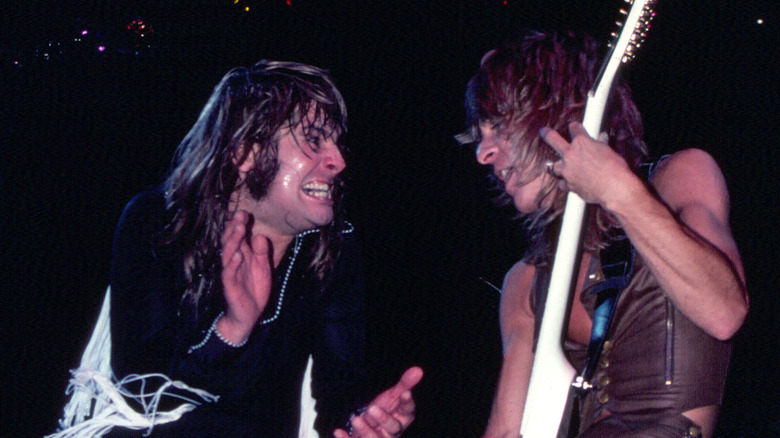
If there's some unspoken code among high-level rock bands, the most serious violation of those rules is when one artist or band steals a musician from another. It's perceived as such a nasty and egregious act that the personnel-poaching leaves in its wake some nasty feelings that linger for years.
Lineup changes are common in every stage of a band, from infancy to established arena-filler. While some rock bands may lose their guitarists to mega successful artists, or they veer away from their main project in hopes of forming one of the best supergroups in history, it always results in some growing pains and creative turmoil among the abandoned parties. It can get a lot worse if that musician who left one band at the behest of another finds more fame and fortune with the new band than the old one. And so, the negativity kicks into high gear. Here are rather ignominious moments from rock history where a musician got called over to the other side.
When David Bowie recruited Adrian Belew away from Frank Zappa
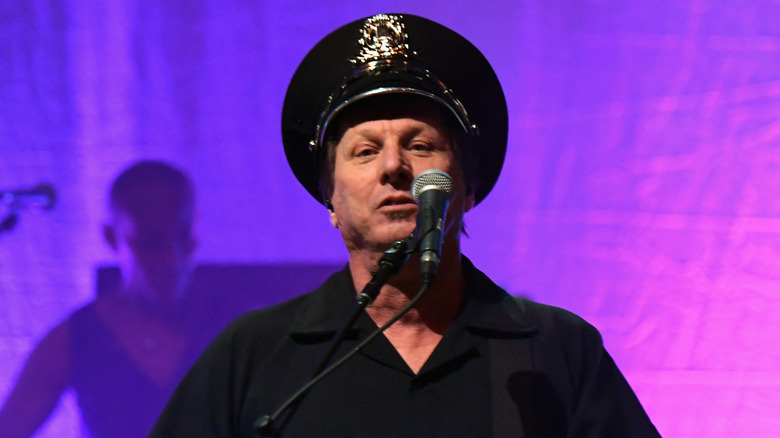
Frank Zappa gave guitarist Adrian Belew his big break when he welcomed him into his touring band as a guitarist and vocalist in the late 1970s. Belew lasted for just one 1978 set of European concert dates before his skills caught the ear of a different star. Multi-hyphenate musician and David Bowie associate Brian Eno took in Zappa's show in Cologne, Germany. Following the concert, Eno telephoned Bowie — he knew Bowie wanted a touring guitarist, and he recommended Belew. Bowie took in the following night's Zappa concert in Berlin, and during a break in the set, Belew met Bowie backstage. "So I walked over to David Bowie, shook his hand and said, 'I love what you've done, thank you for all the music.' And he said, 'Great, how would you like to be in my band?'" Belew recalled on Facebook.
A reluctant Belew accepted an invitation to discuss the offer over dinner. When they got to the restaurant, Zappa (and everyone else in his band) was there, too. "David, trying to be cordial, motioned to me and said, 'Quite a guitar player you have here Frank.' And Frank said, 'F*** you Captain Tom.'" Belew defected to the band led by Bowie, aka the singer of "Space Oddity," the 1969 hit about astronaut Major Tom.
When Ozzy Osbourne got Randy Rhoads to leave Quiet Riot
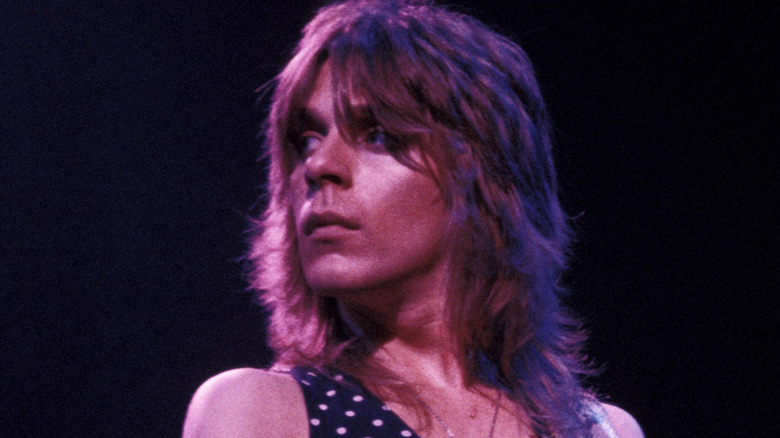
After Black Sabbath singer Ozzy Osbourne was fired by his band in 1979 because his substance use made him so unreliable, he quickly put together a new outfit, Blizzard of Ozz, which would eventually just be known as the metal legend's solo-era backing band. Osbourne's lead guitarist was virtuosic shredder Randy Rhoads, who created and played in Quiet Riot. He can be heard on just two Quiet Riot albums: its self-titled debut and "Quiet Riot II." Osbourne discovered Rhoads after many unsuccessful guitarist auditions, when a mutual associate set up a meeting. After a two-minute demonstration of his skills, Osbourne offered Rhoads the gig.
By the mid-1980s, Osbourne's band was a premiere metal act, and so was Quiet Riot. Rhoads' former band recorded the 1983 LP "Metal Health," the first metal album to reach No. 1 on the Billboard album chart. Still, Quiet Riot lead singer Kevin Dubrow had complicated feelings about his ex-bandmate and his new group. "He was a wonderful person. He was not an angel the way he is made out to be," Dubrow told "Full in Bloom." He went on to say he was "very, very hurt" when Rhoads left their group. When Quiet Riot was at its peak, DuBrow took to publicly deriding Osbourne, likening his voice to that of a frog.
Foo Fighters swiped Alanis Morissette's drummer
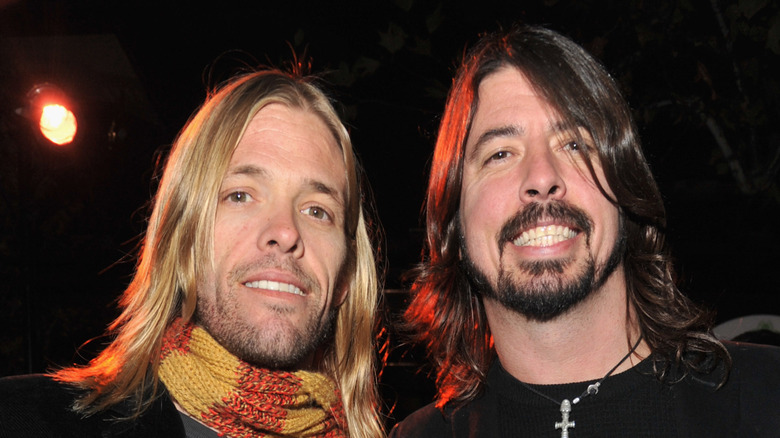
After Kurt Cobain's death ended Nirvana in 1994, drummer Dave Grohl recorded an album almost entirely by himself as Foo Fighters. Then he formed a real band, which included drummer William Goldsmith, who exited around the recording of the 1997 LP "The Colour and the Shape," forcing Grohl to find a replacement.
Besides Foo Fighters, another major rock act of the mid-1990s was Alanis Morissette, winner of the Grammy for Album of the Year for "Jagged Little Pill," an LP that sold 17 million copies. Morissette's concert drummer, Taylor Hawkins, was such an admirer of Foo Fighters' work that when he heard the band had a vacancy on his instrument, he obtained Grohl's phone number from a mutual friend and made the arrangements that would ultimately lead to him securing the job.
"I thought he would never leave Alanis' band," Grohl told Entertainment Weekly. "At the time, they were packing stadiums around the world." Morissette was left even more confused. "She wasn't very happy when I quit. I think she felt I was a bit lame in some of the interviews. I don't think she thought I shed a very nice light on her," Hawkins told South African outlet News 24 in 2011. "In retrospect, I probably was a little less respectful than I should have been. Looking back, those were some of the funnest times of my life. She became a very good friend and I wish we were still in touch."