

These Rock Icons Were Once Banned From Entire Countries
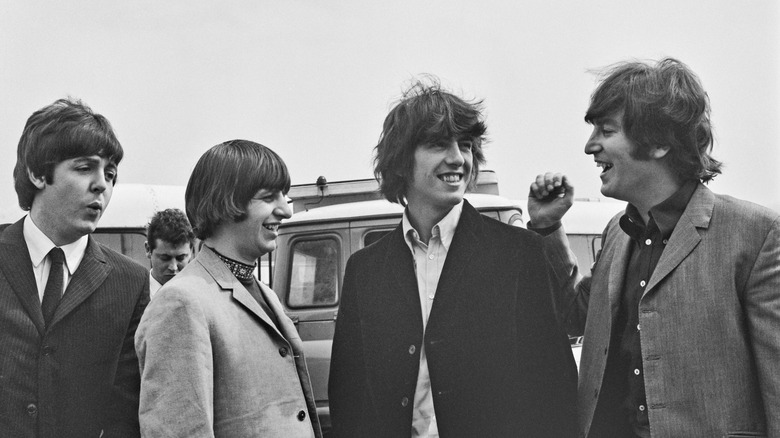
Look, we all have a band or artist that we absolutely hate, one (at least) that we'd ban from touring or releasing new music if we could. Maybe you've fantasized about locking Jamiroquai in the tallest tower or tricking Radiohead into a rocket trip to be the first band on Mars. Or maybe you want to convince Taylor Swift that she's done enough and it's time to enter a convent to spend the rest of her life in prayer, reflection, and above all, silence. While most of us lack the power to silence musicians — and while in general that's a good thing, even if it does mean that nu-metal may yet return — some civil servants and politicos do have the power to block musicians from visiting a given country.
Throughout rock 'n' roll history (and even before, as you'll see below), musicians that looked like they spelled trouble have been given the gate in Germany, ushered out of the U.S., given the bum's rush in Russia, and told they couldn't sing in Singapore. Prior convictions, rowdy fans, disturbing lyrics, or long hair: Whatever reason presented itself, these bands found themselves, at least temporarily, without a new passport stamp.
Led Zeppelin, Singapore
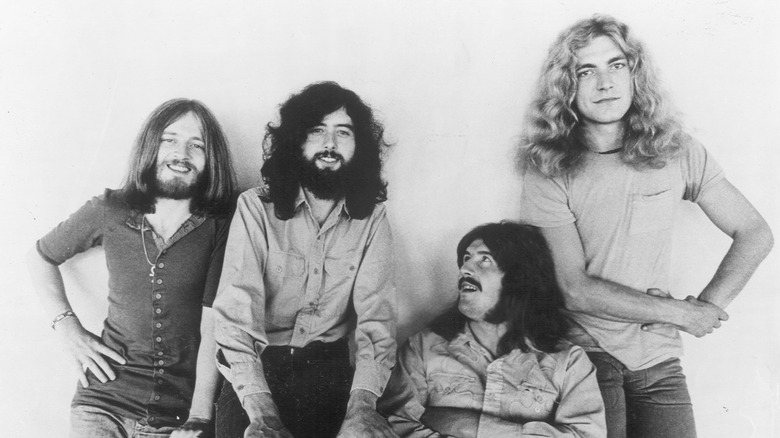
Singapore is not a loose, anything-goes society, as evidenced in matters as minor as its chewing-gum ban and as great as its much less endearing continued embrace of the death penalty. Order and decorum are apparently a priority for Singaporean society, or at least for those who call the shots, and even in the scruffy '70s, they weren't going to let a bunch of longhairs from abroad rattle their buttoned-down island. So they kicked out Led Zeppelin.
In early 1972, the members of Led Zeppelin were living like the rock stars they were and had taken their own jet to Singapore to perform. They successfully got off the plane but didn't even make it through customs before they were stopped, turned around, and put right back on their plane to London, seemingly never even formally entering the island fortress of probity. But how had they gotten in trouble before even making it in the door?
You see, in order to clamp down on counterculture and "damn hippies," Singapore had a law against ... men having long hair. Men with shoulder-length hair or longer were turned away (or in some cases, allowed to submit to on-the-spot makeovers), and the glorious manes of Messrs. Plant and Co. were far beyond the limit. Eventually, Robert Plant (if not his bandmates) would return to Singapore to perform, hair intact ... in 2013.
Cannibal Corpse, Russia
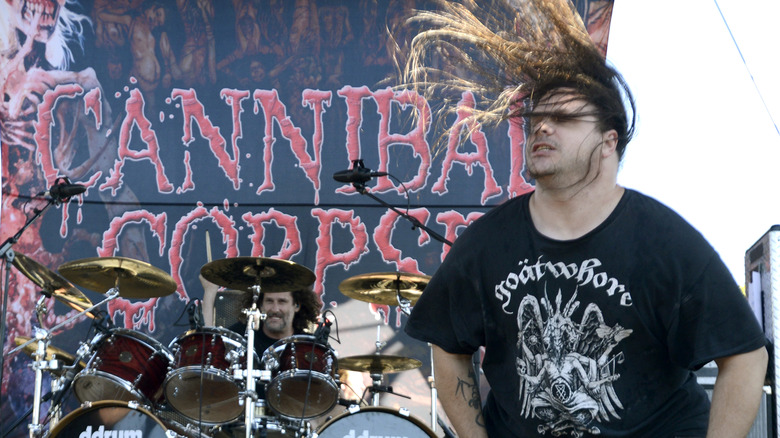
If the average person were asked to say something nice about Russia, even today, they would have their pick. The Eurasian titan has given the world the novels of Tolstoy, the operas of Pyotr Ilyich Tchaikovsky (who composed "The Nutcracker"), formidable athletes and dancers, and enough vodka and caviar to make the world feel elegant. What no one would say, under any circumstances, is that Russia is a nonviolent country, which makes it grimly hilarious that it banned the band Cannibal Corpse in 2014, along with images of its album covers and translations of its lyrics, for ... inciting violence.
The ban followed a disastrous-for-promoters, great-for-street-cred Cannibal Corpse tour of Russia that saw six of eight tour stops cancelled, including dates in Moscow and St. Petersburg, under threat of deportation. And while Cannibal Corpse's album art and lyrics aren't particularly tame (at least one album even bears an image of an actual cannibal corpse), this criticism is especially rich coming from Russia. In 2008, Russia invaded its smaller neighbor Georgia, shearing off two sections to run as theoretically independent states. In 2014, it invaded Ukraine and bit off the Crimean Peninsula. In 2022, after a quick stop to cause trouble in Kazakhstan, it invaded Ukraine again. Meanwhile, Russian mercenaries have been busy across Africa, propping up equally unsavory governments. But still — don't let them catch you translating those lyrics.
Fred Durst, Ukraine
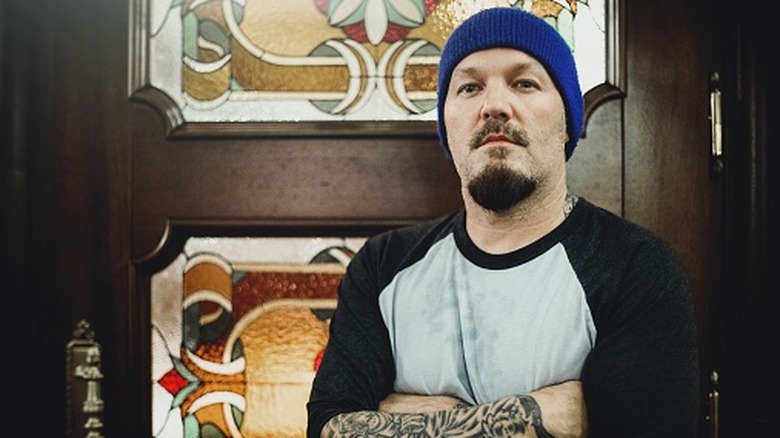
The fact that Limp Bizkit released an album called "Chocolate St*rfish and the Hot Dog Flavored Water" should, in a just world, be enough to see frontman Fred Durst banned from a few countries. (Imagine a stamp coming down on his passport that, instead of "Welcome to Chile," just reads "Yuck.") But it wasn't this alarming sense of image that got him axed from Ukraine — it was his support for vicious dictator Vladimir Putin and his expansionist fever dreams.
When Russia seized the Crimean Peninsula from Ukraine in 2014, many people saw a crime, but Fred Durst saw an opportunity. In October 2015, Russian media reported that Durst was considering buying a house in occupied Crimea and spending some months there making "content." (Better than if he were making music, at least.) This plan dovetailed with a Russian drive to get Western celebrities, or celebrity-style products like Durst, to spend time in Russia and Crimea and clean up the occupation's image. Reasonably annoyed by Durst's apparent participation in this scheme, Ukrainian courts slapped him with a five-year ban on entering Ukraine, flagging him, probably accurately, as a security risk. While the situation in Ukraine has, of course, gotten markedly worse, at least Ukrainians won't have to struggle for their country's survival in the presence of the Limp Bizkit guy. Meanwhile, Durst's pro-Putin statements still occasionally cost him work, with a May 2026 concert in Estonia cancelled explicitly over his past support for the Russian dictator.
Elton John, Egypt
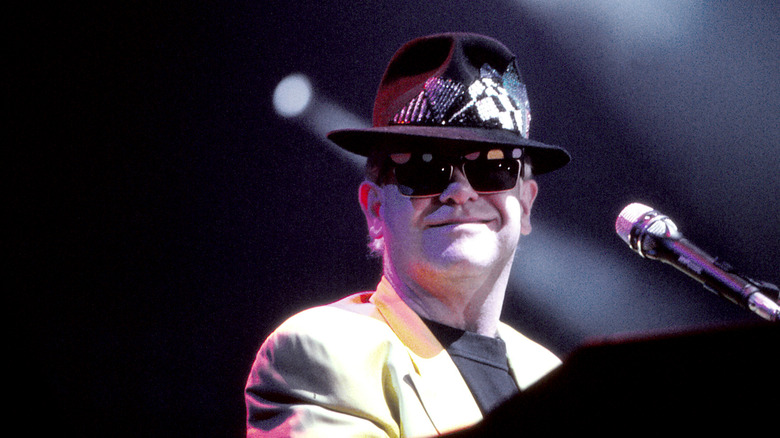
Brace yourselves for some big news: Elton John is gay. Has been for a long time. Bisexual as of a 1976 announcement, gay as of a 1992 revision. He has a husband, who is also gay, and in general has lived an out-and-proud life as a performer and icon since the era of dial-up internet. Egypt didn't like that! And so in 2010, the country banned the Rocket Man from touching down in the Land of the Pharaohs.
To give the Egyptians a very small amount of credit, what they really didn't like was a throwaway comment Elton John had made in an interview years earlier, surmising that Jesus was gay. (The deity and part-time carpenter could not be reached for comment.) Jesus is an important figure in Islam, the majority religion in Egypt, and speculation about any same-sex romances unrecorded in the Gospels inflamed local religious sentiment.
One might ask, reasonably, why Elton John was planning to perform in Egypt at all. As a foreign celebrity, he would be shielded from the harsh laws and societal prejudices that choke gay and queer lives in Egypt, but that doesn't mean they don't exist. John can be out and glittery and married to someone named David; most gay Egyptians can't. But of course, you need money to live like a rock star, and the Egyptian pound would have been spent almost as easily as the British one.
The Beatles, Israel
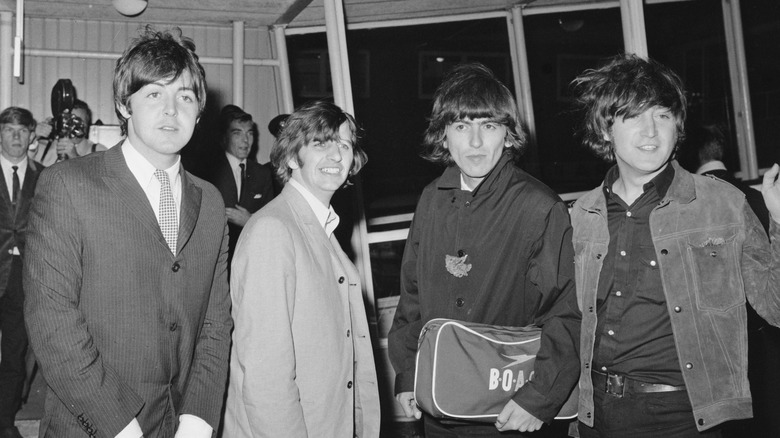
Guess what the Israeli government apologized for in 2008? It had nothing to do with the Palestinians or that secret nuclear test they may have conducted with apartheid-era South Africa (one of the unsolved mysteries of the 1970s). Nope, the Israeli government took time out of its allegedly busy schedule to say sorry to The Beatles and the band's fans for having forbidden a Beatles concert in the Jewish state in 1965.
The reasons that Tel Aviv missed out on firsthand Beatlemania aren't completely straightforward. There were a number of members of the Israeli government who thought the band had no artistic merit and would do nothing but rile up the youths, and so the official "no" came from a government agency. Behind the scenes, it seems there was some scrapping between various competing concert promoters hoping for a shekel-tastic payout by bringing the globally famous band to Israel. The loser, piqued, undercut the winner by complaining to the government body in charge of issuing approvals. The plan for the Beatles concert was further complicated by the fact that then-young Israel had issued controls on large payments in foreign currency, and the scheme never came to fruition. The Beatles broke up before making it to Israel as a group, though Israeli fans saw Paul McCartney in 2008 and Ringo Starr (better than nothing) in 2018.
Dusty Springfield, South Africa
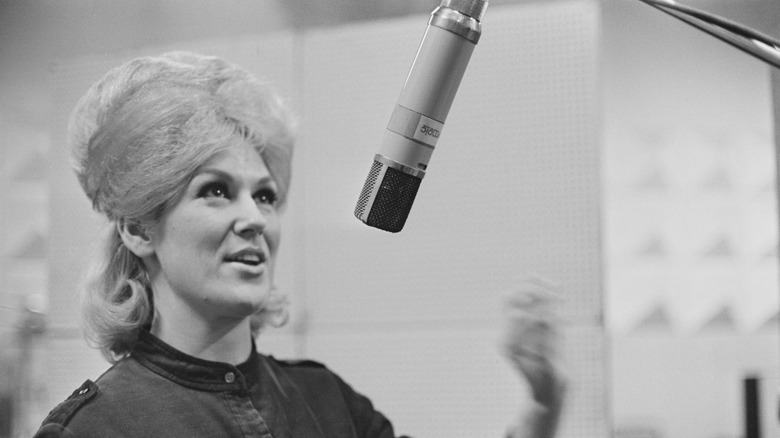
When touring artists visited South Africa under the apartheid regime, they generally had to comply with the government's ban on intergrated events, meaning that performers would have to give separate (but allegedly equal) concerts. Smooth-voiced crooner Dusty Springfield correctly thought this system was both wrong and stupid, so to the extent she was able, she defied it. In 1964, Springfield, her blonde beehive, and her honeylike voice were moving from triumph to triumph, and so she decided to tour Europe and some distant Anglophone markets: Australia, New Zealand, and South Africa.
Putting ethics before money (and arguably her personal safety), Springfield quietly placed language in her performance contracts stating that she would not perform for segregated audiences: Everyone came, or no one got Dusty. It worked until it didn't. The South African government allowed a few shows to move forward but eventually gave Springfield and her team one day's notice to get out of South Africa. Springfield died, too young, in 1999, but she lived long enough to see the apartheid system in South Africa collapse and Black civil rights advocate Nelson Mandela take power in 1994. She knew she had been on the right side, and she got the pleasure of also having been on the winning one.
Bob Dylan, China
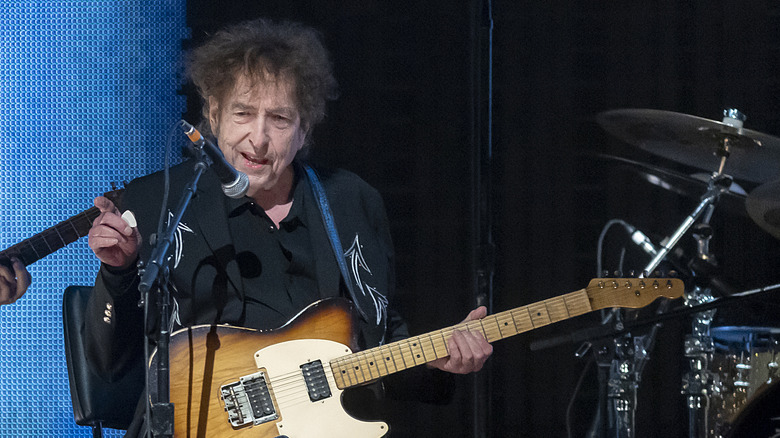
In 2010, when Bob Dylan was touring China, he was blocked from performing in Beijing and Shanghai because Chinese authorities thought his general protest-song vibe was, er, too anti-authoritarian for authoritarian China. They apparently took particular issue with "Blowin' in the Wind," not only one of Dylan's signature songs but also one that dated from early in his career, all the way back in 1962. You'd think the Communist powers-that-be would have made some time in the intervening 48 years to listen to the song before they let Dylan into the country in the first place, but apparently they were busy breaking vases and killing people.
The next year, Dylan was back in China, having apparently agreed to submit his set lists to authorities before his concerts. This justifiably angered a lot of people, causing Dylan to weakly protest that no, these were the set lists he always planned to use — it was just happenstance that they omitted the protest songs from his early career (you know, the ones that made him famous and admired). Despite this colossal cave, Dylan was awarded a Nobel Prize in 2016 for literature, because they don't yet award one for money-grubbing cowardice.
The Rolling Stones, Japan
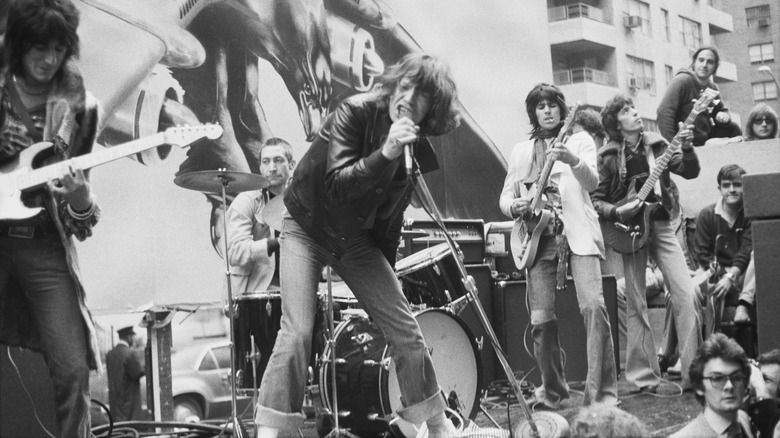
Say what you will about Mick Jagger, it probably won't be something like "I would be amazed to learn he had been caught with drugs in 1967 and 1970." The Rolling Stones rolled and got stoned, and everyone seemed to know it except the people in charge of arrangements for their planned 1973 tour of Japan. Prior drug convictions were grounds for rejection of a visa application, and Jagger was flatly denied permission to rock the Land of the Rising Sun. Warner was left with a bunch of special editions of the album "Sticky Fingers" commemorating a tour that never happened, and Japanese fans were crestfallen, but it was a hard no.
The Stones skipped Tokyo — that time at least — yet being "banned from Japan" arguably made them seem even cooler. The band did eventually make it back to Japan in 1990, selling out the Tokyo Dome and thrilling fans who had been waiting 18 years. Jagger still needed special permission to enter Japan, but this time it was granted.
The Kinks, United States of America
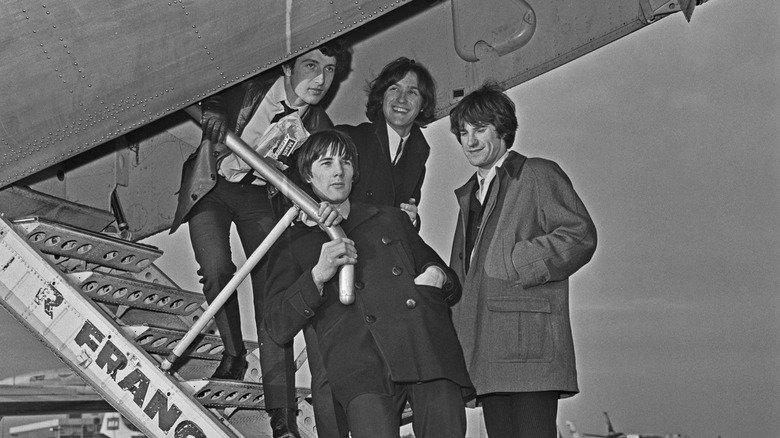
The United States of America, an alleged free-speech champion, also has (at least) one big-name act it refused to let perform. Members of the Kinks were a hard-living bunch, prone to drinking and getting rowdy, with a track record of at least one fistfight breaking out onstage. (The drummer won.) But it wasn't this wildness that got them kicked out of the U.S. (though it didn't help) — it was some nasty backstabbing by a tour promoter.
Betty Kaye had promised to pay the band in advance and in cash, which implies that she was not an especially good businesswoman. She was also no great shakes as a promoter, as she didn't sell enough tickets to actually generate the cash she had promised. This annoyed the members of the Kinks, who were admittedly not great sports about the whole thing, deliberately putting on abbreviated or crappy concerts in protest.
Kaye made everything worse by complaining to the American Federation of Musicians, a powerful union that could revoke the band's permission to perform if it acted up. Act up it did when a random crew member on "The Dick Cavett Show" accused the members of being Communists, leading to a fistfight. That was enough to get the Kinks slapped with a four-year ban on performances in the United States.
Various, Venezuela

Nicolas Maduro, the mustachioed goober who ruled a suffering Venezuela from 2013 to early 2026, identified a problem facing his country in early 2025. Unfortunately, what Maduro took issue with wasn't the collapses in living standards or personal freedoms Venezuelans had endured under his rule, but musicians who didn't like him. In March of that year, Maduro's goon Diosdado Cabello issued a long list of musicians who would be barred from performing in Venezuela due to their stated opposition to the Maduro government and participation in benefit concerts intended to support opposition causes.
Cabello's threat-laden announcement blacklisted many international artists, especially those from neighbor Colombia, as well as a number of Venezuelan performers in exile. Most of the names aren't quite household in the English-speaking world but are popular and iconic in their home countries and among Latin music lovers, with some of the better-known acts including Lele Pons and Carlos Vives. Among the people banned, the Colombian press identified nine blacklisted Grammy winners ... from Colombia alone. Maduro's bans came less than a year before his abduction and removal by U.S. forces in early 2026. Had he focused on the real challenges Venezuela faced or even more serious threats to his regime, he might still be in a palace in Caracas rather than a jail cell in New York.
Richard Wagner, Kingdom of Saxony
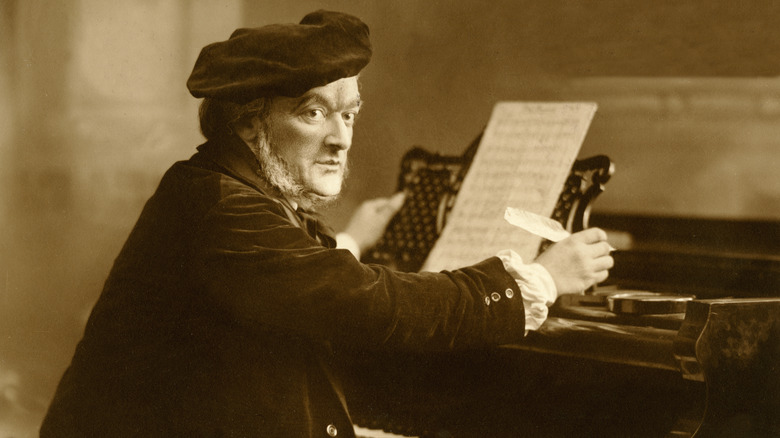
As far as authorities are concerned, musicians have been trouble since long before rock emerged as a genre. Enter Richard Wagner, composer of the bombastic German operas that created the stereotype of the large woman in horns and breastplate. The musician got himself kicked out of his own home country, the Kingdom of Saxony, after meddling in politics on the losing side. Wagner had moved around Germany (and Europe) early in his career, but Dresden, the capital of Saxony, had given him some of his most enthusiastic audiences and most triumphant premieres. In 1848, a wave of revolutions swept across Europe, rattling capitals and menacing the status quo. Pretty if second-tier Dresden weren't immune, and Wagner jumped into the fray, arguing in published articles for the establishment of a republic. The fighting in Dresden led to, among other damages, the burning of the opera house Wagner had helped design just a few years before.
Alas for Wagner and the revolutionary project, the royal government triumphed, and Wagner and his allies had to beat feet to find refuge in Switzerland. The troublesome composer was pardoned in 1862, though he never resettled in Dresden. Wagner's next project was to strike up a weird pseudo-romantic friendship with the king of Bavaria, the young, impulsive, and probably gay Ludwig II of castle-building fame, that allowed him to siphon off money for his new productions. Despite public scandal and eventual clashes with his royal fanboy, Wagner avoided being kicked out of Bavaria.