

5 Flop Soft Rock Songs That Have Earned Respect From Younger Generations
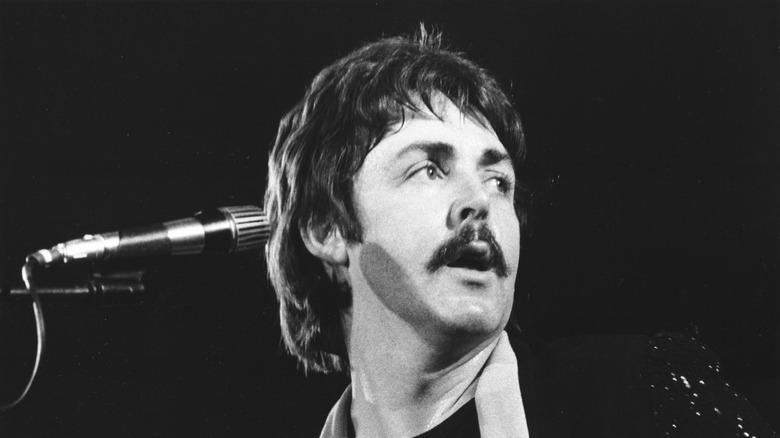
For decades, the genre known as soft rock was considered the antithesis of cool, but in recent years, soft rock has found a new, often wider audience among younger listeners who are drawn to its often dreamy, loungy, or otherworldly sound. These discoveries are often made because tracks are co-opted into more modern styles of music through samples, through cover versions by later generations of bands, or simply by being rediscovered on streaming platforms.
At its most popular in the 1970s and 1980s, soft rock employed improved recording techniques and wider instrumentation to create songs that were smooth, elegant, and easy to listen to, often touching on their creators' interests in wider styles of music such as folk and jazz. In doing so, it often produced songs that were so easy to listen to that they were dismissed as elevator music or Muzak, and firmly rejected by fans of hard rock, punk, and metal, which grew in popularity during the same period. But today, younger generations don't hold the same disdain that the Gen X youth did.
Here, then, are five great soft rock songs that are gaining far more appreciation now despite underperforming commercially on release. Some are tracks from bands you are unlikely to have heard of, while others are by major artists but failed to hit the commercial heights of their bestselling work, and remained relatively obscure in their discographies until they were re-evaluated by later listeners.
If I Saw You Again – Pages
The pop-rock band Mr. Mister topped the album charts in the mid-1980s, but in the years prior to that, founding members Richard Page and Steve George had struggled to find fame with the soft rock outfit Pages, which existed from 1978 to 1981, releasing three albums. Though nothing in the band's short discography was a smash — the albums each failed to chart, while only one of Pages' singles, 1979's "I Do Believe In You," scraped into the Billboard Hot 100 – many of the band's tracks, such as the debut single "If I Saw You Again," have since attracted nearly 9 million streams on Spotify.
"If I Saw You Again" sounds like a hit that never was. It opens with an exceptionally cool synth line and funky, understated bass thrum interspersed with occasional slap accents, before Page's exquisite vocal line breaks in, along with tasteful guitar work that remains super smooth despite some exploratory passages. The track is now a chillout favorite and had a resurgence back in 2011 when it was looped and sampled on the title track of Macintosh Plus' "Floral Shoppe" album, a cornerstone of the viral vaporwave subgenre of electronic music.
Let's Fall In Love Tonight – Lewis
Another viral hit of the 2010s was the album "L'Amour," by the mysterious artist known only as Lewis. Though his chiseled face features on the album's cover, little was known about the artist, who recorded the album in obscurity in the 1980s and disappeared from the music industry after making virtually no impact. According to Vice, the album was rediscovered by chance by an enthusiast who had it reissued via the indie label Light in the Attic, leading to rave reviews from music outlets and online rumblings that the whole thing may actually have been a stunt or a hoax.
But the story behind Lewis was real, and tracks like "Let's Fall In Love Tonight," the stand-out on "L'Amour," really were recorded by a shadowy figure in an LA studio back in the 1980s. The song is something of an outsider gem, with a strange, haunting quality that contrasts with the sleek production and imagery attached to the album.
Characterized by fragile keys and Lewis' tender, half-whispered vocals, the track sits somewhere between the work of tragic folk singer Nick Drake and Roxy Music's Bryan Ferry, but has a homespun quality that explains why it failed to find an audience when it was first released. By the 2010s, however, lo-fi bedroom pop had made sounds like this easily digestible to many listeners, and it's easy to see why it caused such excitement when it was finally reissued.
Arrow Through Me – Wings
Wings' "Arrow Through Me" just cracked the Top 30 of the Billboard Hot 100 in 1979, which would have been considered a major achievement for most other artists. But this is Paul McCartney we're talking about, who post-Beatles repeatedly hit No. 1 with his new band, formed with his wife Linda and Moody Blues guitarist Denny Laine. And compared with other releases he had throughout the decade, "Arrow Through Me" was certainly a comparative flop, signaling the band's imperial phase had run its course.
However, as years have passed, the funk-infused soft-rock track has emerged as one of McCartney's classic tracks of the era, and certainly the standout of its parent album, "Back to the Egg." Featuring an infectious opening synth line and one of McCartney's most melodic vocal performances, it is a showcase of the former Beatle's perfectionism and chameleonic ability throughout the 1970s to bring new influences into his music and continue to sound fresh and relevant.
The laidback instrumentation contrasts sharply with the desperation that runs through the lyrics to "Arrow Through Me," and the song has drawn several cover versions down the years, by Richie Havens in 1987, Laurence Juber in 2005, Scary Pockets and Madison Cunningham in 2021, and, most recently, The Kooks in 2025. Meanwhile, it has been sampled by Erykah Badu and others, bolstering its popularity among neo-soul fans.
Get It Up For Love – Ned Doheny
Beverly Hills soft rocker Ned Doheny struggled to make a commercial breakthrough after beginning his recording career in the 1970s, with his studio albums failing to find an audience in the United States before he was unceremoniously dropped by his label. But tracks like "Get It Up For Love," from his 1976 album "Hard Candy," reveal that he was unfairly overlooked (though he did develop a devoted following in Japan).
Penned by Doheny but previously recorded by other artists, including David Cassidy, Doheny's version of "Get It Up For Love" perfectly balances acoustic guitar and forward-thinking synths to create a chilled, sunny atmosphere that summons the atmosphere of LA in the 1970s. Its choruses explode with Doheny's multi-tracked vocals and angular piano parts, but never dispel the loungy vibe permeating the song.
Though his version was never a charting single, a cover version of Tata Vega became a minor dance hit, and it has been covered by numerous other artists, like Average White Band and Johnny Rivers. In 2014, a collection of cuts and demos of songs from Doheny's first three studio albums, titled "Separate Oceans," was issued, on which "Get It Up For Love" was the opening track, bringing it to new audiences.
Margarita – Marc Jordan
Once-obscure soft rock is now often found populating "yacht rock" playlists on streaming platforms like Spotify, and in recent years, Marc Jordan's non-charting 1983 track "Margarita" has become a popular track in such spaces. The Canadian-American songwriter, best known for penning songs for other artists including Rod Stewart and Joe Cocker, has been inducted into the Canadian Songwriters Hall of Fame. Nevertheless, for many, he is considered an underappreciated artist, especially as an interpreter of his own songs.
"Margarita" was released in 1983 on his third album, "Hole in the Wall." It simply exudes soft rock cool, with an assured arrangement and moody instrumentation that form a relaxed base for Jordan's wistful vocal delivery. Fittingly, the track features backing vocals by no other than Richard Page and Steve George of the band Pages. The synths may once have sounded cheesy, but modern dream pop producers aiming for an assured '80s vibe would surely be chasing a similar sound today. A true gem that has deservedly attracted millions of listens in recent years.