

5 Classic Love Songs That Were Once Banned From The Radio
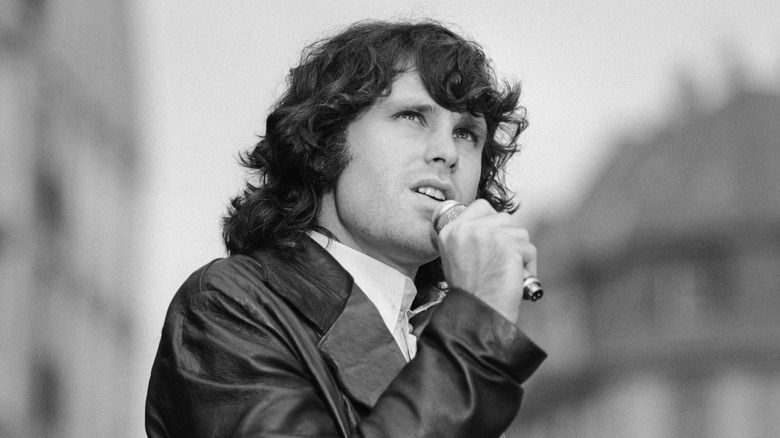
Love songs that find radio success may typically be relatively tame, but there have been a number of classic love ballads that went just a little too far for some and were barred from radio play as a result. Though some of the reasons for the bans may seem trivial now, the music industry was very different not so long ago: Radio stations, especially across the United States, were the faucet from which consumers drank, and they were a lot more particular about content than music services now, especially in the 1960s. As popular music grew into more alternative spaces, especially in the '60s and '70s, sometimes radio stations butted heads with the content and music of some popular rock 'n' roll groups.
In this list, we'll take a trip back to the 1960s and '70s to recall some love songs you're sure to remember, songs that have established their place in rock 'n' roll history yet were faced with significant music industry adversity upon release. Iconic artists like the Rolling Stones, Van Morrison, Paul Simon, and more all tussled with the narrow views of classic radio stations, both inside and out of the States. Despite the radio bans, these songs are all still memorable classics, and worth taking a look back at with a fresh perspective.
Let's Spend the Night Together — The Rolling Stones
Despite enjoying a number of hits throughout the '60s (and well on after), the Rolling Stones was at odds with the establishment in 1967 with "Let's Spend the Night Together." Its music often toed a line between extremes of PG and obscene, and this track put the band over that boundary, since the title and lyrics made clear its subject matter.
"Let's Spend the Night Together" was originally released as the B-side of the No. 1 hit "Ruby Tuesday," and while not blatantly inappropriate, the clear implications behind the title weren't fit for '60s radio audiences. Consequently, it was given limited radio airplay in the U.S., which partially helped the hit status of "Ruby Tuesday." Its chorus repeats its title, and the verses flesh out the details of the story: "This doesn't happen to me every day, oh my / No excuses offered anyway, oh my / I'll satisfy your every need / And now I know you will satisfy me." This was just too much for the radio stations of the time, despite the track's enduring appeal.
God Only Knows — The Beach Boys
To today's audiences, it must be a surprise that the Beach Boys' "God Only Knows", a feel-good, sentimental love song full of silky smooth repetitions and harmonies, could ever be banned on the radio. But in the 1960s, radio placement was not given lightly, and the rigid guidelines and practices of the time wouldn't bend for this classic from the California band. The Beach Boys released "God Only Knows" in 1966, and the song charted reasonably well. The pleasing arrangement and gorgeous vocals by Carl Wilson flesh out a relatively normal love song: "If you should ever leave me / Well, life would still go on, believe me / The world could show nothing to me / So what good would living do me?"
The sticking point for "God Only Knows" was religious, as the word "God" was not acceptable for some radio stations to air, particularly in the South. It seemed a bit of an outdated practice even then, but "God Only Knows" has remained among the best-known Beach Boys hits since, proof that the ban didn't impact its longevity.
Brown Eyed Girl — Van Morrison
Van Morrison was no stranger to tussles with radio stations. In 1964, when Morrison was the lead singer for the band Them, he wrote "Gloria," which was barred from Chicago radio stations. Released in 1967 and reaching the Top 10 on the Billboard Hot 100, the single "Brown Eyed Girl" was a major step in Morrison's career and went on to become his most iconic song. Still, Morrison's lyrics attracted some controversy, and it went through multiple changes just to get played on the radio before becoming the iconic version that's been streamed nearly 1.5 billion times by early 2026.
The song was originally titled "Brown Skinned Girl," but was changed to increase radio appeal, ironically, to its now-known title. However, this change wasn't enough, as radio stations still took issue with the lyrics: "Making love in the green grass," which were deemed too suggestive for airplay, and were replaced with more tame ones in radio edits. "Brown Eyed Girl" pushed through this adversity, and the fun and groovy love song, with its iconic singalong chorus and rousing guitar and bass licks, has remained a classic to this day and is a boomer rock hit favorite.
Kodachrome — Paul Simon
Paul Simon was responsible for a number of hits across his storied career, but none had the same — and to be fair, silly — controversy that 1973's "Kodachrome" did. This lead single from his 1973 album "There Goes Rhymin' Simon" reached No. 2 in the United States. While there were no notable issues in the U.S., the song experienced some pushback for its trademarked name in other countries, including a ban by the BBC in the U.K., which kept it off the country's charts entirely.
Otherwise, it's a relatively inoffensive song, a nostalgic look into Simon's past, using the trademarked title only as a specific detail for a larger metaphor: "I love to take a photograph / So mama don't take my Kodachrome away." "Kodachrome" is a sweet, heartfelt love letter to the past and what it looks like from afar, and there's no doubt why it was a success, though it's entirely possible the bans could've held it back from an even higher tier of classic status. Still, it has remained a stalwart, broad love song, and one of the essential tracks in Simon's discography.
Love Me Two Times — The Doors
Jim Morrison and the Doors did not shy away from controversy in the late '60s. Though the group's music was innovative and roused new rock 'n' roll audiences, radio stations were skeptical for a number of reasons. The Doors released "Love Me Two Times" in 1967 as a single for its second album, "Strange Days." The song makes suggestive love-making innuendos in its main refrain — "Love me two time, girl / Last me all through the week / Love me two times / I'm goin' away" — and though not blatantly obscene, the implications were enough for radios to shut the song down.
Furthermore, Morrison was arrested (and not for the only time) onstage in New Haven, Connecticut, on December 7, at around the time "Love Me Two Times" was released, and so the song received a regional radio ban. Nonetheless, "Love Me Two Times" still reached No. 25 on the charts in early January 1968, with the controversy likely boosting popularity. It seems silly now, as the Doors didn't even seem to be attempting controversy with these lyrics, at least by today's standards, but the '60s were a different time entirely.