

5 No. 1 Hits That Prove 1966 Was The Decade's Best Year For Folk Rock
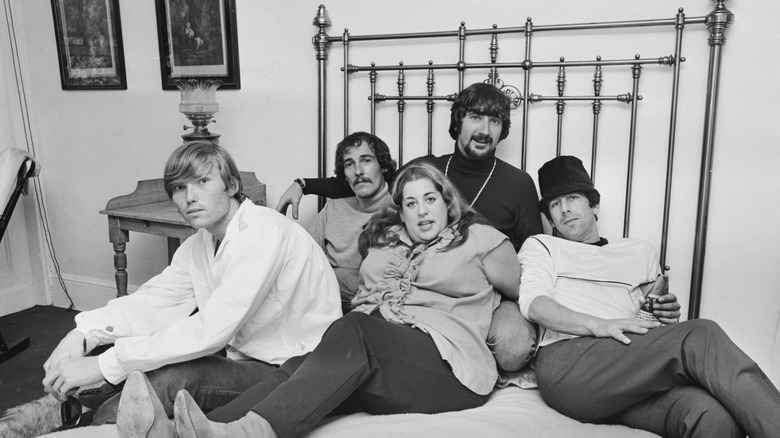
Folk rock emerged in full force in the mid-1960s and saw the most propulsion from '65 to '68 or so, but 1966 struck the perfect balance of fresh sounds and notable chart successes to cement it as the decade's best year for the growing genre. This case could be argued from a variety of perspectives – best albums, best songs, and best peaks of notable artists — but the charts reflect what fans were actually listening to.
In this list, we'll use the very top of the charts to showcase the supreme heights that 1966 had in folk rock. What's more, rock music, from songs to albums, excelled in 1966, in general, with classic tunes like "Paint It, Black" by The Rolling Stones also topping the charts, but the likes of Simon & Garfunkel, the Mamas & the Papas, and other memorable folk rock acts took their turns at that coveted top spot in 1966, establishing it as the definitive year of the 1960s for the genre. These are five No. 1 hits, tackled chronologically, that you're likely to remember, and each takes its own excellent spin that showcases the essential variety of this storied year.
Simon & Garfunkel — The Sound of Silence
In the first recorded week of the year, the acclaimed duo Simon & Garfunkel was atop the charts. "The Sound of Silence" first charted in November 1965 but ended up peaking at No. 1 by January 1, 1966. First released in 1964, the song had a long journey to the top, with its iconic opening — "Hello darkness, my old friend" — and unique sound taking time for audiences to appreciate. In fact, it was the song's remix for the radio, which featured overdubbed guitar and drums, that enjoyed chart success, not the original, quieter version.
"The Sound of Silence" is, expectedly, rather eerie, but it found a bit of a warmer ambiance in the version that reached No. 1. The duo's mellow vocals harmonize beautifully, and the slow and quiet song is among the best of meditative folk rock. Its dreamlike, hazy but detailed lyrics — "In restless dreams, I walked alone / Narrow streets of cobblestone / 'Neath the halo of a street lamp / I turned my collar to the cold and damp" — evoke the essential wandering of classic folk music. Simon & Garfunkel may have faced some adversity for this hit to reach No. 1, but the reward was well worth it, as "The Sound of Silence" is a memorable and essential song for '60s folk rock.
The Beatles — We Can Work It Out
It's no secret that The Beatles dominated the charts throughout the 1960s, and the storied band spent a total of five weeks in the No. 1 spot during 1966. "We Can Work It Out" spent a combined three weeks in the top spot, battling with "The Sound of Silence" throughout January, and "Paperback Writer" enjoyed two nonconsecutive weeks at the top in late June and early July. The former is a captivating folk-rock tune that showcases the very best of the genre when it comes to hits.
Written by Paul McCartney and John Lennon, "We Can Work It Out" balances the duo's optimistic and more cynical takes on a relationship: "We can work it out / We can work it out ... Life is very short, and there's no time / For fussing and fighting my friend." The song flashes by over a quick two minutes, and its upbeat, warm melodies, paired with the waltzy breakdowns in its bridge, make clear why it was a success: "We Can Work It Out" is easy and catchy enough to enjoy, and still complex enough to be undoubtedly memorable.
The Mamas & The Papas — Monday, Monday
A few months after the Beatles and Simon & Garfunkel battled for the top spot, another excellent folk-rock song vaulted to the top, holding No. 1 for three straight weeks in May. "Monday, Monday" was the sole No. 1 hit for the Mamas & the Papas, though the group is perhaps now best remembered for the enchanting song "California Dreamin,'" which topped out at No. 4 in March 1966. The vocal group was short-lived — the Mamas & the Papas broke up soon after in 1968 — but its harmonic sound was a key part of folk rock's rise in the '60s.
"Monday, Monday" is a relatively simple song, calling on the universal nature of some of folk's most classic songs. Its sentiment has been echoed by working people since the dawn of the workweek: "Every other day, every other day of the week is fine (Fine), yeah ... But whenever Monday comes, you can find me cryin' all of the time." The sound that carries this message, consisting of choral backing vocals and cheery, acoustic instrumentals, is what most fans would imagine when they think of folk rock. "Monday, Monday" is definitively '60s in its style, and its influence has lived on. The song was certified platinum in the U.S. in December 2024.
Donovan — Sunshine Superman
Donovan seamlessly blended psychedelic and folk rock throughout his career. He only reached the top spot on the charts once, though his late 1966 song "Mellow Yellow" climbed all the way to No. 2. "Sunshine Superman" held the top spot for just one week in early September, and this gritty and folky recording is yet another height of folk rock in '66. Notably, Jimmy Page and John Paul Jones of Led Zeppelin played guitar and bass on the track, certainly contributing to its star power.
The song features a mix of electric and acoustic sounds, with unique percussion and driving guitar licks. Lyrically, it's traditionally romantic, with a bit of flair: "When you've made your mind up / Forever to be mine / I'll pick up your hand and slowly / Blow your little mind." Otherwise, "Sunshine Superman" doesn't play like a traditional No. 1 hit — though it's groovy and contains some sticky vocals and melodies, it still feels a bit too avant garde to have taken No. 1. Such was the beauty of the year, where not only excellent pop songs of folk-rock influence could hit the top of the charts, but more experimental, strange, and artistically inclined cuts could end up there too.
The Monkees — Last Train to Clarksville
It's quite the achievement for a band's debut single to chart well, not to mention to chart all the way at No. 1. But that's what happened for the Monkees, the folk-rock band that released "Last Train to Clarksville" as its first-ever single in 1966: By the end of the year, it reached the very top of the U.S. charts. Hitting No. 1 for one week in November, the song was the first of three No. 1 hits for the Monkees, with their next reaching the top spot for the very last week of the year.
The song's unlikely rise, though it was helped along by the popular TV show the band was featured in, showcases the power of folk rock: in 1966, everything the genre touched was gold. "Last Train to Clarksville" is clearly inspired by the rise of styles largely attributed to the Beatles, featuring a twangy groove and bright, harmonic vocals. The song's references to the Vietnam War further underscore the power of folk rock and prove that, in '66, the genre could both have fun and tackle serious topics, cementing its spot as the best year of the genre.