

Rock Musicians Who Appeared In Iconic '70s Movies
Nowadays, celebrities are everywhere: It's no stranger to see a rock star in a movie than it is to see a reality star-branded liquor or an infomercial king running for a governorship (remember My Pillow Guy Mike Lindell?). Fame today is infinitely transferable, and making it in one field can be a near-guarantee of a shot at some other "famous person job." But this wasn't always the case! A couple of generations ago, celebrities had their lanes — which made it fresh and exciting to see a rock star taking on a movie role.
Success in one creative field doesn't mean talent in another, of course, but anyone with the charisma to be a bona fide rock star probably has the raw power to turn in a compelling performance on the screen. The rockers whose performances we've selected below never really built full careers as actors. Nevertheless, their understanding of how to turn in killer performances lit up '70s cinemas.
The Rocky Horror Picture Show, starring Meat Loaf
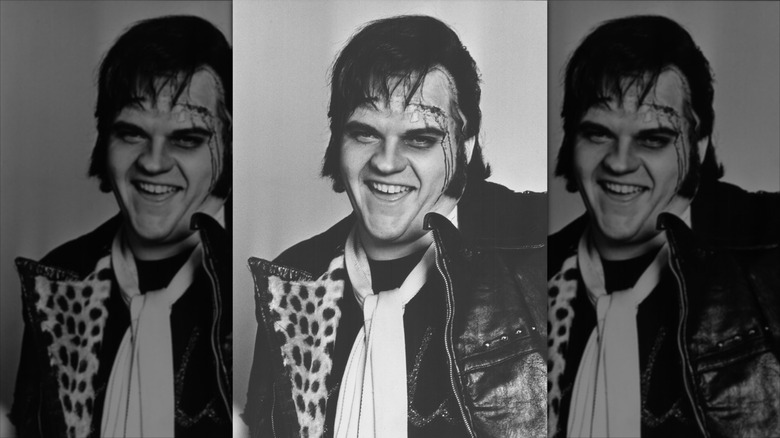
Meat Loaf, the beefy belter whose witty lyrics and big stage presence made him a hitmaker, had a past: Back in Texas, the rocker-to-be had been a theater kid. This led to a role in a production of "Hair," and after seeing young Loaf on the stage, Richard O'Brien invited him to join the cast of his musical in development, "The Rocky Horror Show." Meat Loaf wowed lyricist O'Brien when he articulated all the words in the character Eddie's fast-moving song "Hot Patootie (Bless My Soul)," and he remained part of the cast when the provocative sci-fi romp was filmed in 1975.
Meat Loaf's brief but energetic appearance in "The Rocky Horror Picture Show" involves him coming out of a deep freeze, singing while riding a motorcycle around a laboratory, and being bludgeoned by a grinning Tim Curry. The role made him an integral part of the midnight movie sensation "Rocky Horror" became. Better still, at least when it came to keeping Meat Loaf in cabbage, the movie's popularity lifted sales of his 1977 album "Bat Out of Hell."
Lisztomania, starring Roger Daltrey
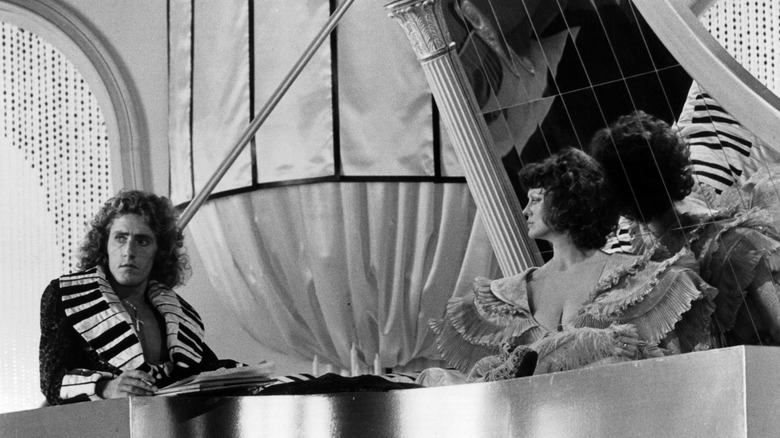
The charismatic 19th-century composer and pianist Franz Liszt sent crowds so wild with his crashing, banging performances that the resulting cultural frenzy got its own name: "Lisztomania." When director Ken Russell began making a surrealist adventure film loosely based on this phenomenon in 1975, he hired the closest thing to Franz Liszt '70s Britain could offer: The Who's Roger Daltrey. Roger Ebert called the resulting film a "berserk exercise of demented genius," which seems like a tame description for a film that sees Daltrey piloting a spaceship as part of his combat with Richard Wagner, who is a vampire but also kind of Hitler. Oh, and Ringo Starr portrays the Pope.
Russell had directed both The Who's "Tommy" and a handful of other composer biopics (what a niche), so a generous interpretation might call this project a "crossover." But where "Lisztomania" fails as a historical or biographic film, it succeeds as a visually lush, narratively bonkers ride with plenty of shirtless young Roger Daltrey. Worse ways to spend an afternoon.
Tommy, starring Tina Turner
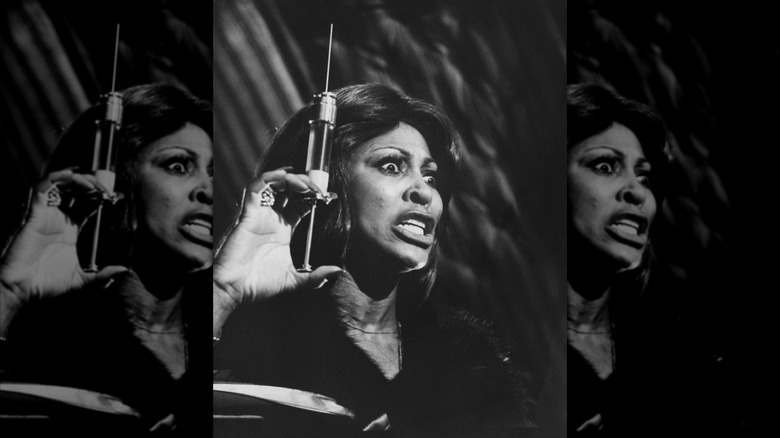
To be nitpickingly fair, the title character of "Tommy" is played by Roger Daltrey, but he's supported by a never-surpassed list of supporting performers. Keith Moon plays a predatory uncle, Eric Clapton leads a cult, Elton John plays an Elton John-like pinball expert, and towering above them all on her peerless gams is Tina Turner as a fiendishly compelling drug-slinging escort. Measuring by thrills-per-second, "Tommy" belongs to Turner's character, nicknamed "Acid Queen."
Turner, perhaps understandably, hesitated to accept the role of an escort who takes advantage of a disabled young man, but her terrifying and frenetic performance is one of the highlights of a star-studded, set-piece extravaganza. Her voice is up to the challenge of a difficult song, but her increasingly wild expression sells it as she hauls the near-catatonic Tommy upstairs and drugs him up in a hallucinatory sequence. "Acid Queen" would remain a concert piece for Turner for the rest of her career, and she even titled a 1975 album after her rerecorded version of the song.
Quadrophenia, starring Sting
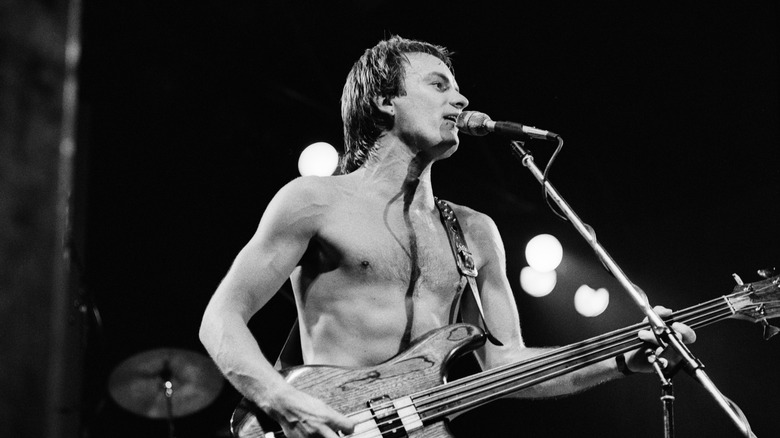
By 1979, when the ubiquitous The Who turned its 1973 concept double album "Quadrophenia" into a film, the group was willing to cast actors who were not part of the band. That said, they weren't done casting rock stars, and so Sting came in for an important secondary part — that of the bad-boy role model for the main character. "Quadrophenia," set in 1964, follows a young British dude named Jimmy, who's part of the Mod subculture. Jimmy thinks his job at the post office and small city in which he lives are boring, so he gets in fights and takes amphetamines. (The sentiment is relatable, even if the coping mechanisms seem extreme.)
Sting plays Ace Face, a designated cool dude who rides around on a Vespa and heavily implies that he has the money to back up his wild ways and contempt for authority. Sting, whose star was rising and who would grow only more successful in the years immediately following "Quadrophenia," is perfectly cast: Sensually unpolished, with a smirk that melted hearts as it enraged "the Man."
Performance, starring Mick Jagger
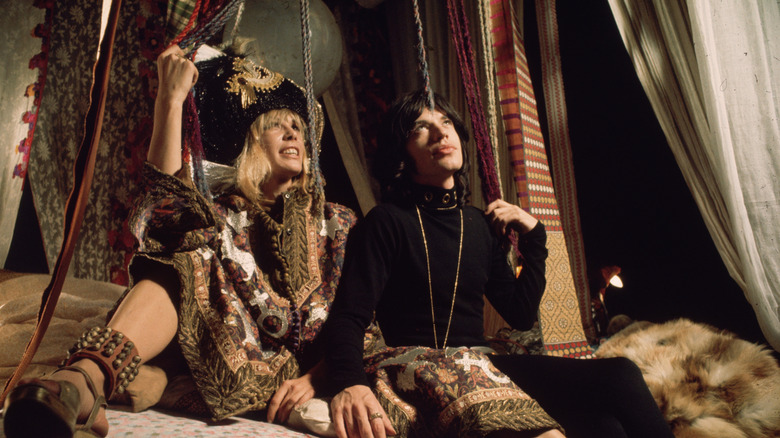
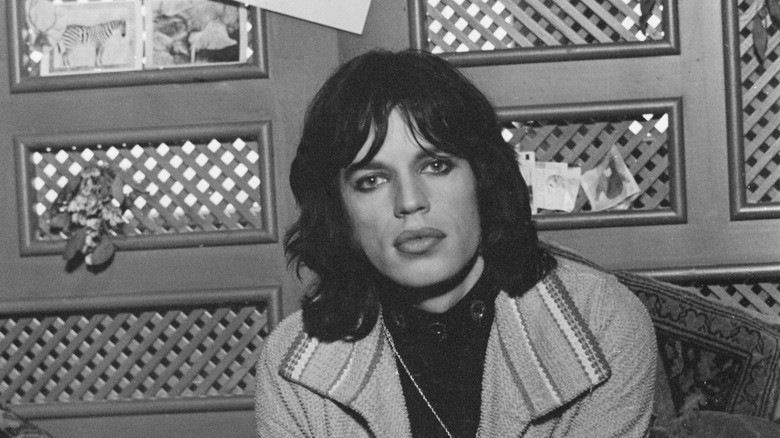
Keep your Oscars, your BAFTAs, because "Performance," featuring a young Mick Jagger in his first film role, achieved an even greater triumph than these awards. Allegedly, the graphic and transgressive film about organized crime and taboo intimate encounters caused a woman to vomit at a preview screening. Jagger, then still in his 20s, plays a "fading" rock star holed up in a domestic threesome with two women. It is to this love nest that a hitman on the run retreats to hide.
It's not a light watch, and the film's reputation became even more lurid because of rumors that the love scenes were real. Allegedly, Jagger's on-screen interaction with bandmate Keith Richards' paramour Anita Pallenberg had worsened Richards' issues with addiction and dialed up intra-Stones tensions. Jagger has refused to deny these rumors. Whether that's a soft confession or a playful enjoyment of the film's notoriety is up for debate.