

5 No. 1 Hits That Prove 1993 Was The Decade's Best Year For Love Songs
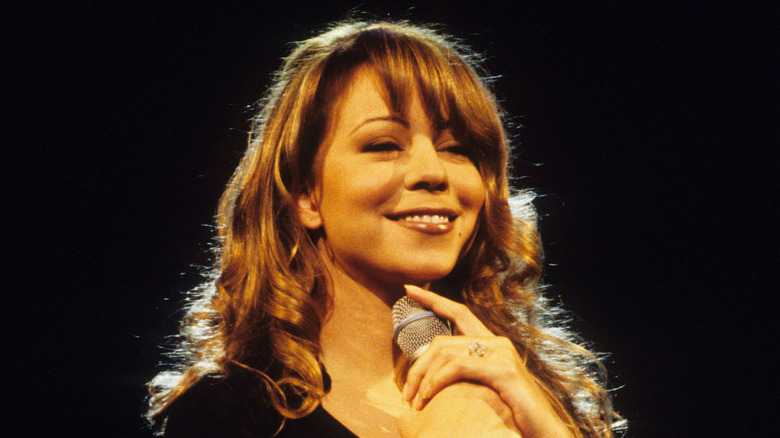
More than any other year in the '90s, 1993 was the era of the blockbuster No. 1 love song. Not only were the romantic tunes impressive achievements for the artists who released them, but they were also extended chart-toppers that blocked other songs from reaching the pinnacle of success — and they came one after the other, from January right through to December. Some of them even got a running start in December 1992 and just kept locking it in through the spring of 1993. No other year in that decade even came close to the multi-week peak positioning of 1993's best-performing love songs.
Every one of the sterling hits took up residence at the top of the Billboard Hot 100 and stayed there for weeks on end. It was more than enough evidence that listeners and record buyers were in the mood for love. Dramatic ballads, bouncy pop finger-snappers, and even a little island groove — the diverse love songs of 1993 gave the year a slate of tracks unrivaled in the entire decade. With such a stellar set of hits about romance and its various facets, it's no surprise they're among the classic love songs we'd trade the world to hear again for the first time.
I Will Always Love You — Whitney Houston
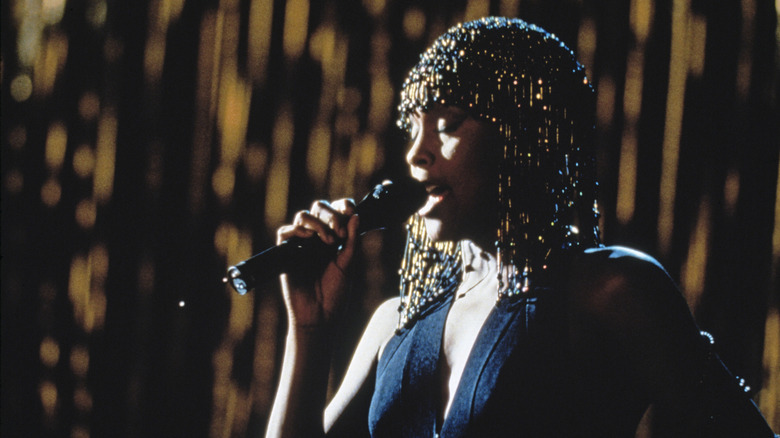
Whitney Houston hit an all-time career high when she released "I Will Always Love You" as a single from the soundtrack of "The Bodyguard," the blockbuster film that marked her acting debut in 1992. Her songs and her singular voice had made her an '80s icon, but this new release took her to the ultimate peak of her pop stardom. The tune wasn't even close to being new — Dolly Parton had written and released the song on her "Jolene" album in 1974 and made it a hit with her audience. When "Bodyguard" star and producer Kevin Costner chose the song for the soundtrack, he recommended the a cappella intro, which gives this classic love tune a palpable fragility that makes those first phrases unforgettable.
By reinventing a country ballad as a soaring piece of pop artistry, Houston and her team crafted what became the best-selling single ever for a female artist. It spent a record-setting 14 weeks at No. 1 that started in November 1992 and ran into the spring of 1993 and also won Grammys for best female pop vocal performance and record of the year.
That's the Way Love Goes — Janet Jackson
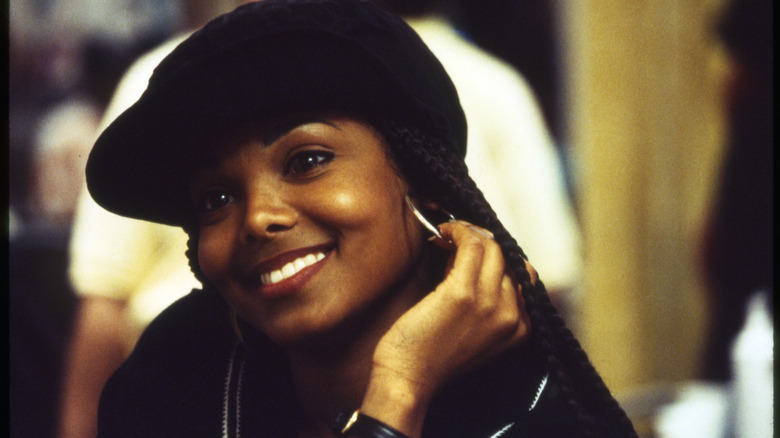
Little sister Janet Jackson kept giving big brother Michael a run for his chart-topping money with "That's the Way Love Goes." The softly sung shuffle smoothed the edges of Jackson's muscular sound from her previous Grammy-winning release, "Rhythm Nation: 1814." This time, her soothing vocals gave a love song a lilting romantic vibe, steering the artist into distinctly grown-up territory.
In the gentle yet direct verses, Jackson tells her sweetheart how their evening is going to unfold. It's sensual in a way that her earlier work hadn't been and introduced a more grown-up Janet to a world that knew her as the youngest Jackson. She'd dropped the militant fashion choices in favor of an earthier image, one that aligned perfectly with her new sound.
Audiences ate it up and sent "That's the Way Love Goes" to No. 1 on Billboard's Hot 100 for a solid eight-week span. The album it came from, "janet.," ultimately pushed six of its tracks into the top 10, including another No. 1, "Again." But it didn't repeat its predecessor's remarkable run.
Can't Help Falling in Love — UB40
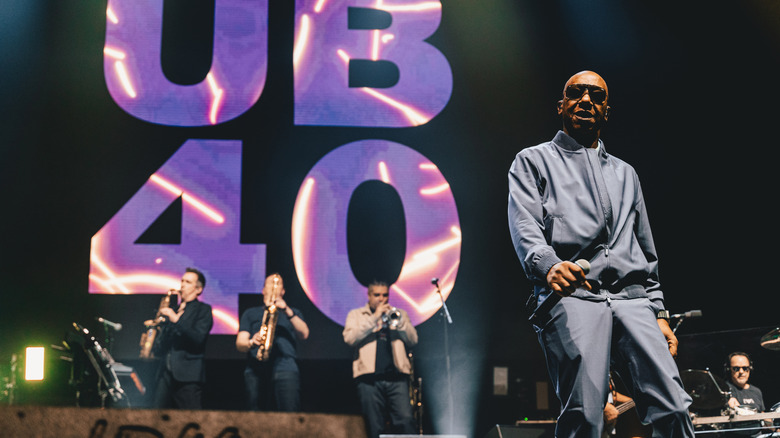
The fact about British reggae band UB40 is that its island-tinged single, "(I Can't Help) Falling in Love with You," was only the latest in a line of well-received remakes from the band. UB40 had already hit the top of the charts with a cover of Neil Diamond's "Red, Red Wine" back in 1988. The group's versions of Sonny and Cher's "I Got You Babe" and Smokey Robinson's "The Way You Do the Things You Do" had also made the charts. This time, they gave the 1961 Elvis classic a bit of the steel drum treatment and came up with an update that added a second No. 1 hit to the band's resume.
There's proof here that a truly romantic love song will ring true in any era and any genre. Even with a bouncier rhythm and less syrupy arrangement, "(I Can't Help) Falling in Love with You" retained its considerable charms and undoubtedly tapped into a nostalgic vein. It was featured on the soundtrack for the Sharon Stone film "Sliver," which likely gave it a bit of a bump, and vice versa. The movie's music became a gold-selling record.
UB40 dominated peak position for seven weeks, an ongoing victory that added to the 1993 chart monopolization by top-performing love songs. It also helped the band's album "Promises and Lies," which also featured the song, reach platinum status in the U.S. after selling 1 million copies — not too shabby for a tune originally released more than 30 years earlier.
Dreamlover — Mariah Carey
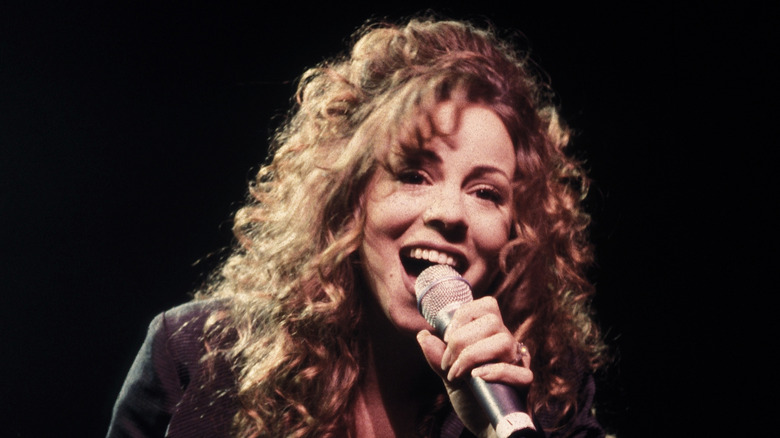
In 1993, With Mariah Carey was riding high on an ascent that seemed unending. When the single "Dreamlover" was released that year, the smash felt like the apex her accomplishments from the previous years had been leading up to. It became one of her record-setting 19 No. 1 hits, — the most ever for a female artist — and held onto the top spot for a mind-blowing eight weeks.
"Dreamlover" cleverly used a sample taken from "Blind Alley" by the Emotions, which gave Carey a lush, laidback vibe to sing over. Her boyfriend wish list lyrics explore exactly what she's looking for in a sweetheart, almost like a '90s version of "Mr. Sandman," but with more depth. Carey's sunshine voice floats over the lyrics — the singer was in her prime here, even reaching that effortless whistle tone at the song's final vamp. Put simply, it was the total Mariah Carey package. This single shifted Carey's sound into a clearer R&B and hip hop direction and gave 1993 a late-summer bop to bliss out to. The year was even a banner moment for songs about imaginary love, affirming that Carey could turn essentially any subject into musical gold.
I Would Do Anything for Love (But I Won't do That) — Meat Loaf
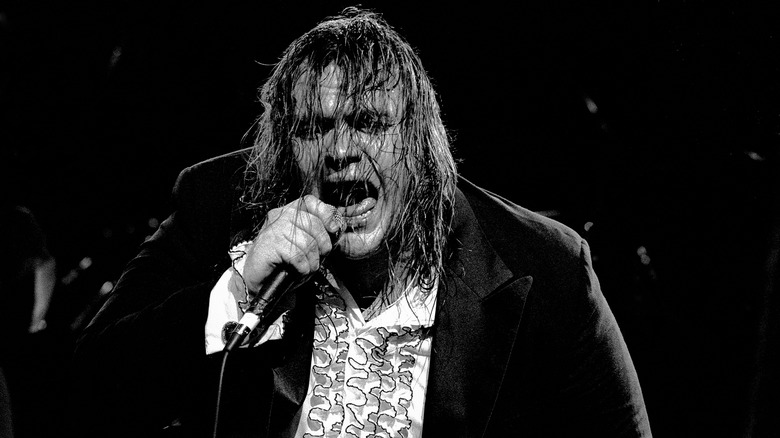
Swooping in for an out-of-left-field comeback, Meat Loaf revved up his career in a whole new decade by dropping "I Would Do Anything for Love (But I Won't do That)." The wordily titled Jim Steinman rocker brought back the theatrical showmanship of the duo's "Bat Out of Hell" album from 1977. It reignited the thrilling power ballad energy Steinman had tapped into in the mid-'80s artists like Bonnie Tyler and Air Supply. Appropriately enough, the song came from "Bat Out of Hell 2: Back Into Hell," a sequel album that aimed to capture the energy of the original, but with a '90s sheen.
All the elements that made Meat Loaf's earlier songs a singular rock phenomenon were present and accounted for. There was plenty of power piano, abundant melodrama, and a back-and-forth conversation between Meat and his beloved. Instead of a randy teenager having a car-centric tryst, Meat played the part of a guy with standards, someone who'd only go so far for the one he loves. That's what a decade and a half of maturing will get you in the world of rock 'n' roll love songs.
Meat Loaf wrung an amazing seven weeks out of the No. 1 spot and gave the rocker his only chart-topper. And after Meat Loaf's heart-wrenching death in 2022, the song racked up over 3 million streams and jumped more than 1600% over the previous week's traffic.