

The Biggest No. 1 Hits Of 1970, Ranked
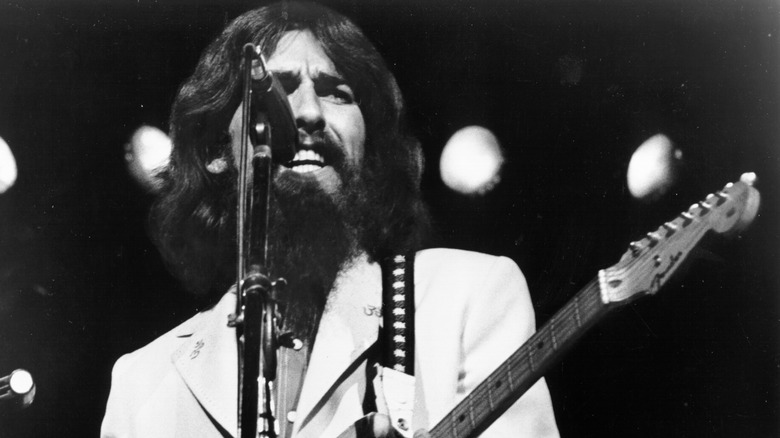
The first year of the 1970s was a monumental period for pop music, as evidenced by the sheer volume of classic and still enduring songs that went to No. 1 on the pop chart during those 12 months. The sounds of the '60s converged with and gave way to the newer movements and musical ideas that would define the decade to come. The songs that became the biggest hit in the United States for at least one week came from the realms of pop, rock, soul, folk, adult contemporary, and bubblegum, contributed by both bands and solo acts, Americans and Europeans, and well-known stars and sensations on the rise. As a result, 1970 was an especially competitive year on the charts: a total of 21 songs made it to No. 1 on Billboard's Hot 100.
The numerically greatest hits of 1970 are a substantial bunch, with only a few tunes by '70s musicians we completely forgot about. But some are better than others. Based on durability, influence, and the opinions of Grunge staff in terms of feel, importance, and overall quality, these are the 10 best No. 1 hits of 1970.
10. Cracklin' Rosie
Neil Diamond represented for the slightly older crowd that still liked Top 40 radio, and he hit No. 1 in 1970 with "Cracklin' Rosie," a jaunty bit of chamber pop-adjacent escapism about escapism. With cryptic lyrics about having fun on borrowed time with a lady, "Cracklin' Rosie" is really about using cheap wine in lieu of romance, making this a drinking song. Rock n' roll's history is full of those tunes, even if it's from the always brainy and slightly melancholy Diamond, who loads this song with too many hooks to count.
9. I Think I Love You
Credited to the fictional band from TV's "The Partridge Family," "I Think I Love You" was a vehicle for teen idol David Cassidy. Adhering to the standards of the bubblegum pop of the era, "I Think I Love You" is bouncy, sticky, and concerns new love. It transcends its sub-genre, however, and joins that canon of songs about people who, despite their better judgment, accidentally fell in love, but it sure feels great. Cassidy's acting chops help sell the song as he moves from confused to astonished to elated, helped along by heavy doses of harpsichord and percussion that give "I Think I Love You" a classical and quirky edge.
8. Mama Told Me (Not to Come)
Like a cross between a vocal group and a rock band, the quintessentially '70s Three Dog Night had three powerfully-piped lead singers who crooned, belted, and harmonized their way through tunes contributed by songwriters not in Three Dog Night. Their grooviest and hardest rocking hit was the 1970 No. 1 "Mama Told Me (Not to Come)." Composed and originally recorded by future star Randy Newman, the song is a playfully sinister slow builder in the hands of Three Dog Night. A creepy and creeping organ-like riff builds through some laid-back, mildly psychedelic, half-spoken verses until it reaches a thunderous and anthemic chorus.
7. The Tears of a Clown
The Motown sound was a big part of the '60s, and it took something of a victory lap in 1970 with "The Tears of a Clown," although it's actually a delightfully daring, experimental, and forward-thinking pop song. Co-written by Miracles leader Smokey Robinson and Stevie Wonder, "The Tears of a Clown" is an uptempo song that one can't really dance to, and it's loaded with borderline corny orchestral flourishes that sound comical, reflecting the title. But there's also a deep and persistent groove and the sweet, smooth, upper register crooning of Robinson, who sings dark, buried lyrics about hiding one's sadness with a smile.
6. Bridge Over Troubled Water
A gorgeous, soaring ballad with an orchestral backing is the ideal, peak, and final song of Simon and Garfunkel. The duo behind so many definitive 1960s folk-rock songs called it quits in 1970, but went out on top, ironically with this solemn and powerful ode to friendship and undying support. "Bridge Over Troubled Water" showcased the remarkably versatile and believably earnest voice of Art Garfunkel, and when he hits those triumphant notes at the end of the song, it's easy to get teary-eyed and understand how this was the No. 1 song of 1970.
5. I Want You Back
The Jackson 5 were the biggest new act of 1970, taking four songs to No. 1 that year. Its boisterous, soul-centered dance music was the sound of 1970 in a nutshell, particularly "I Want You Back." It's a showcase for pint-size Michael Jackson, singing about regret and lost romance in a believable way despite his lack of life experience, before he unleashes the chorus. There's pleading, there's each word carefully stated, and the vocal acrobatics. The other Jackson brothers got a chance to shine in "I Want You Back" as well — the Jackson 5 was all about making youthful pop expert-level and accessible to all ages.
4. The Love You Save
"The Love You Save" is overstuffed with so many of the ingredients for a perfect 1970s pop song, and they come around so quickly and in such rapid succession that it's overwhelming. Beginning with a shouted "Stop!" and a swirling cloud of guitars and percussion, the Jackson 5 quickly move on to the "woos" and low register "bum-bum" scatting. While the lyrics scorning the female subject for perceived promiscuity are patronizing, dated, and probably not appropriate for tween Michael Jackson to be singing, "The Love You Save" has the fingerprints of Motown Records all over it, and it knew how to make hit songs with melodies that would withstand the passage of time.
3. Let it Be
The breakup of the Beatles happened in 1970, the same year it scored its last great No. 1 hit, "Let It Be." (The final chart-topper, "The Long and Winding Road," is too schmaltzy.) Veering away from the guitar rock that made the Beatles huge, the transcendent, anthemic, and hymn-like "Let it Be" is propelled by Paul McCartney's piano, and it almost sounds like he's crying as he describes an encounter with his deceased mother. The late Mary McCartney and the Beatles' message, to think of when times get tough: Just let things stand, and it'll all work out.
2. Venus
Right when late '60s darlings the Monkees dispersed, in came Shocking Blue with a similar, folk-influenced but groovy pop-rock sound. The first band from the Netherlands to ever top the American pop chart, Shocking Blue did it with "Venus," a song as hypnotic as its lyrical subject, an enigmatic and captivating woman. The one-two punch of an ascending, repeating organ riff and a chaotic acoustic guitar riff proves that those instruments can be just as hard rocking as more traditional rock band instruments. Plus, the haunting, wandering vocals of lead singer Mariska Veres make "Venus" a permanent earworm.
1. My Sweet Lord
"My Sweet Lord" is a '70s song that changed the course of music because of its accidental plagiarization of a melody from the 1963 Chiffons hit "He's So Fine," but also as the first solo No. 1 by a former Beatle. After introducing his new era with some of his distinctive, ringing, singing slide guitar riffs, Harrison presents a multi-denominational prayer and something between a meditation and a mantra set to a chugging acoustic guitar. Harrison then openly clamors to understand the creator of the universe in this ambitious, beautiful, and pleasantly haunting song. It's unlike anything that the Beatles, or anyone else in the pop world of 1970, was even attempting.