

The Most Unexpected Career Moves In Music History
At times, the music business can come across as too calculated and curated, with performers sliding along well-worn career tracks according to the algorithmic preferences of executives. Other times, a musician does something so (metaphorically) off-beat that, even if it's objectively a "bad idea," fans sit up and take notice. Musicians get bored, have secondary interests, suffer midlife crises, and hear the whispers of mischievous demons like anyone else, and sometimes that leads them to make wildly unexpected career moves.
Some of these moves are heartwarming, like Queen's Brian May offering injured hedgehogs sanctuary on his estate. Some of these moves are (literally) gutsy, like a young Lady Gaga strolling onto a stage to accept an award wearing a dress made of meat. Sometimes they reflect personal growth, like Nina Hagen's gospel albums, or colossal obliviousness, like Gwen Stefani's "imaginary" claque of Japanese followers. We've collected eleven of our favorite unexpected resume line items from popular musicians below.
Brian May became an astrophysicist and hedgehog conservationist

Brian May, guitarist of Queen, is also an accomplished astrophysicist. Technically, it's more accurate to say that the astrophysicist Brian May found luck with his rock band Queen. After all, he was a graduate student in physics when Queen started to make it big, returning much later to hand in his dissertation and complete his doctorate in 2007. May's dissertation studied zodiacal dust, the diffuse mass of small dust grains that suffuses the solar system and creates the phenomenon of the "false dawn" through reflected sunlight. Now he's more interested in asteroids, having worked on the international team that successfully sent a lander to take samples of the asteroid Bennu. (And the orbiting bodies that surround May during his special-effects-laden guitar solos with Queen? They're projections of real asteroids.)
May also has interests closer to Earth. On his property south of London, May operates Amazing Grace, a wildlife sanctuary dedicated to rehabilitating injured hedgehogs. Small and nearsighted, hedgehogs are often injured in interactions with people or the hazards of the human-built world. If these injured hedgehogs are lucky enough to be sent May's way, they're given veterinary care and released into "Hedgehog Heaven," a sort of halfway house where they can recover free of predators and other dangers before being sent back into the wild. Once back in their habitat, they presumably have trouble convincing the other hedgehogs that they went to live with Brian May for a few weeks.
Prince's name change
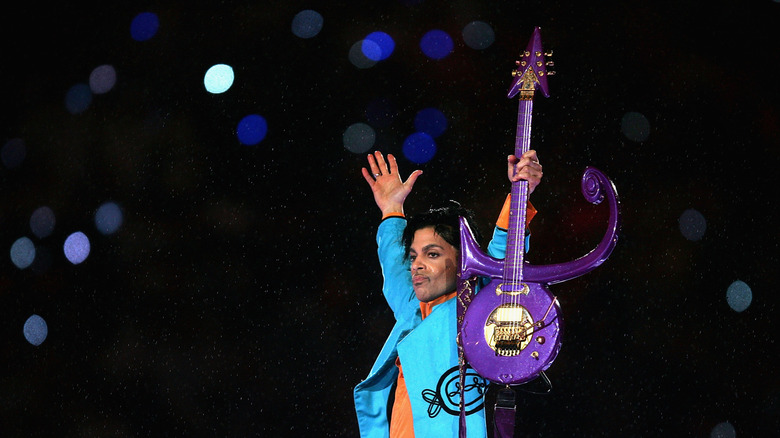
Prince, the tiny, tragic, beautiful, energetic performer, defied genre and gender throughout his career, so perhaps it was inevitable that he would eventually move beyond the English language. In 1993, Prince renamed himself, announcing that he would now be designated by the "love symbol." The emblem, referencing the well-known alchemical symbols for Mars and Venus that had come to be associated with masculinity and femininity, respectively, was unpronounceable (at least by us mere non-Prince mortals). Flummoxed announcers and DJs compromised by dubbing him "the artist formerly known as Prince." This phrasing would itself become something of a snowclone, with "the 'blank' formerly known as 'blank'" becoming a phrase as rhythmically recognizable as "Now I lay me down to sleep."
People made fun of Prince for changing his name to ... something that was barely a name, but he had some very understandable reasons for the switch: He hated his boss. Locked into contractual obligations with Warner Brothers since 1977, Prince had been cranking out music that execs sat on, tutting at him that they wouldn't release all the material he had given them to avoid saturating the market. This annoyed Prince, as you might imagine, and he came to associate his name (and Warner's control over it) with the contract conditions he was so unhappy with. Plus, he knew changing his moniker would annoy the suits. When the contract lapsed in 2000 and Prince was again a free agent, he was Prince again.
Pete Townshend, acquisitions editor

If you asked a thousand people if they'd rather be a rock star or have a desk job, most of them, if they were being honest, would opt for the desk job. They might feel like they should at least want to be a rock star, but the life of a touring musician sounds exhausting, especially if you're old enough to have a least favorite joint. But The Who's Pete Townshend managed to fulfill both dreams: Those of worldwide fame and of sitting in an office chair for hours at a time. For a few years, the star worked as an editor at the British publisher Faber & Faber. (Though, since he was already rich and famous, he only went in two days a week.)
Admittedly, it's not a huge surprise that Townshend, already a songwriter, would be interested in the written and published word. Even before he worked at Faber & Faber, he had set up his own small press. Over the past few decades, he's published various books of short fiction and poetry, in addition, of course, to many songs for The Who. But Townshend's work for Faber & Faber was specifically as an acquisitions editor who would determine which books were picked up by the imprint. This implies that someone had a manuscript turned down because Pete Townshend, the rock star with a day job in an office, thought their story was unrealistic.
Jeff Baxter taught himself missile defense

Never fear, America: While you go about your daily life, Skunk Baxter is keeping you safe from screaming death from above. The Steely Dan and Doobie Brothers alum (and his wild facial hair, which deserves its own credit line) has always been involved in the tech that underpins music recording. And as is often the case, it turned out that many of the basic concepts and functionalities had initially been developed for military use (think efficient data storage and transmission).
Baxter talked about this interest to one of his neighbors, a retired military engineer, who gifted him a subscription to a weekly aviation magazine in the very different media landscape of the '80s. The musician became hooked and quickly taught himself enough about aviation and, specifically, missile defense that he wrote a short paper on the topic and handed it off to a sitting congressman. From there, Baxter began to work for the U.S. as a defense consultant and congressional adviser. His self-taught field knowledge combined with his musician's flair for unorthodox use cases of technology allowed him to suss out and counteract novel threats. And he still has the mustache.
Nina Hagen went gospel

Blessed with a four-octave vocal range and an inherent contempt for authority, East German punk goddess Nina Hagen has an unblemished reputation for iconoclasm. After the East German state denied her attempt to become an actress, she spent some time in London immersing herself in punk and ska before returning to Germany (the fun side of the Berlin Wall, this time) to shock audiences with both her sex-and-death-obsessed music and her offstage antics. (She spoke so frankly about sex on an Austrian chat show that the host got fired.) As time went by, Hagen refused to mellow, attacking fur shows, protesting injustice, living around the world, cycling through relationships as they suited her, and naming her daughter after a UFO sighting. And then she went gospel.
For a person whose entire public life had been outside the norm, religious music was the only rebellious path left. In 2010, she released "Personal Jesus," an album of mostly spiritual songs that keeps a classic Hagen flair: "Just a Little Talk with Jesus" shares space with Woody Guthrie's "All You Fascists Bound to Lose." Hagen's dip into Christian music was apparently a connection to genuine spiritual development, as the singer had been baptized in 2009. In 2026, she released another gospel album, "Highway to Heaven," citing the Holy Spirit as a collaborator and noting the historical connections between gospel and rock music. Amen.
Gwen Stefani's imaginary friends

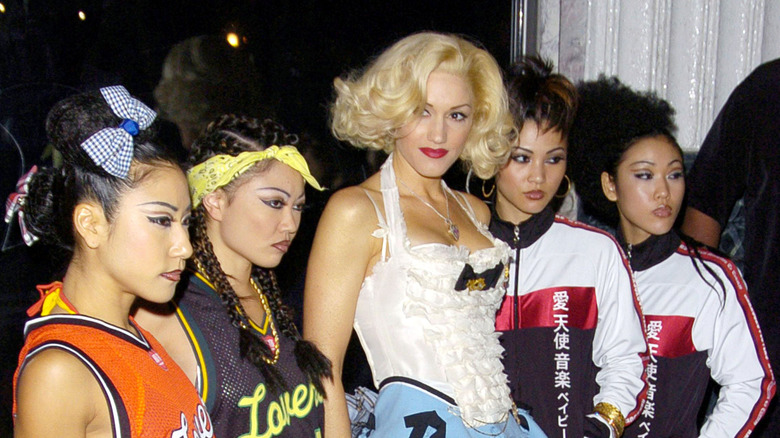
By 2005, Gwen Stefani had made a handful of gutsy career moves that had paid off handsomely. She had replaced John Spence as lead singer of No Doubt after his death, giving the world the immortal "Tragic Kingdom," and she had gone on hiatus from No Doubt in order to pursue a successful solo career. These triumphs may have left her trusting in her own instincts too much. In 2005, she recruited a quartet of Japanese women to follow her around as a sort of traveling chorus/hype crew/set of flesh-and-blood accessories. Maya Chino, Jennifer Kita, Rino Nakasone Razalan, and Mayuko Kitayama were respectively renamed Love, Angel, Music, and Baby (after Stefani's own album) and referred to collectively as the Harajuku Girls in homage to the Tokyo epicenter of Japanese street fashion. Stefani referred to them as "figments of her imagination," which is a bold move when we could all see them.
Stefani's tone-deaf approach to having an entourage left her open to accusations of cultural appropriation and racism. Sure, the Harajuku Girls were, by all appearance, free to run screaming away from Stefani as soon as the ick factor overwhelmed whatever they were paid. But it was still creepy for a rich white lady to be running around announcing that's she'd imagined some Japanese women who followed her around. With the Harajuku Girls, Stefani proved that even the most successful performer needs someone in the room willing to tell her she's making an ass of herself.
Garth Brooks did rock star drag
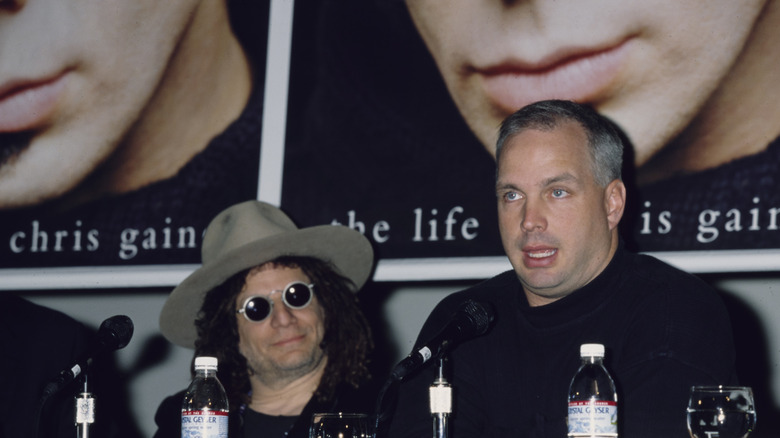
Apparently, Garth Brooks wanted to be a rock star. Many people have, at one point or another! But he was already famous for being, y'know, Garth Brooks. Most people in his position would have either released a rock album under his own name or accepted that country stardom was really, really close to being a rock star and declared victory. But our boy Brooks was willing to redefine the debate. He grew out a soul patch, slapped on some sad-boy bangs, and gave us an alter ego, Chris Gaines, who then released an album, complete with fictional liner notes referencing his make-believe career.
The tragedy of Chris Gaines, aside from the soul patch, is that this could have been a cool idea. No one believed that Gaines was a real dude. Garth Brooks in mascara is still demonstrably Garth Brooks. But why wasn't it fun? Why did the whole thing, up to and including Brooks hosting an episode of "Saturday Night Live" where he also played Gaines as the music guest, feel like homework? And why did "The Life of Chris Gaines" still sell 2 million copies? Ultimately, to pull off something this weird, a performer needs a sense of fun and gentle self-mockery that Brooks either didn't have or didn't succeed in bringing to the project. Chris Gaines started out as a punchline and stayed that way.
Pat Boone pretended to release a metal/hard rock album
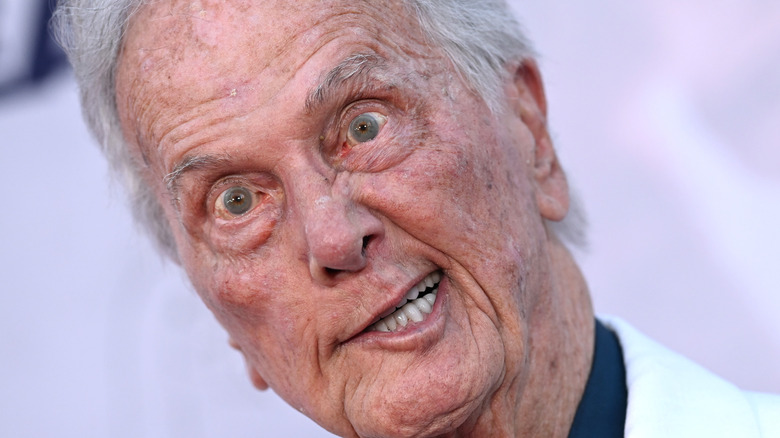
In the 1950s, Pat Boone was the crooner who was there for you if Elvis made you uncomfortable. If you didn't like gyrating, if that pouty little sneer made you nervous, you could have a safe, no-going-past-first-base crush on Pat Boone. When that stopped selling records sometime in the '60s, Boone pivoted toward gospel, cementing the transition with radio and TV shows on Christian channels. But even squeaky-clean Boone felt the pull of, if not the dark side, at least a marginally wild side. So in 1997 he released an album of softened heavy metal covers called "In a Metal Mood: No More Mr. Nice Guy."
Boone and his band had been looking for something fresh to do when they decided to go "hard" and cover some metal songs after first carefully vetting them to make sure they wouldn't accidentally sing about drugs or lovemaking. After assuring himself that the devil and marijuana had been successfully excluded, Boone recorded an album of covers revamped to suit his voice, with backing from presumably bemused luminaries like Ronnie James Dio. Boone slapped on a leather vest and some fake tattoos to launch the album on a TV appearance alongside Alice Cooper, causing Trinity Broadcasting Network to axe Boone's show. The channel brought it back a month later — as you might expect, the execs missed the joke, but Boone's fans didn't.
Carly Simon sold a secret

Warren Beatty, as allergic to humility as he is to irony, thinks he inspired one of the greatest kiss-off songs of all time. But Carly Simon, writer and singer of the glorious "You're So Vain," has never wholly confirmed whether or not it really was Beatty who swanned into a room in an apricot scarf and made eyes at himself in a mirror. Simon's other exes and associates include Mick Jagger, Cat Stevens, David Bowie, and James Taylor, any of whom one might imagine annoying the young Simon. She's coyly hinted at the identity of her vain inspiration but has never unambiguously confirmed his identity except once, privately.
In 2003, Simon offered deep-pocketed music fans the gossipy tidbit of a lifetime. For charity, she would auction off a private revelation of the song's subject, which must be kept secret except for a wee hint. Simon's friend Dick Ebersole won and told fans the notorious man had an "E" in his name, which is effectively no hint at all. Parsing Simon's various (and not especially clear) statements on the topic, it seems that there may be three inspirations for the so-vain man, one for each verse. Simon seemed to confirm that Beatty was one of the Tedious Three, but confirmation of the others' identities hasn't been forthcoming.
Lady Gaga's meat dress

In 2010, Lady Gaga was about to really become Lady Gaga. Her first album had won multiple Grammy and Brit Awards, and her second was flying off the shelves. She was just 24 and seemed to be poised for colossal stardom. At this early, critical stage in her career, she might understandably have proceeded cautiously and kept some of her most extreme artistic ideas under her hat until she had solidified her fame and fanbase... but that would have been out of character for the auteur. Instead, she changed into a dress made out of meat during the MTV Video Music Awards (one of the most startling musician fashion moments in history).
Gaga was already an outré dresser who'd shown up to a previous event spattered in stage blood. The meat dress, though, really pushed the definition of clothing. It became one of the most talked-about garments in the history of covering the body and had people asking: "Is meat fabric?" Gaga's creative team included an Australian ex-club kid who had also worn meat in a costume in her youth and a stylist from the beef capital, Argentina. Between them — and with some help from an open-minded butcher — Gaga and company were able to conceptualize and construct a beef dress. The meat itself was stitched to a corset, structuring the piece, and a small cut of meat worn as a hat and meat-covered shoes united the look. As much as audiences squirmed imagining the feeling of the dress, it accelerated Gaga's already-meteoric rise to living icon status.
Celine Dion won Eurovision — for Switzerland
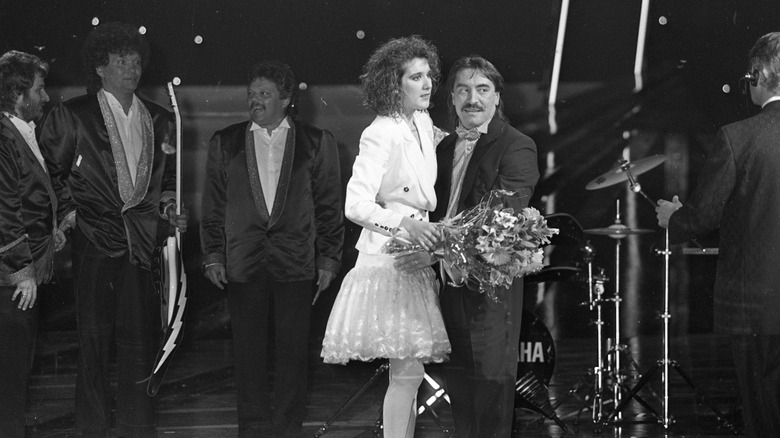
In 1988, a young Quebecois woman won an international singing contest, accelerating her explosion from "local favorite in French Canada" to the globally known and universally adored Celine Dion. One of Canada's biggest stars, her career really took off that magical night when she won ... Eurovision. For Switzerland.
Eurovision has famously convoluted rules that can vary from year to year and from country to country. But crucially, in 1988 Switzerland, it was enough that the song be written by Swiss nationals. They could send anyone they wished to sing it, and so producers settled on the best French-language voice they could find. That voice belonged to the then-obscure Dion, who found herself in Dublin singing "Ne Partez Pas Sans Moi," representing a country to which she had an extremely tenuous connection. Six points from Yugoslavia (remember them?) gave her a one-point edge over the United Kingdom, and Switzerland and Dion were the night's big winners.
Celine Dion has since become an icon, and so has her Eurovision-winning performance. In 2024, nonbinary Swiss artist Nemo performed in a costume that referenced Dion's blending of masculine and feminine styles. Nemo triumphed, bringing Switzerland its most recent win since Dion's.