

At 78, Bob Dylan Finally Nailed A No. 1 Billboard Hit With This Epic 17-Minute Song
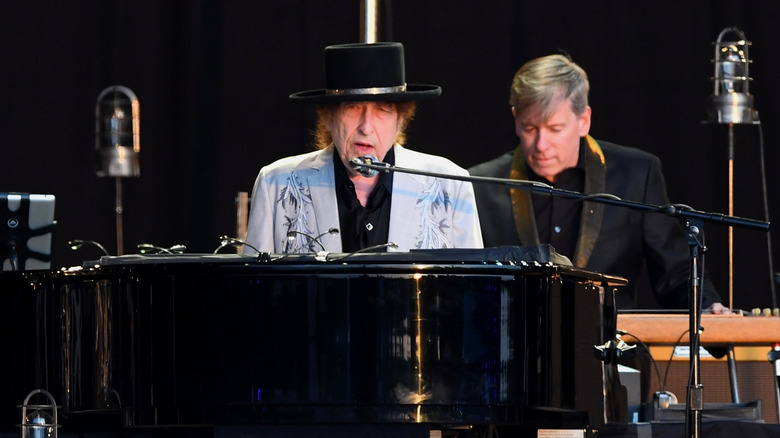
Nothing about the arrival of Bob Dylan's 2020 epic "Murder Most Foul" seemed likely. The track is just a couple of seconds shy of 17 minutes long, making it the longest song in the Nobel Laureate's extensive catalog. It was the first piece of new music from the iconic songwriter in eight years, with Dylan concentrating on recording cover versions of standards from the Great American Songbook after the release of his 2012 album "Tempest." And somehow, even though he's sold millions of records, he never had a No. 1 hit until this first-ever chart-topping single was achieved at the age of 78.
The surprise release climbed to No. 1 on Billboard's Rock Digital Song Sales chart, off the back of more than 10,000 downloads in its opening week. Strangely, despite enjoying critical acclaim and a devoted fanbase for most of his career, Dylan had never managed this feat with a single before. On the pop chart, he has hit No. 2 twice, with "Like a Rolling Stone" in 1965 and "Rainy Day Women #12 & 35" in 1966. While "Murder Most Foul" wasn't likely to make it onto the pop chart, this is still an incredible accomplishment considering how non-commercial the song is.
A late-career masterwork
"Murder Most Foul," the title of which is taken from Shakespeare's "Hamlet," has gone down well with Bob Dylan's fanbase, as well as music critics. Released in the early months of the COVID-19 pandemic, during which Dylan was forced to take a break from his so-called "Never Ending Tour," the song was accompanied by a press release saying the song had been recorded "a while back" (via Pop Matters), perhaps to distance the song from the pandemic itself, which, as the dominant subject in public discourse at the time, many fans may have ended up finding unintended parallels to.
Rather than the immediate present, "Murder Most Foul" dives into the past. Dylan has long been drawn to the pivotal events in American history for his subject matter, and "Murder Most Foul" revolves around the 1963 assassination of President John F. Kennedy, one of the defining events of the 1960s, the decade Dylan is most associated with. Over unnerving cello, piano, and percussion, Dylan dissects the repercussions of the murder, and mixes pop culture references with other horrifying historical events to show how America has persevered despite its bloody past.
The song is arguably Dylan at his allusive, poetic best, and was included as the final track of his acclaimed studio album, "Rough & Rowdy Ways." It has attracted a great deal of interest from Dylan scholars who are still trying to unravel it — a sure sign of a Dylan classic.