

Musicians Who Scored Their First No. 1 Hit After Turning 50
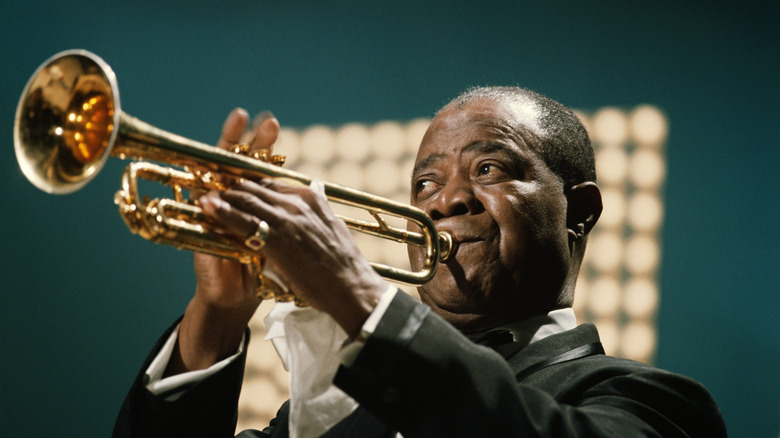
Whether it's the artists who make it or the audiences that consume it, topping the pop chart is a pursuit of the youthful and culturally hot — but not always, as proven by the musicians who hit No. 1 after lengthy careers and even after their 50th birthdays.
There are singers, bandleaders, and instrumentalists who had to wait literally decades for that milestone No. 1 pop hit. Such musicians may have sold a ton of records and taken many singles to the upper reaches of various other charts early or even years into their careers as radio-friendly superstars, but it took a special song to make them the exception to the rule and be a part of a very small club. These are the acts that went to No. 1 on the Hot 100, the all-encompassing pop chart established by music industry record-keeper Billboard Magazine in August 1958, for the first (and as it would come to pass, only) time — well after turning 50 years old.
Percy Faith
The 1960s are a time associated with explosive, progressive, youth-oriented musical styles, like the British Invasion, Motown, and psychedelic rock. And yet Billboard's third-most successful single of the entire decade was a sweeping and sentimental orchestral work from an old-fashioned bandleader recorded for a melodramatic movie with mediocre box office results. In November 1959, the soapy "A Summer Place" unspooled in American movie theaters. In February 1960, the instrumental "Theme from 'A Summer Place'" ascended to No. 1 on the Hot 100, a spot it occupied for nine weeks, helping it to recognition as the top song of the year.
Composed by Max Steiner, "Theme From 'A Summer Place'" was conducted by Percy Faith and credited to Percy Faith and His Orchestra. Faith was adept at soundtracks, having received a 1956 Academy Award nomination for his work on "Love Me or Leave Me" and releasing the best-selling single of 1953, "The Song from 'Moulin Rouge (Where is Your Heart)." That all led up to Faith's crowning achievement, a No. 1 single on the Hot 100. When Faith made that happen, he was 51 years old.
Lawrence Welk
"Calcutta" is the kind of sentimental '60s song that can instantly take Boomers back to childhood. As lightweight as it is jaunty, "Calcutta" begs for formal dancing with its chugging melody provided by a harpsichord and lyrics that consist solely of a ghostly choir crisply cooing nonsense. This was the kind of music that made Lawrence Welk an extremely popular entertainer for older generations in the mid-20th century, both before and after the youthful sounds of rock 'n' roll came to dominate the culture. After beginning as a Los Angeles local program, the music and dancing heavy "The Lawrence Welk Show" ran nationally from 1955 to 1982.
That weekly outlet provided enough exposure to help Welk consistently sell albums and chart some singles. In February 1961, the bandleader and musician took "Calcutta" to No. 1 on the Hot 100, where it stayed for two weeks. Just after the song began to fall back down the pop chart, Welk celebrated his 58th birthday.
David Rose
Composer and bandleader David Rose repeatedly made his mark on the entertainment industry. For one, he figured into the tragic life of Judy Garland with an ill-fated, significantly age-gapped marriage with the movie star. He's also responsible for a selection of brassy and vivacious instrumental music that's closely associated with old-fashioned burlesque performers who slowly and emphatically deliver a choreographed striptease. That highly recognizable composition is called "The Stripper," which topped the Billboard chart in 1962.
Rose created or directed the music for dozens of projects in a career that spanned from movie musicals in the 1930s to TV's "Highway to Heaven" in the 1980s. "The Stripper" originated as a quick burst of music for the 1958 TV presentation "Burlesque." He expanded it, MGM used it as the B-side of Rose's 1962 single "Ebb Tide," and after a Los Angeles DJ discovered it and played it frequently, "The Stripper" hit it big. In July 1962, the lyrics-free song, credited to David Rose and His Orchestra, spent one week at No. 1 on the Hot 100. Only Rose's second pop hit, it was his first and only chart-topper. At that point, Rose was already 52 years old.
Louis Armstrong
At the height of Beatlemania in 1964, the Beatles took three straight songs to No. 1 on the Hot 100. The Fab Four's 14-week total tenure at the top ended at the hands of an American music icon who was almost three times as old Beatles leader Paul McCartney. And Louis Armstrong did it with a jazzy and folksy cover of a Broadway show tune, the title song from the musical "Hello, Dolly."
Armstrong learned to play the cornet in reform school and studied under trumpet great Joe "King" Oliver to become one of the biggest and popularizing stars of jazz when it was a dominant genre of popular music in the 1920s and 1930s. Armstrong's fame grew with stage and movie appearances, and in addition to numerous classic jazz recordings, he used his distinctively deep and raspy voice when a horn wouldn't do. That's on display in "Hello, Dolly," which rose to No. 1 some 14 years after he first graced a pre-Hot 100 chart. When the delightful and jaunty "Hello, Dolly" peaked at No. 1 for a week in May 1964, Armstrong was a Hot 100-leading rookie at 62 years old.