

Bands That Lost Their Horn Players To Mega-Successful Artists
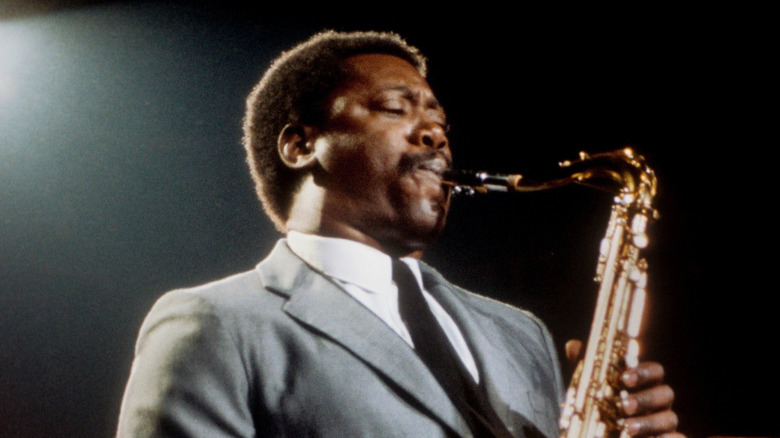
Being in a rock band is a cutthroat business — at any time, your up-and-coming, scarcely known group could lose its horn player to an act far more well-known that plays much bigger venues. Only so many musicians who specialize in a horn — those with expert skills on the trumpet, saxophone, or trombone — have ever traversed the mostly electric and percussive world of rock music. That means there's a relative scant number of them to go around.
With their services in high demand in such a seller's market, those players who can really blow and add a brassy blast to a band's sound are ripe for the poaching. If another major group, or one that's on a rapid trajectory to fame, needs a horn player who can keep up with its members, the best place to look for a skilled, talented, and seasoned option is in another act. Here are some bands that lost their horn-blowing instrumentalists to more popular musical artists.
Spring Heeled Jack
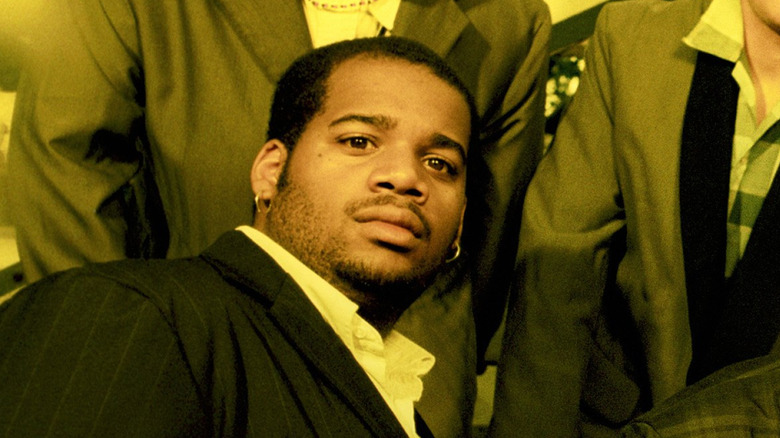
The one subset of rock that employs the most brass musicians is ska, as the modern blend of punk, reggae, and pop requires trumpets and trombones at a minimum. One of the most successful ska bands ever was Boston's The Mighty Mighty Bosstones, which sold 1 million copies of its 1997 album "Let's Face It" and 500,000 copies of the LP's breakout single, "The Impression That I Get" (though they're sadly still a significant '90s band you probably forgot about).
Trombone player Chris Rhodes worked his way up the ska scene. Starting out in a college band, he impressed the members of Spring Heeled Jack enough that they asked him to join in advance of making its first recordings. Seven years later, Spring Heeled Jack announced its end and played one last gig in New Haven, Connecticut. But by that time, Rhodes had prematurely exited the band after being offered a spot in The Mighty Mighty Bosstones. In May 2000, he performed with his new group on "The Late Show with David Letterman," and the same night, Spring Heeled Jack took the stage for a good-natured parody of the Bosstones' "Where'd You Go" called "Where's Chris Rhodes."
Dizzybeam
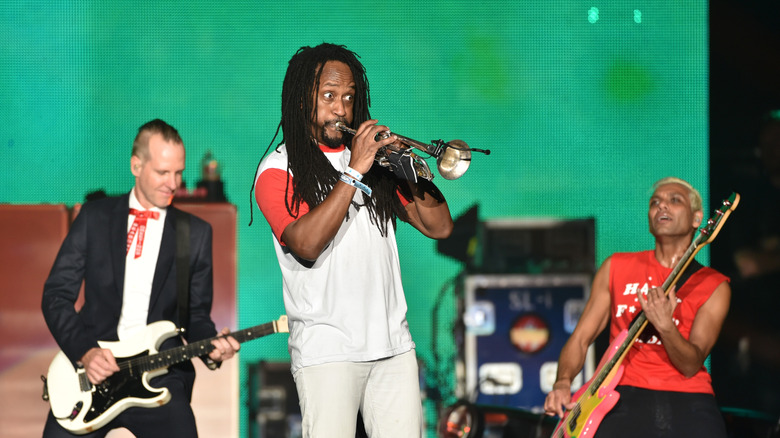
In the early 1990s, the California ska scene was fairly small and tight-knit. Many of the bands from Los Angeles and the Bay Area were on friendly terms and filled out the lineups of the same shows. One such group was the Berkeley-based Private Culture, featuring Stephen Bradley on trumpet. In 1991, Private Culture opened for the Los Angeles band No Doubt. A couple of years later, Bradley had moved on to another band, Dizzybeam, whose bass player, Kerry James, was friends with No Doubt's bass player, Tony Kanal. In the middle of a club tour of western U.S. cities, No Doubt was suddenly without its regular trumpet player, Phil Jordan, and Kanal asked James if he could approach Bradley.
"I don't think he [James] realized that he was getting ready to lose a band member," Bradley said on the History of LA Ska YouTube channel. "But nobody saw it coming." Bradley was open to the idea, so he started learning No Doubt's music on his own. He got along so well with the ska punkers at live shows that he became their permanent trumpet player, joining right before No Doubt went on to become one of the best-selling and most important rock bands of the 1990s.
Norman Seldin & the Joyful Noyze
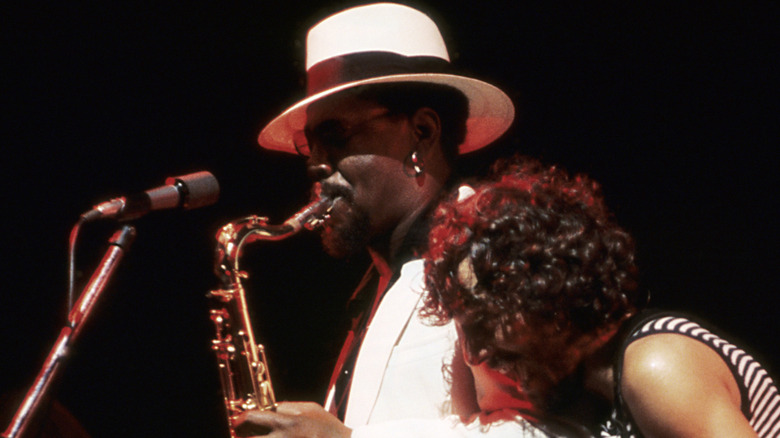
Of all the members of the E Street Band, Bruce Springsteen's long-serving backing group, saxophone virtuoso Clarence "The Big Man" Clemons was probably the best known. Before he connected with Springsteen, he recorded an album with the New Jersey band Norman Seldin & the Joyful Noyze. During a set break one evening in 1971, and upon the recommendation of a bandmate, Clemons went to a club where the Bruce Springsteen Band was performing. He asked if he could play, too, and he joined Springsteen on "Spirit in the Night." "Bruce and I looked at each other and didn't say anything, we just knew," Clemons told Mojo (via Land of Hopes and Dreams). "We knew we were the missing links in each other's lives."
During production on his first album, 1973's "Greetings from Asbury Park, N.J.," Springsteen summoned Clemons to play tenor sax on two songs, including "Spirit in the Night." Thereafter, when he put together a new band for a tour, Springsteen extended an offer to Clemons. The sax player left Norman Seldin & the Joyful Noyze in favor of Bruce Springsteen and the E Street Band, where he remained until his death in 2011.