

The Career Of Animals Frontman Eric Burdon Is As Old School Rock 'N' Roll As It Gets
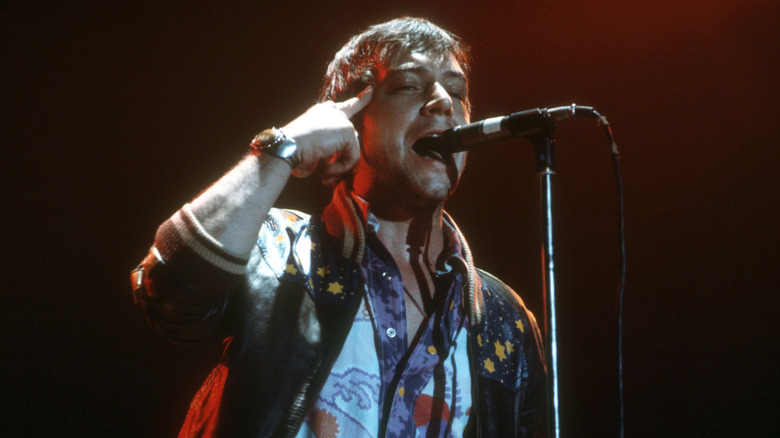
They probably don't make them like Eric Burdon anymore. Few rockers can look back on a life as storied and a career as varied and prolific. While he's probably most known as the Animals' singer, that was just the beginning. His journey through music took him from dingy jazz clubs in the north of England to the vanguard of psychedelic rock in the late '60s to the groundbreaking funk rock with War in the '70s, along with decades more entries on an illustrious rock resume. With highs that were extra high and lows that nearly buried him, Burdon's story is pure, uncut, old-school rock 'n' roll.
The path from working-class roots in Newcastle, England to London, Laurel Canyon, and beyond wasn't just lined with roses. On his trip, he lost close friends like Jimi Hendrix and Jim Morrison, got kicked out of a band at gun point, and ended up in handcuffs in Germany. Through it all, Burdon's music has continued to take root, find new listeners, and grow. "There's been triumph, some glory and fame and achievement," he recalled in his 2001 autobiography, "Don't Let Me Be Misunderstood," "and also times of true misery."
And yet, as of the time of this writing, Burdon continues unabated. He's one of music's great survivors and rock star chameleons who's jammed with just about everybody. It wasn't always a painting, and there were casualties, but Burdon's rock 'n' roll journey lit the world on fire.
Poverty, pubs, and the Newcastle streets
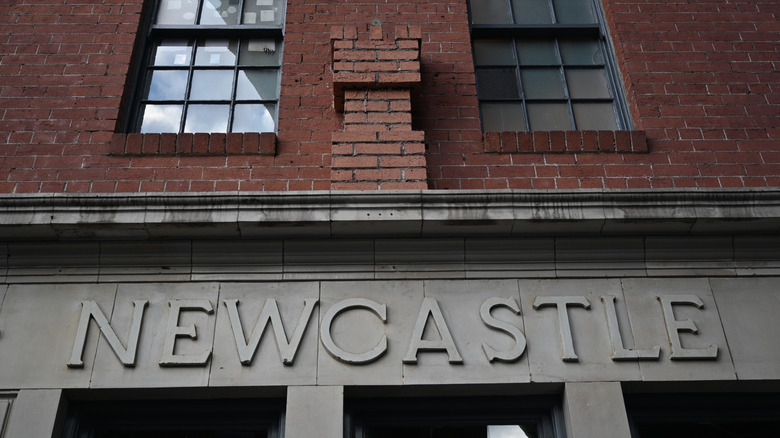
Like Ozzy Osbourne, Kurt Cobain, and so many other rockers, Eric Burdon grew up working class and had a tough upbringing. Born to an electrician and stay-at-home mother in 1941, the tragic real-life story of his childhood began in the blue-collar neighborhoods of Newcastle in Northern England. An early love of music helped get him through his time at a strict school. He got into the blues after seeing Louis Armstrong on the family's first TV set and collected chart-toppers to spin on his portable Dansette record player.
During his teenage years, he often spent his nights out and about in livelier and seedier parts of town. "I would go to the jazz and blues clubs around Newcastle and beg for a chance to sing," he told Forbes in 2023, and things clicked. "As soon as I grabbed the microphone, I knew the power of my own voice," he recalled. Burdon was just 17 when he joined a combo called the Pagan Jazzmen, and setting him apart then was what still sets him apart: His distinctive baritone voice and impassioned delivery, which owed everything to the African American rhythm and blues legends he admired, like John Lee Hooker, Ray Charles, Fats Domino, and Chuck Berry. "They taught me something about raw emotion, about pouring your heart out into every song, feeling it deep down in your soul and letting it flow like a river," he told Tidal in 2024.
A higher education in the blues
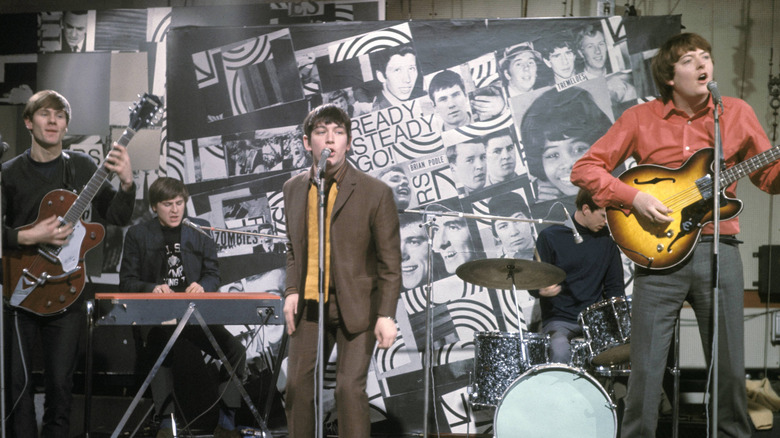
By the early '60s, Eric Burdon was pursuing an art degree at Newcastle Art College, though he clearly was more focused on the blues. His education came in the late hours: "Almost every night of the week at some club or pub, there was music going on," he recalled in "Don't Let Me Be Misunderstood." The "Pagan Jazzmen" became just "Pagans," as the group switched from jazz to rhythm and blues. In 1962, he met drummer John Steel, a fellow art student, who invited him to sing for the Alan Price Rhythm & Blues Combo. With organist and keyboardist Price, bassist Bryan "Chas" Chandler, and Hilton Valentine playing guitar, the original Animals lineup was set. The name, Burdon told Forbes, is a reference to "a guy named Animal Hogg, who was prominent member of our gang ... the squatters."
In addition to immersing himself in blues music and records, those years saw Burdon rub elbows with musical heroes. When the legendary John Lee Hooker came through Newcastle on his birthday, the Animals — starting to develop a buzz around town — jammed with him. "John Lee and I hit it off wonderfully," Burdon recalled in his memoir, "and we hooked up again in New York on the Animals' first American tour." It's telling that the original U.K. release of the band's self-titled debut opens with Burdon's "Story of Bo Diddley," a fictionalized account of the band meeting the legendary blues and rock 'n' roll musician. Right from the get-go, he tipped his hat to those who taught him.
The Animals' rising sun
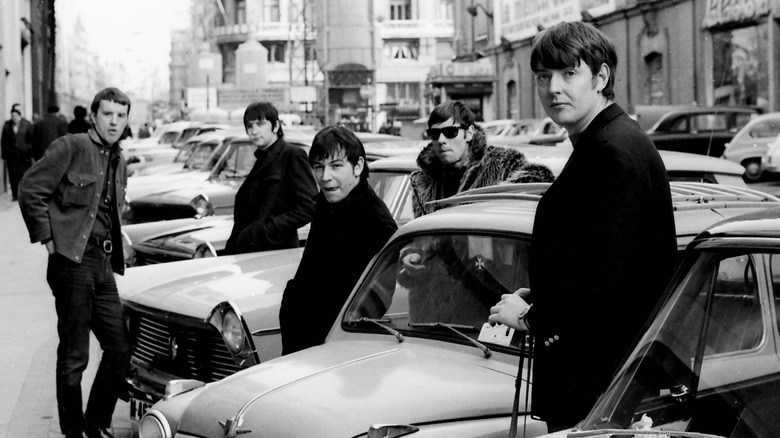
Though the Animals was a general of the "British Invasion" along with the Beatles and Rolling Stones, Eric Burdon never liked the term. "There was no plot to storm America," he quipped to Forbes, dismissing it as "a catchphrase that Walter Cronkite ... coined to put us all in one basket." Regardless, conquering Newcastle's clubs and pubs was never going to be the Animals' horizon. By early 1964, the band had relocated to London and found itself immediately immersed in the thriving British rhythm and blues scene.
While a regular act at the Crawdaddy Club — the stomping grounds of the Rolling Stones and the Yardbirds — the band caught the ear of producer and manager Mickie Most. He scored them a record deal with EMI's Columbia Records, breaking things wide open. By September 1964, the Animals' second single, "House of the Rising Sun," took the No. 1 slot from the Supremes' "Where Did Our Love Go?" on the Billboard Hot 100. Recorded in one take between dates of a tour opening for Chuck Berry, the traditional standard took new life, driven by Burdon's impassioned, unforgettable singing.
With the band's swift rise came another rock career staple: A run of relentless touring, recording, and promotional appearances. The pressure and pace weighed on Burdon. "It was fun for a while, but it soon became really tiring," he told Louder. "As soon as you got into a band like that you were a prisoner." For the singer, this wouldn't be the last time that the reality of a life and career in rock 'n' roll reared its ugly head.
The end of the road and the start of the trip
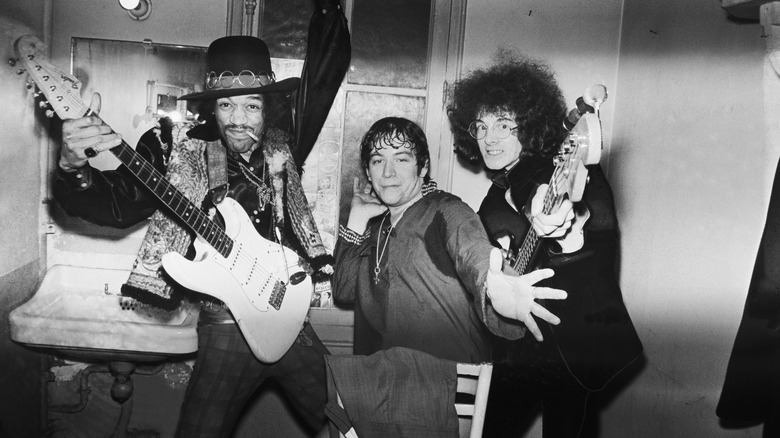
An exhausting schedule — three albums and five tours in just 15 months — wasn't the only reason the Animals fell apart. Adding to the tension was the fact that Alan Price was the only member earning royalties from "House of the Rising Sun." Eventually, creative and personal differences caused things to snap. "Alan didn't bother to sit down and work with me and then he left the band soon after that," Eric Burdon told Louder. "I won't mention anything else — it's too painful." Following the keyboardist's exit in 1965, drummer John Steel left soon after, and bassist Chas Chandler moved on to join Jimi Hendrix's management team.
Burdon was always tuned into the counterculture. In London, he was part of the Swinging '60s cultural movement and attended parties hosted by next-door neighbor and close friend, Beatles manager Brian Epstein. By late 1966, he could sense a shift, recalling to Louder, "I realized that there was a revolution going on in America, especially on the West Coast." He settled into Laurel Canyon in the Hollywood Hills, with Frank Zappa next door and David Crosby down the street. And of course, he went up to the Bay to rap with Janis Joplin and the Grateful Dead.
Inspired by psychedelic rock, idealism, and political foment of the period, he formed a new band, Eric Burdon and the Animals. Songs like "San Franciscan Nights," "Monterey," and "Sky Pilot" showcase this shift in sound and subject matter. "That's when I first started documenting the times in many of my songs," he wrote in "Don't Let Me Be Misunderstood."
The Eggman is everywhere
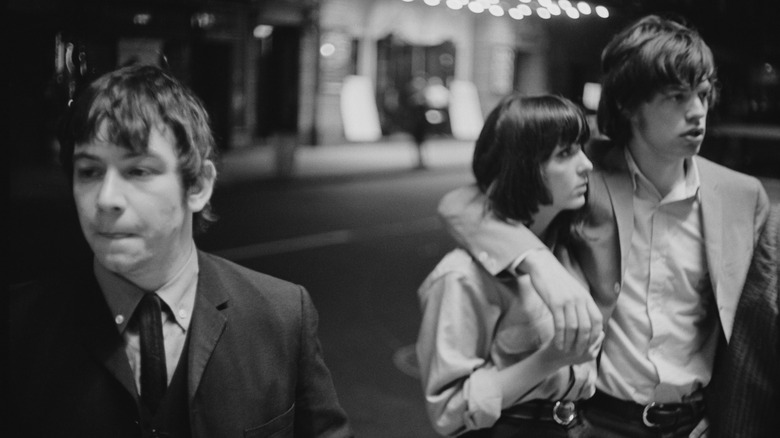
Eric Burdon was friendly with all the Beatles, but he became especially close with John Lennon. The two formed a friendship built on mutual admiration and laddish behavior. "It may be one of my more dubious distinctions," he wrote in "Don't Let Me Be Misunderstood," "but I was the Eggman" referenced in "I Am a Walrus." The origin of the nickname isn't family friendly, so we'll spare you the details, but the lines "I am the Eggman / They are the egg men" add to the song's comedic, psychedelic charm. Suffice it to say that Burdon's fingerprints seem to be everywhere in '60s rock.
That's likely because of his living arrangement. Swinging between London and Laurel Canyon in the late '60s and early '70s, Eric Burdon was a nexus point: A node connecting the California and English rock scenes. Even after moving away, he kept a flat in England above the Indica art gallery, where Lennon met Yoko Ono, and down the street from close friend Jimi Hendrix. He introduced the Beatles to the music of his California neighbor Frank Zappa, and when he played "I Am a Walrus"— psychedelic rock going mainstream — at the Grateful Dead's house in the Haight, he blew the group away.
New directions lead to new heights and a pointed gun
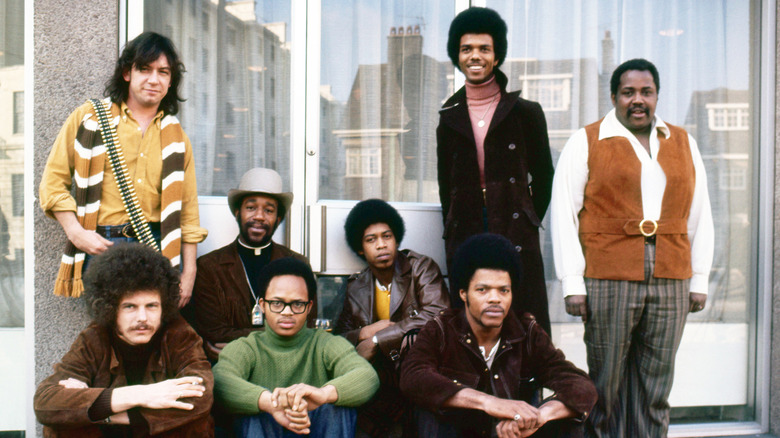
From the late '60s revolution came evolution for Eric Burdon. Having gone psychedelic with Eric Burdon and the Animals (he dissolved the group in 1968), his next step was funk and R&B. After seeing Nightshift (which included drummer Harold Brown, keyboardist Lonnie Jordan, and guitarist Howard Scott) backup NFL player and singer Deacon Jones in a small club in LA, he found the sound he wanted. He recruited the Long Beach-based band on the spot, and his manager Steve Gold convinced them to take the name "War."
By late 1969, Eric Burdon and War were touring and recording, and the next year saw them release two groundbreaking funk rock albums: "The Black Man's Burdon" and "Eric Burdon Declares 'War.'" Off the latter, the single "Spill the Wine" took funky, Latin jazz-inflected grooves to No. 3 on the Billboard Hot 100 chart. "We had two years of having a lot of fun and playing at great venues," Burdon recalled in Louder.
But as they had before, the constant grind of touring and tensions in the band took their toll. The cracks really started to show when Burdon canceled on War midway through a European tour in 1971. Looking to strike out on their own, War secured a separate record deal without the singer. "I found out that I wasn't a part of it," he told Louder. "Things got really nasty from that point on." And his exit was pure rock 'n' roll — he was let go in a tense meeting, with a gun pointing at him.
Tragedy darkens the dream
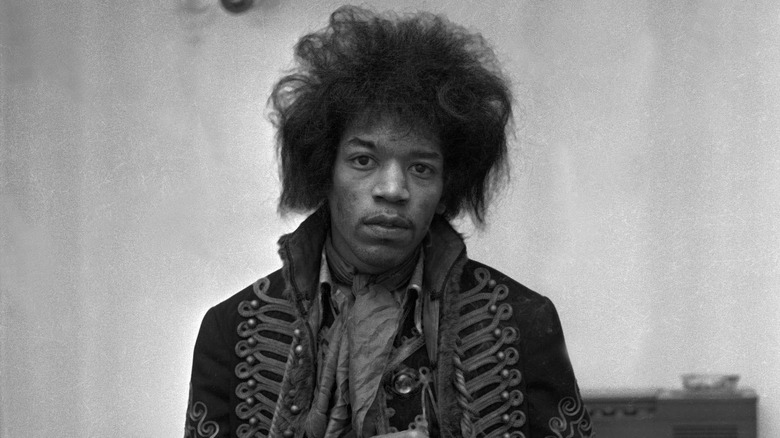
As the '60s and Summer of Love drifted into history, things took a harder turn for Eric Burdon. The list is long of close friends he lost to the excesses that came with fame and countercultural cred. "We were convinced we weren't going to live past 30," Burdon told Louder. "So that made us want to live life to the full ... I made it through, but a lot of my friends didn't."
In "Don't Let Me Be Misunderstood," Burdon details the chaos of his last encounter with Morrison, not long before his death in 1971. Finding the Doors singer and his entourage crashed out in his living room after they'd overstayed their welcome, he snapped. "I grew tired of stepping over the bodies in the morning ... so one day I came down with my .44 magnum in hand and one bullet in the chamber," he recalled. A gun shot into the chandelier sent everyone packing.
Even more shattering was the loss of Jimi Hendrix. Burdon got to know him early on — ex-Animals bassist Chas Chandler brought the iconic guitarist to London in 1966 — and they grew close. When Eric Burdon and War debuted in London in September 1970, Hendrix joined the group on stage. Within a couple of days, he'd died. "We were the last people Jimi ever played with. It shook me up pretty bad," he told Louder. "... What started out as a really beautiful period of my life and great friendship turned into a real tragedy."
Animals reunions and fights with punks
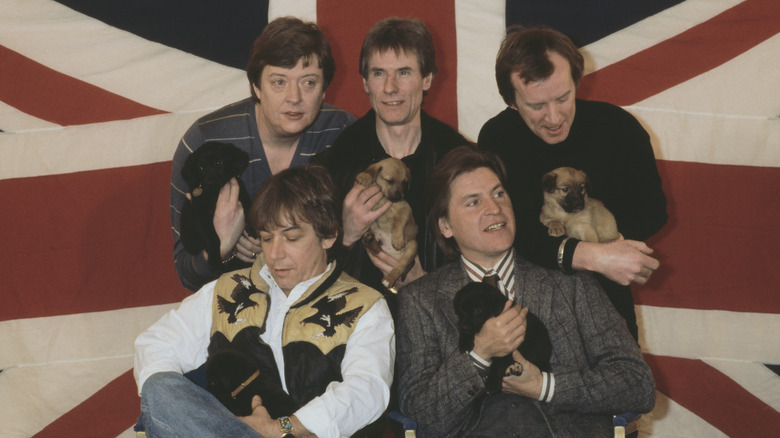
With a rerelease of "House of the Rising Sun" hitting No. 25 in the UK Singles Chart in 1972, Eric Burdon and the original lineup reunited in 1975. Working on the album "Before We Were So Rudely Interrupted" with his old bandmates "wasn't an unpleasant experience, partly because we never had plans to tour," he recalled in "Don't Let Me Be Misunderstood." The release was pushed to 1977 — the peak of the punk explosion in England — and without shows to promote it, the album tanked. When it peaked at No. 70 on the Billboard Hot 200, Fleetwood Mac's "Rumours" held strong at No. 1.
Going from being a face of the youth revolution to an elder statesman in rock 'n' roll wasn't always smooth. Generations collided when Burdon popped by London to check out the burgeoning punk scene. "I was in a bar with a writer friend of mine, Jim Diamond," he recalled in The Age. "The next thing, John Lydon [Johnny Rotten of the Sex Pistols] comes in with two bodyguards." Things got ugly from there. "Words were said and the next thing, Lydon cut him up with a glass," Burdon added.
The original Animals reunited a second time in 1983, releasing a follow-up, "Ark," and touring in the U.S. and Europe. Sadly, many critics hated it — "More thud-thud than 'Boom Boom,'" wrote Rolling Stone reviewer David Fricke — old tensions flared up, and the band packed it up again. "With our personalities, it could never be just about the music," he told Louder.
Film acting, and a shocking arrest
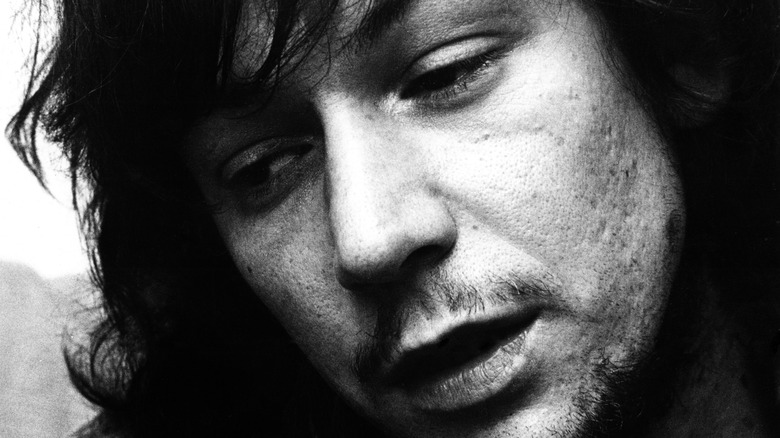
Shaken by the Manson murders and the cultural sea change he was sensing in LA in 1969, Eric Burdon quit music for a time. "I was burned out and kind of losing it, not talking to people," he wrote in "Don't Let Me Be Misunderstood," before finding solace in acting lessons at the Actors Studio. "I was happy there, learning the craft of acting, coming away from each session feeling clean," he recalled. While work with War pulled him back into music soon after, acting credits are speckled throughout his career.
Many of these were in German productions. Having toured West Germany extensively, he moved to the country in 1977 and scored a role as a hotel porter in "Gabbi West Germany," a film about a sailor drifting through Hamburg's red-light district. Of course, this work wasn't without its hazards. While working on the film "Comeback" in Munich in 1981, German authorities arrested Burdon for alleged links with members of a militant left-wing group, the Baader-Meinhof gang. Despite flimsy evidence — and the singer not knowing anything about the group — he spent a short stint in a German prison.
Burdon also shared the screen with actor Val Kilmer, who played his old pal Jim Morrison in Oliver Stone's 1991 film "The Doors." Rather than landing him in jail, that cameo led him back to music: A tour with the film's musical advisor, Doors guitarist Robby Krieger.
Battles over the band name and a major no show
While the Animals' original line-up split up for the last time in 1984, variations of the band and name lived on. Hilton Valentine recruited John Steel to play in Animals and Animals II, and Steel tapped Mick Gallagher, who briefly took over after Alan Price quit in 1965, for his group, Animals and Friends. While Burdon didn't get involved in these projects, he also couldn't escape the name. In 1988, he released a solo album cheekily titled, "I Used to Be an Animal."
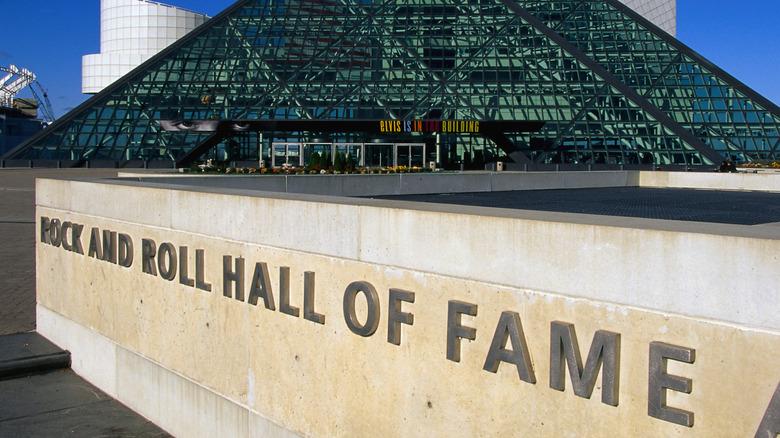
It tracks that a countercultural figure like Burdon would be ambivalent about making it into the Rock & Roll Hall of Fame. "I have mixed feelings about it," he told The Plain Dealer in 2004 (via Cleveland.com). "Since I was inducted, I've signed more autographs, to the point where it's a menace." When the Animals was inducted in 1994, he was the only original band member missing from the stage. Though he's said it was due to touring commitments in Germany, his absence was conspicuous.
"The rock 'n' roll highway is dotted with little white crosses marking the casualties," Burdon remarked in "Don't Let Me Be Misunderstood," "some literal, many more financial." Among them was his relationship with his former drummer. In 2008, John Steel filed for ownership over the Animals' band name, barring the singer from using it on tour. While an appeal court reversed the decision in 2013, Steel told Cream that "it certainly soured things" between the two.
Solo albums, cemented legacy, and life in Greece
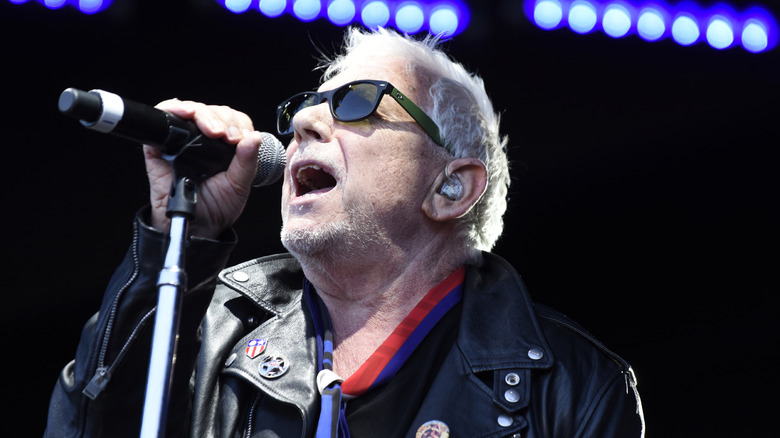
One of the highlights of Eric Burdon's 2013 solo album "'Til Your River Runs Dry" is a driving blues number called "Old Habits Die Hard." It finds the singer looking back. "When it comes to trouble / I got me a good head start," he sings. "Nothing's changed I'm still the same / Old habits die hard." While his output has been nothing like the prolific '60s and early '70s, Burdon's musical habit goes strong. In 2024, he performed at LA's Fool in Love Festival, joining a lineup of generation-defining acts, like Smokey Robinson, Diana Ross, and the Isley Brothers. It's undoubtedly company he's earned.
During the COVID-19 pandemic, Burdon started yet another chapter in his life by moving with his wife to her native Greece. There, he's stayed busy — he's collaborated on music for Greek TV, and his creative practice continues to grow. "Overall, while the process of songwriting has evolved for me over the years, the underlying passion and drive to create music remain constant," he told American Songwriter. With a lifetime of brilliant albums, legendary performances, fights, laughter, and loss in the rearview, Burdon continues to add to his odometer. There's nothing more rock 'n' roll than remaining true to who you are. There's nobody more rock 'n' roll than Eric Burdon.