

These Rock Star Chameleons Played In An Absurd Number Of Bands
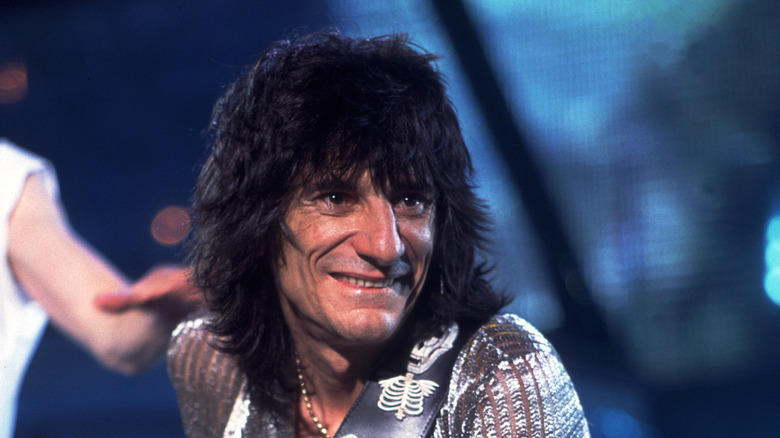
Some rock musicians are so talented, so versatile, so skilled, and so ready to rock that being in just one band simply isn't enough. They're the ones who can change and adapt their sound so well that they've been in a wildly high number of well-known bands. Of course, the world of major label-signed, arena-filling, radio-dominating rock 'n' roll, from the 1960s to the present, is a relatively small and definitely elite club. Only a handful of musicians ever really make it big, and the love of playing and composing, along with the need to earn a living, propels the churn.
Bands essentially have a small pool of the very best of their peers from which they can draw personnel to form new groups or side projects. The true cream of the crop are those guitarists, singers, bassists, and drummers seemingly willing to try anything creatively. As a result, they become legendary for their quantity as well as their quality, popping up in successful band after successful band for years on end. Here are the rock stars for whom one big band was just one chapter in their careers as prolific, chameleonic, and chronic group hoppers.
Eric Clapton
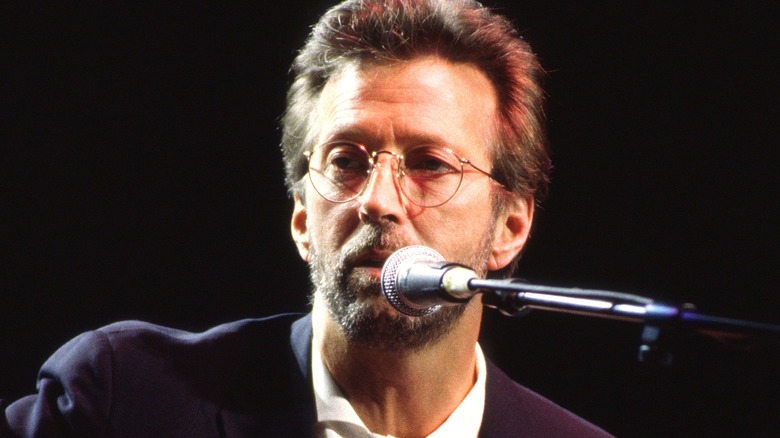
John Mayall & the Bluesbreakers, a freewheeling electric blues band with a frequently changing lineup, fostered many rising stars and raw talents during the British rock scene of the 1960s. Its most notable graduate: Eric Clapton, heralded as one of the finest guitarists in rock history. By the time he reached his star-making turn on the 1966 album "Blues Breakers," credited to John Mayall with Eric Clapton, the latter had already been part of one proper band, the Yardbirds. The guitarist departed that group in 1965 because it was heading too far into accessible pop-rock and too far away from the blues.
In 1966, Clapton pursued the blues muse in a smaller setting, joining Cream with drummer Ginger Baker and his fellow Bluesbreaker, bassist and singer Jack Bruce. Hard and heavy blues-influenced hits like "Sunshine of Your Love" and "White Room" followed. Around when Cream finished up in 1969, Clapton (and Baker) connected with Ric Grech and Steve Winwood for one album as Blind Faith. At the end of 1969, Clapton signed up to be a supporting guitarist in Delaney & Bonnie and Friends and then formed Derek and the Dominoes with Duane Allman; responsible for one LP and the classic rock staple "Layla." After that, Clapton focused on recording music under his own name.
Ginger Baker
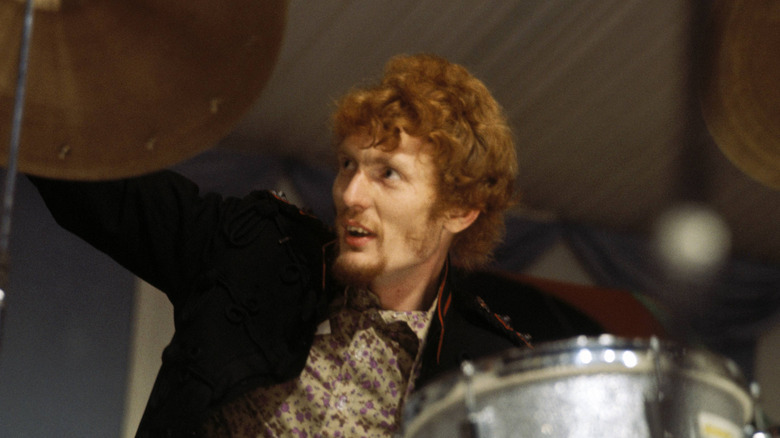
During the era of arena rock and classic rock that bore a heavy blues influence, Ginger Baker became one of the most accomplished and acclaimed drummers around, despite beginning his career playing in jazz combos. In the early 1960s, he landed a spot in the blues-rock collective Alexis Korner's Blues Incorporated. He felt a musical kinship with bassist Jack Bruce and keyboard player Graham Bond so serious that after just a year, the trio splintered off to create the Graham Bond Organization. Although Bruce departed that act in favor of John Mayall and the Bluesbreakers, Baker recruited him away, along with guitarist Eric Clapton, to create the heavy and heavily blues-derived Cream, among the best supergroups in history.
After releasing four studio albums in four calendar years, Cream broke up after recording 1969's "Goodbye." Baker and Clapton immediately moved over to another supergroup, joining Traffic singer Steve Winwood and Family bassist Ric Grech in the one-album wonder Blind Faith. That project gave way to Ginger Baker's Air Force, a sprawling 11-member group (including Grech and Winwood) that experimented with R&B, jazz, and traditional African music. Establishing himself in the latter genre, Baker teamed up with Nigerian star Fela Kuti and played in his ensemble. Baker's seventh and last major band, Hawkwind, was best known for throwing out future heavy metal legend Lemmy Kilmister. The hard rock act brought in Baker to be its official drummer from 1980 to 1981.
Ronnie Wood
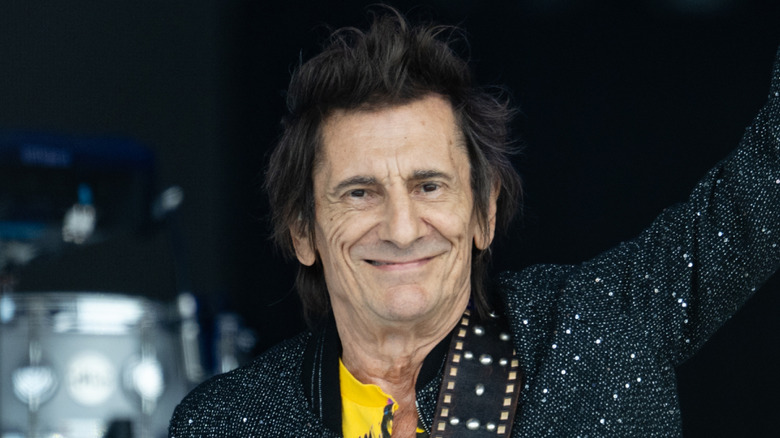
Ronnie Wood has played guitar and, on occasion, bass, for multiple iconic British classic rock bands. His six-decade career began in earnest in the early 1960s, when his Rolling Stones-esque band the Birds got a deal with Decca Records. Unfortunately, the group's singles sold so poorly that the Birds split, and in 1967, Wood hooked up with the illustrious Jeff Beck, contributing bass to counter the guitar of the eponymous leader of the Jeff Beck Group. Amidst a spat with Beck, Wood took a spot in the Creation, a crunchy mod band probably best known for the single "Making Time." Eventually, Wood returned to the Jeff Beck Group, which dissolved in 1969.
Wood then connected with his brother, Art, for a project called Quiet Melon before he answered the call from the remnants of the band the Small Faces to play guitar (and co-write hits like "Stay With Me" and "Ooh La La") for a new iteration, the Faces. Following some solo efforts, Wood replaced Mick Taylor in the Rolling Stones in 1975, where he's still one of the band's primary guitarists.
Paul Carrack
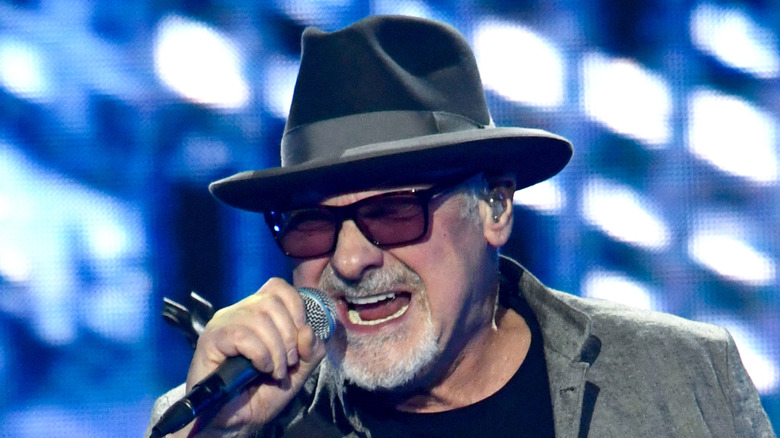
One of the most versatile mainstream musicians in rock history, Paul Carrack parlayed his voice and keyboard skills into becoming a member of a soft rock band, an art rock group, an alternative rock act, and a synth-pop supergroup. Ace was a '70s one-hit wonder in 1975 with "How Long," a smooth No. 3 smash written by Carrack. After the ascendance of punk and new wave, Ace found that its sound had gone stale, so it split up and left Carrack to take on session musician work in the U.K. Some of his cohort were associated with Roxy Music, and the artsy band reunited after a years-long hiatus for the 1979 album "Manifesto." Carrack was invited to play on that LP, along with two subsequent albums, and play live with the group, too.
From there, Carrack segued into Squeeze, where he played keys and sang occasionally, including a prominent part in the band's 1981 hit "Tempted." After a time backing up Eric Clapton, Carrack joined his fourth real band, Mike + the Mechanics, a synth-based adult contemporary trio led by Mike Rutherford of Genesis. Carrack was part of its 1989 No. 1 hit "The Living Years."
Dave Grohl
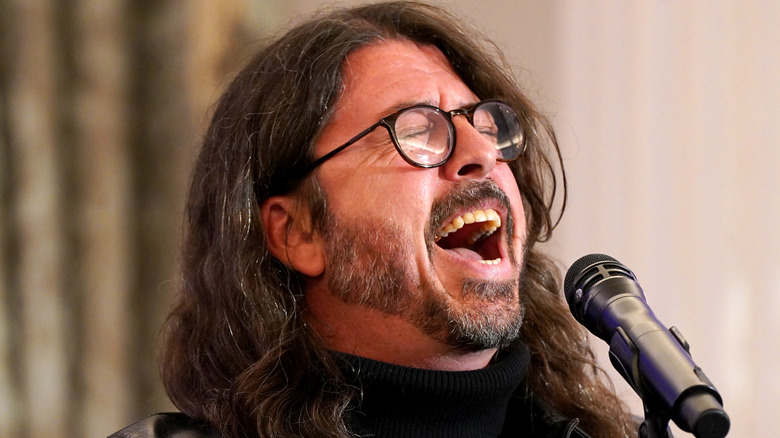
The Washington, D.C. hardcore punk band Scream got together in 1979, and two of its members would eventually be part of Foo Fighters, one of the biggest alternative rock bands of the '90s and beyond. Guitarist Franz Stahl joined Foos creator Dave Grohl, who'd replaced original Scream drummer Kent Stacks. Grohl reluctantly departed Scream to join Pacific Northwest band Nirvana just before it became one of the most influential rock bands of all time and helped start the grunge rock movement.
After Nirvana ended in tragedy with the death of frontman Kurt Cobain in 1994, Grohl recorded an album largely by himself, credited it to Foo Fighters, and then formed a band around it. Consistently popular ever since, Foo Fighters has allowed Grohl to moonlight in other bands and create multiple supergroups. He played drums for comedic acoustic metal band Tenacious D on its first, second, and third albums, as well as many instruments for his own authentically metal act, Probot. In the 2000s, Grohl also teamed up with bassist John Paul Jones of Led Zeppelin and Queens of the Stone Age leader Josh Homme for the supergroup Them Crooked Vultures. Grohl enjoyed working with Homme — in the early 2000s, needing a respite from Foo Fighters, he served as Queens of the Stone Age's official drummer.
Josh Freese
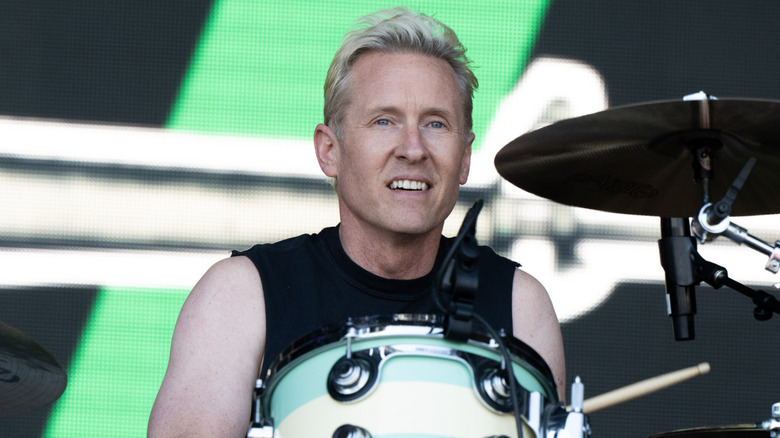
Josh Freese, who has worked as a session guitarist since the age of 15, has been a crucial member of a horde of well-known bands that run the gamut of rock sub-genres. Classic Southern California punk act the Vandals hired Freese in 1989, and he's still a member of the band (he plays with them if his schedule as a studio musician and work with other acts permits). Since the mid-1990s, he's been Devo's drummer whenever the performance art collective needs him. In a recording-dormant era for Guns N' Roses, Freese signed a contract to be the hard rock act's touring drummer from 1997 to 1999. This was just before he joined the moody dark alternative supergroup A Perfect Circle and then the really dark Nine Inch Nails from 2005 to 2008. Following the exit of Paramore drummer Josh Farro in 2010, Freese joined the emo group in time for its 2011 South American tour. When that stint concluded, Freese filled a similar role for Sublime with Rome, the current version of '90s band Sublime, in the wake of drummer Bud Gaugh's departure.
Freese replaced deceased Foo Fighters drummer Taylor Hawkins in 2023, until he was surprisingly fired in 2025. From there, he returned to his gigs as Nine Inch Nails' touring drummer and tertiary Weezer touring drummer. For that alternative pop band, Freese drummed from 2007 to 2012, when regular percussionist Pat Wilson switched to guitar.
Ronnie James Dio
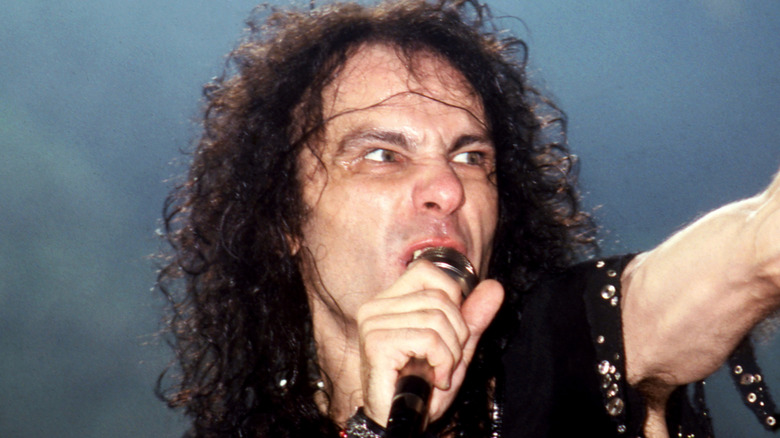
While he'd eventually find fame and acclaim as one of the most powerful and distinctively voiced singers in all of heavy metal, Ronnie James Dio started his career years before that genre even existed. In the late 1950s, Dio — born Ronald Padavona — led a four-part vocal harmony group that played its own instruments called the Vegas Kings, later known as Ronnie and the Rumblers and Ronnie and the Redcaps. Dio at first played bass and was eventually promoted to lead singer. By the end of the '60s, that group had evolved into Ronnie Dio and the Prophets, breaking up so that Dio and guitarist Nick Pantas could start the Electric Elves, which turned into Elf, a hard, heavy, psychedelic-meets-early metal outfit.
Elf opened for Deep Purple, and that band's guitarist, Ritchie Blackmore, recruited Dio to sing for a new project called Rainbow. Wanting to go weirder where Blackmore wanted to go radio-friendly, Dio left Rainbow after four LPs, which was right when Black Sabbath needed a new singer to replace the departed Ozzy Osbourne. All over the hit album "Heaven and Hell," Dio left after creative differences with Black Sabbath's other members, prompting him to leave and start the '80s fantasy-oriented metal band Dio.
In the 2000s, with his eponymous band on hold, Dio rejoined his Black Sabbath brethren for a group that named itself after its greatest triumph, Heaven and Hell. After that era wound down in 2009, Dio died from cancer the following year.
Johnny Marr
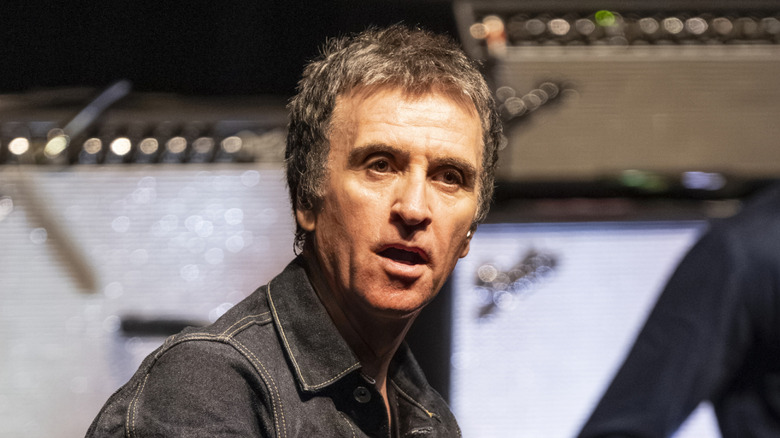
For more than 40 years, guitarist Johnny Marr has been a stalwart of the alternative rock scene, establishing himself in one of the area's most consequential acts and then bouncing around to successors and new bands. He became a member of the mopey, modern, and melodramatic the Smiths in 1982, which broke up after four studio albums and five years together.
After a short time as a full-fledged part of classic rock act the Pretenders, by 1989, Marr had moved on to the alternapop supergroup Electronic, alongside members of New Order and the Pet Shop Boys. At the same time, he was in the midst of a five-year run with The The, leaving that U.K. group in 1993. In the early 2000s, he briefly fronted Johnny Marr + the Healers, then became a guitarist for the long-running American indie standout Modest Mouse, repeating the feat with rising U.K. group the Cribs.
Josh Homme
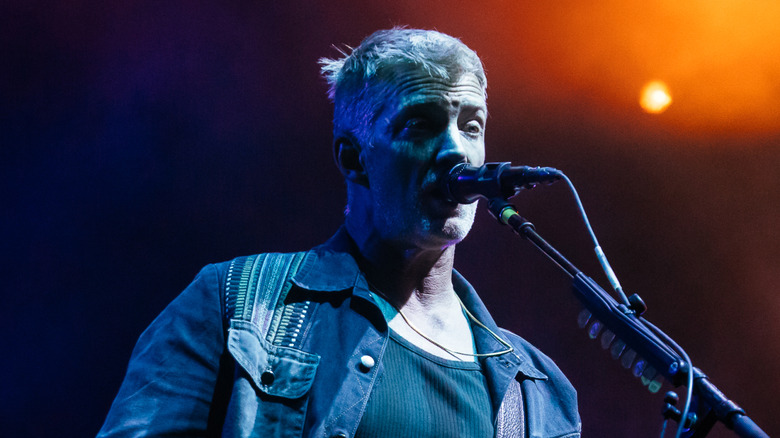
Guitarist and vocalist Josh Homme has brought a humorous sensibility, along with a rumbling, low-end heavy, and hard-charging sound, to several popular metal and alternative rock bands across the past few decades. After helping start the "stoner rock" band Kyuss as a guitarist in 1987, Homme departed after a decade to work as a producer and play rhythm guitar for Seattle grunge band Screaming Trees before assembling a new band, Gamma Ray, which had to change its name to Queens of the Stone Age because a German group had already taken that moniker.
Queens of the Stone Age remains an active group with eight studio albums to its credit, including the gold-certified 2002 effort "Songs for the Deaf." Homme splits his time between his main act and Eagles of Death Metal, a boogie-rock group he created in the late '90s with his close friend Jesse Hughes. He was also a participant in the late 2000s supergroup Them Crooked Vultures with Dave Grohl of Foo Fighters and John Paul Jones of Led Zeppelin.
Matt Cameron
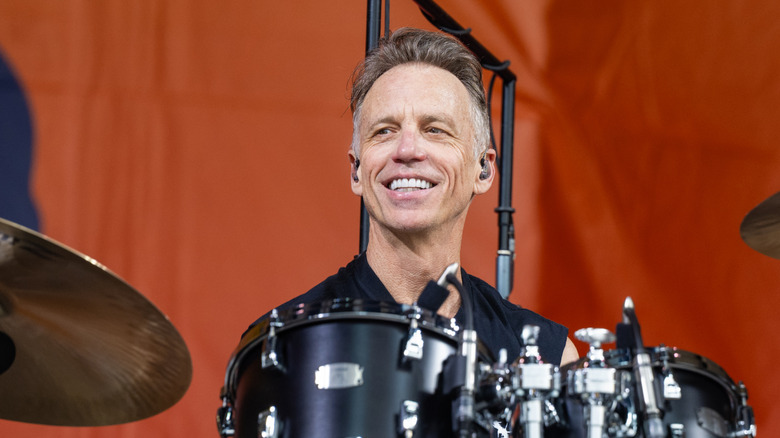
One of a scant few inducted into the Rock & Roll Hall of Fame twice, Matt Cameron helped create the sound of '90s grunge as the drummer for two of its most important acts. Cameron's first chart-topping Seattle band was Soundgarden, for whom he kept the beat from 1986 and performed on every album released until 2012. Soundgarden was inactive from 1997 to 2010, during which time Cameron hopped over to sit behind the kit for Pearl Jam, a position he kept for nearly three decades, leaving that band amicably in 2025.
In addition to membership in two significant rock bands, Cameron dabbled in side projects. With some time to kill between Soundgarden albums, Cameron and bandmate Ben Shepherd formed a garage band called Hater. After Soungarden ended but before he joined Pearl Jam, Cameron started the psychedelic act Wellwater Conspiracy, with whom he recorded multiple albums. He's also drummed for 3rd Secret, which also included Soundgarden guitarist Kim Thayil and Nirvana bassist Krist Novoselic, and the off-and-on group Skin Yard.
Jimmy Page
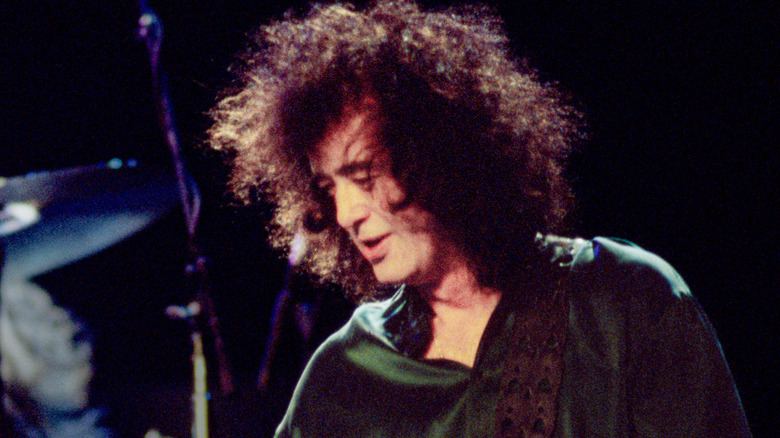
U.K. band Neil Christian and the Crusaders had a very early rock 'n' roll sound, while its guitarist, Jimmy Page, would help define the sound of forward-thinking 1970s hard rock. After leaving the band because he got sick during a tour, Page eventually settled into a career as a session and studio guitarist in the early 1960s. Then he decided he wanted to be in a band again and in 1966 joined guitarist Jeff Beck in the Yardbirds in the popular rock band's waning years. Page didn't want to let it go, however, and with vocalist Robert Plant, he assembled the New Yardbirds, later known as Led Zeppelin, one of the best-selling and most important bands of the late 1960s and 1970s.
After drummer John Bonham died in 1980, Led Zeppelin disbanded, and Page, by that point an elder statesman of hard rock, was free to begin his supergroup era. Nothing by a project called XYZ — a joint venture between Page and members of Yes — was formally released, but then the guitarist reunited with Beck and Plant for the Honeydrippers, which released one self-titled collection of classic pop in 1984. After that, Page was on to the Firm — with Paul Rodgers of Bad Company singing — for two albums. In the early '90s, the musician formed half of the single-album sensation Coverdale/Page with Whitesnake singer David Coverdale, then got back together with Plant again for sporadic touring and album releases.
Paz Lenchantin
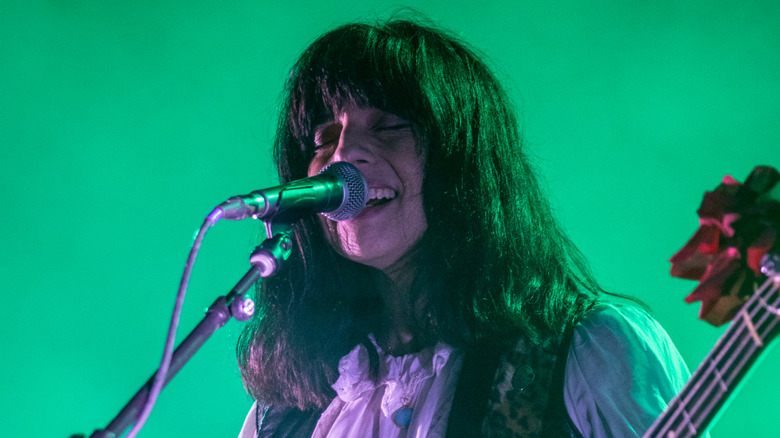
Paz Lenchantin is best known for her 10 years playing bass for the contemporary, reformulated version of classic alternative rock band Pixies. She was hired as a touring musician in 2014, then became a true member, and was then let go in 2024. That was the latest in Lenchantin's string of memberships in high-profile bands. When Billy Corgan put aside Smashing Pumpkins for a while in the early 2000s to form a new group with mostly new musicians called Zwan, he called on Lenchantin to play bass. At that moment, she was already a part of another edgy supergroup, Tool founder Maynard James Keenan's A Perfect Circle, but since it wasn't up to much, she departed. Zwan collapsed after one album.
Lenchantin has also contributed violin and other string instruments as a session and guest musician, and she served as the fiddle player in indie musician David Berman's band the Silver Jews. She's also been part of the long-running psychedelic act the Entrance Band.