

'90s Shoegaze Songs That Made These 5 Movie Scenes Otherworldly
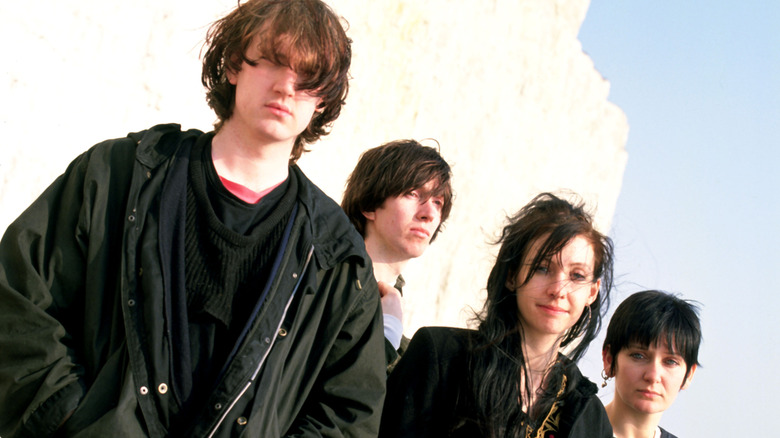
As a genre, it feels like shoegaze was designed with film soundtracks specifically in mind. The genre's defining characteristics — effect-laden guitars, drowned-out vocals, dreamlike arrangements, and lush walls of sound — allow its songs to sit perfectly in the background of more active, speaking scenes and, conversely, also let them highlight the ambient energy of a scene and bring it to a climax. Though any movie could potentially benefit from more '90s shoegaze songs like My Bloody Valentine and the like, it's movies that venture into the surreal and fantastical that utilize them best.
Movies with dream sequences or explorations of the ethereal have long turned to shoegaze and other ambient rock to capture that strange, unexplainable feeling of being between worlds. More than most (and perhaps all) other types of rock, shoegaze is a soundtrack to dreams and liminal experiences, and directors like Peter Jackson and Sofia Coppola have used that fact to full effect on the big screen. We've gathered here five examples of movies, including Jackson's and Coppola's, that used shoegaze to turn film scenes otherworldly.
Alice — Cocteau Twins
Anyone who has seen "The Lovely Bones" knows what a profoundly affecting movie it can be. Certainly, this is because of its dark subject matter and less-than-tidy resolution, but also because of the repeated cuts to Saoirse Ronan's character Susie as she navigates her afterlife as a spirit on Earth and then in (a) heaven. To score the film, director Peter Jackson wisely chose ambient music king Brian Eno, whose atmospheric tones lend themselves well to realm-hopping sequences like Susie's. There aren't many songs in the film aside from Eno's score, but one of the few is "Alice" by shoegaze godparents Cocteau Twins, used for one of the film's more psychedelic and literally otherworldly sequences.
"Alice" originally appeared in the soundtrack for another movie, actually — 1996's "Stealing Beauty," and it was smartly reused 13 years later for "The Lovely Bones." Elizabeth Fraser's angelic vocals are split into two intertwining melodies, which would give the song a heavenly feel in a vacuum. As part of the film's sequences in the afterlife, they feel exponentially so. The sequence begins with Susie realizing her connection with her father is still intact in a way that transcends life and death, causing her and fellow spirit Holly to celebrate as only liminal spirits can.
Susie and Holly dance and laugh through worlds all their own, a series of beautiful green pastures, impossible topiary marvels, dance floors made from giant record players, and snowy edens. All the while "Alice," and in particular Fraser's silken vocals, transform the scene from mere fantasy to bittersweet art.
Sometimes — My Bloody Valentine
Sofia Coppola's 2003 indie darling "Lost in Translation" is an unconventional, borderline free-form meditation of a film. Its style presents a stark contrast to the typical on-rails, cause-and-effect fare found in most mainstream moviemaking. In a major way, this makes it an analogy for shoegaze and its relation to more conventional mainstream rock, which is part of the reason the soundtrack is so thoroughly shoegaze and so thoroughly fitting.
The film's opening shot hints that perhaps the film may all be a dream of Scarlett Johansson's character Charlotte or possibly a male fantasy of Bill Murray's character Bob. From there, the movie's entire presentation is like one extended, waking fantasy, and it has a soundtrack to match. The very next scene after the first is set to shoegaze act Death in Vegas, with trancelike, airy vocals that make Bob's limo ride through the neon streets of Tokyo seem almost imagined.
That becomes a motif for the movie, as virtually every time Bob and Charlotte drive through Tokyo at night, taking in its many-splendored streets and overstimulating displays, one shoegaze song or another plays. The lion's share of those tracks are by the genre's own messiah, Kevin Shields, known best as the frontman for My Bloody Valentine. The band's song "Sometimes," one of its most recognizable, plays at the end of the film's karaoke night sequence. Again, the pair navigates the metropolis streets, and again, we're left wondering to what extent anything the characters, and therefore us viewers, experience is actually real.
Golden Hair — Slowdive
Those familiar with director Gregg Araki will know that he routinely stocks his movies with shoegaze, project after project. His 2004 drama "Mysterious Skin" is no exception, featuring songs by Ride, Curve, Cocteau Twins, and multiple from Slowdive. The first song in the movie is by Slowdive, and it kicks in immediately as the first credits flash across the scene, quickly setting an uncanny, almost eerie tone.
That first song, "Golden Hair," plays for a full two and a half minutes, most of its length and also more than enough to reach its first wall of sound in the form of synths and fuzz-laden guitar. Throughout, small flecks of out-of-focus detritus rain down the screen, gradually coming into focus to reveal rainbow bits of cereal being poured over the face of a young Neil, whose older self is played by Joseph Gordon-Levitt. Though the film later explains the scene as a formative memory for Neil (cereal really did rain down on his head just before he suffered abuse), during the "Golden Hair" scene, it can only be felt as a dream or hazy half-memory.
The cereal moment sets the stage for the rest of "Mysterious Skin," in which childhood traumas manifest throughout the main characters' lives as dissociation and distorted memories. The other lead character, Brian, remembers his own trauma as a possible alien abduction. At many of the points in which their memories and possible futures are discussed, one shoegaze song or another is there to underscore the surrealism of the moment.
Starburned and Unkissed — Caroline Polachek
In many ways, the 2024 psychological drama "I Saw the TV Glow" feels as if shoegaze itself has been distilled and alchemized into movie form. From the opening to the end, the movie deliberately keeps viewers in the (often literal) dark about the extent to which the characters' experiences are real or imagined. Their lives flicker between moments of static and surreal oddities, all lushly colorful, and all of it emphasizing texture as much as substance — much like shoegaze. One of the movie's direct forays into the genre comes during one of character Owen/Isabel's brief moments of happiness as they stroll down their highway halls to "Starburned and Unkissed" by Caroline Polachek.
Purists might fairly point out that the movie itself is new and so is its soundtrack — "Starburned and Unkissed" is an original for the film. But the movie is initially set in the '90s, and as director Jane Schoenbrun themself has said, the story and its soundtrack are meant to recreate the decade and its music. As such, they compiled a soundtrack full of '90s-inspired dream- and synthpop, as well as Polachek's Starburned and Unkissed," which Pitchfork called "anthemic shoegaze."
The scene in question follows Owen/Isabel as they navigate increasingly emptier, darker hallways, a reflection of their depressing and monotonous reality. It all lights up, however, thanks to neon scribblings about their favorite TV show that flash through their head and on the screen. All of this is set to the alternating gossamer and grunge that is "Starburned and Unkissed."
Time Baby II — Medicine
Thanks to its wonderfully diverse soundtrack, which includes a few shoegaze and shoegaze-adjacent bands, as well as the movie's overall dreamlike (or perhaps nightmarish) tone, "The Crow" actually has a couple of scenes in which shoegaze lends its unearthly feel. There's "Snakedriver" by the Jesus and Mary Chain, which plays as young Sarah catches her mother with drug-pusher and otherwise scumbag Funboy. And just a few minutes before that, LA shoegazers Medicine made a cameo, performing their song "Time Baby II."
The scene takes place in a nightclub, which would otherwise be mundane were it not for the flashing lights, inexplicable sparks flying around. And, of course, Medicine's swirling, distorted guitars and droning vocals. The scene's tone is just left of reality, which is consistent throughout "The Crow," and Medicine's hypnotic noise feels at home in the Tim Burton-meets-hardboiled-noir world the film establishes.
There are actually three versions of "Time Baby." The first was an early demo for the band, the second was the version they appeared in "The Crow" to perform, and the third, of course titled "Time Baby III," was a remixed version for the movie's soundtrack. Interestingly but unsurprisingly, given how ubiquitous Cocteau Twins seem to be in the world of soundtracks, lead singer Elizabeth Fraser contributed guest vocals to "Time Baby III," which makes the album version feel even more otherworldly than the cut in the film itself.
If you or someone you know may be the victim of child abuse, please contact the Childhelp National Child Abuse Hotline at 1-800-4-A-Child (1-800-422-4453) or contact their live chat services.