

5 Songs That Take Boomers Back To Summer Camp
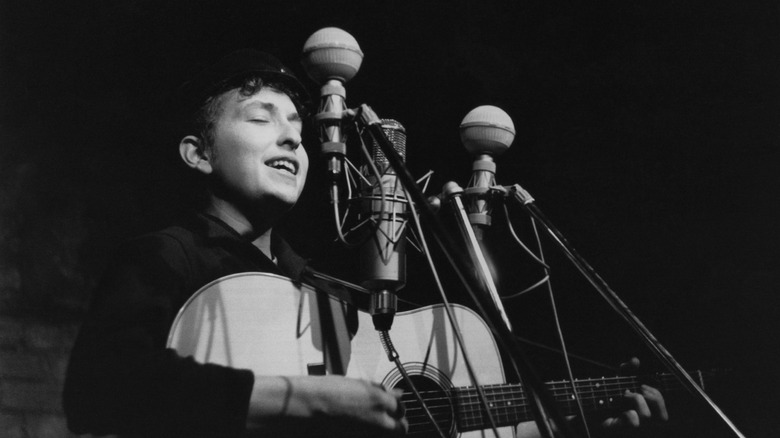
Music is a time machine, and certain tunes are especially effective at summoning specific memories from decades past. For baby boomers, many songs of the 1960s and early 1970s have the ability to conjure happy childhood images, such as those associated with the yearly ritual of summer camp.
Not all experiences are universal, but long, hot days spent at summer camp are emblazoned in the memories of millions of Americans as some of the happiest times of their youth. Bunking in dorms, woodcrafts, outdoor games, swimming, sailing, and, at the end of the day, songs and marshmallows around a roaring campfire. Such idyllic images come from a time when most of us had few cares in the world other than having fun, and hearing the soundtracks to those memories can be especially refreshing at any age. From Peter, Paul and Mary's wistful "Puff, the Magic Dragon" to Bob Dylan's campfire classic "Blowin' in the Wind," we think these five tracks will be especially effective at opening that door in your mind's eye to summer days all those decades ago.
Summer in the City — The Lovin' Spoonful
Summer may well have been about escaping the city for countless American boomers during their formative years, but one of the ultimate "school's out!" songs of the 1960s is actually about the sizzling summer heat of the urban jungle. "Summer in the City" by the Greenwich Village folk-rock group the Lovin' Spoonful dominated the charts in the summer of 1966, spending three weeks at the No. 1 spot on the Billboard Hot 100.
Opening with the infectious chorus line "Hot town, summer in the city," the fun, pacey track feels like stepping out into the blazing sun and being hit by the stifling, simmering heat. No wonder the track has repeatedly been used in movies and TV to denote the arrival of the summer months. In an imaginary movie about a group of '60s kids heading to summer camp, "Summer in the City" would undoubtedly soundtrack the joyous montage of them on their last day of school, excitedly packing their bags and running for the bus.
Puff, the Magic Dragon — Peter, Paul and Mary
A sweet slice of ear-candy folk music typical of Peter, Paul and Mary's other hits to that point, "Puff, the Magic Dragon" is an exploration of childhood innocence and imagination, as well as the inevitability of losing these aspects of ourselves as we enter adulthood. In this case, the song's themes were especially timely for many of those heading off to summer camp, and it may be impossible for many boomers to hear "Puff, the Magic Dragon" without it bringing up memories of the often tumultuous inner lives they were leading around the time it was released.
"Puff, The Magic Dragon" soared to No. 2 on the Billboard Hot 100 chart in 1963. Sadly, the song has been overshadowed by its supposed subtext of substance misuse, which its creators have always denied exists. But "Puff, the Magic Dragon" is a sweetly performed, tasteful number that will also remind many who were there at the time of quiet moments around the campfire.
Blowin' in the Wind — Bob Dylan
There are likely many out there with campfire memories of singing along to the generation-defining Bob Dylan classic "Blowin' in the Wind." The single, which surprisingly didn't chart when it was first released in 1963, grew enormously in stature throughout the 1960s, and is now considered one of the finest songs ever written.
Dylan was just 21 years old when he wrote his signature tune, and was already involved in commenting on the politics of the era. He was especially supportive of the Civil Rights Movement, and he wrote several songs that directly chronicled incidents of injustice that he witnessed around him.
"Blowin' in the Wind" was both an anthem of the Civil Rights Movement and a protest against the Vietnam War. However, there was something different about it. The song sees its narrator in a reflective, ruminative mood, with the cryptic imagery seeming to suggest that the solutions to the world's problems are all around us, but possibly ungraspable. It became a staple of folk sing-alongs, especially around the campfire, reflecting the uncertain worldview of young people in the 1960s like no other song. Surprisingly, Dylan has hinted that it may have taken him all of 10 minutes to write.
Happy Together — The Turtles
The Turtles' "Happy Together" is one of the most carefree and liberating songs of the 1960s. The incredibly joyous tune eschews the openly hedonistic psychedelic sounds that were increasingly popular during the late 1960s for a sweet ballad, which suddenly leaps into a technicolor, brass-drenched chorus expressing the pure happiness of lifelong love. But while the lyrics are certainly romantic, "Happy Together" also reflects the joy of community, and certainly summons the image of larger childhood friendship groups that boomers will have found in summer camp.
Written by Alan Gordon and Garry Bonner of the band the Magicians, "Happy Together" was released in 1967 at the height of the counterculture movement. It quickly gained millions of admirers, with listeners sending the song to No. 1 on the Billboard Hot 100. It was a big boon for the Turtles, who had struggled to translate their own self-penned works, and buoyed the band through the rest of the '60s.
Take Me Home, Country Roads — John Denver
"Take Me Home, Country Roads" was and still is the perfect send-off for summer camp, as young boomers returned to their families, their lungs full of fresh air, and tired smiles on their faces. The rich, warm, and nostalgic classic has become the unofficial anthem of West Virginia, yet it seems to remind every listener of their childhood home.
The song was originally inspired by the travels of Bill Danoff and Taffy Nivert, of the folk group Fat City, down Maryland's scenic Clopper Road. Originally pitched to Johnny Cash, it eventually fell to John Denver, who later contributed to the writing of the song and received a standing ovation from his audience when he first debuted it live in December 1970. It eventually struck No. 2 on the Billboard Hot 100 the following year. Denver's "Take Me Home, Country Roads" remains a much-loved symbol of returning home, whether for Thanksgiving, reunions, or after a long spell away, and, 50-plus years later, its nostalgic quality is especially moving.