

At What Temperature Do Vinyl Records Start To Warp?
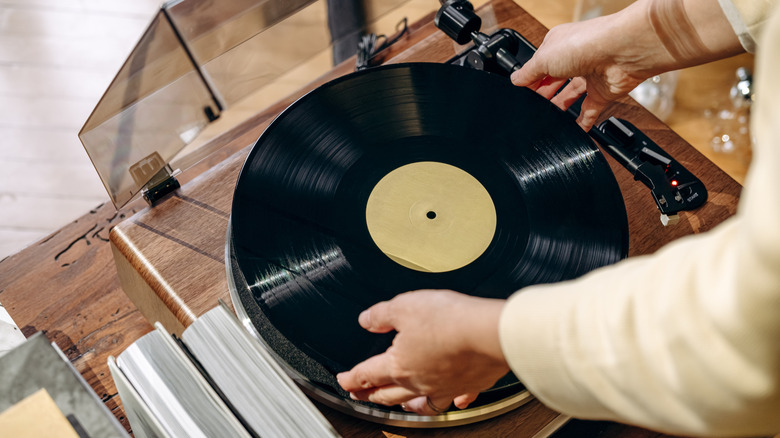
So you know how you shouldn't leave a baby or dog in a hot car? Right. Think of your vinyls like precious little children, which you might already do if you're a serious collector. And if you are a serious collector, then you know that vinyl records can warp if they get too hot. Though direct sunlight is the ultimate killer, temperatures of 140 degrees Fahrenheit (60 degrees Celsius) all but guarantee warping.
Some misguided folks in the audience might hear that exceedingly high temperature (higher than the Sahara Desert's average, as a reference) and think, "Oh sweet, I can just, like, not worry because I live in Alaska." Not so, dear reader, not so. It's environmental factors taken all-in-all, in aggregate, that determine the longevity of a record. No matter that vinyl records can still function at 100 years old, they require proper care, like keeping them stacked vertically except in cases of short-term use and not even leaving them leaning on a loose shelf. A vinyl need not bake on a dashboard on a hot day to warp, which is completely possible, temperature-wise, in direct sunlight. Dust, humidity, improper storage and handling, plus temperatures above or below the very narrow range of 65 to 70 degrees Fahrenheit, respectively, will all wreck your records over time.
But even if you warp your record, it might be salvageable to a degree. Depending on the type of deformity, you might be able to kinda-sorta flatten it back into place. But really, don't expect it to be the same.
Preserving and fixing your records
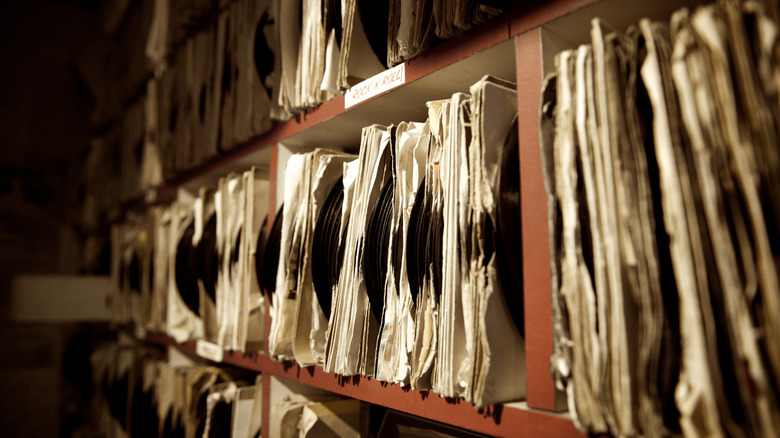
Rather than thinking, "Oh, my records are fine; they won't get warped," you've got to actively make sure they don't. As reported by Vorby, 22% of record collectors told Discogs in 2021 that they wrestled with warped records more than any other damage type. We doubt they all left their vinyls in hot cars. Radiators and windows combined with poor stacking, the lack of proper sleeves, and a generally humid or dusty environment mean your records are begging to be warped. Also note that it's not heat, alone, but also contrasts between heat and cold that can cause records to expand and contract like a sticky door in summer.
But let's say you've mucked up a beautiful vinyl. Don't panic — go slow and examine the record, rid it of dust and particles with a microfiber cloth, and determine the type of warp. "Warp" might make you think of what's called ripple or wave warps across the vinyl's surface, but there's also edge warps where the edge bows up, bowl warps where one side bows, and the dreaded taco warp, which means it's time to call a mortician. In the end, fixing a warped record involves flattening it between two surfaces, like glass panes, and then adding weight to the top, like books or bricks. You could even put this absurd setup into an oven (yes, really) no hotter than 150 degrees Fahrenheit. Take it out after only a few minutes and the record might cool into shape. Or you know, you might totally destroy it.
Worst-case scenario, professional vinyl repair shops wield high-tech record flatteners and can offer mail-in services at a per-record fee. Just don't expect miracles, and try not to get to this point to begin with.