

Bands That Transformed Their Legacy With A New Member
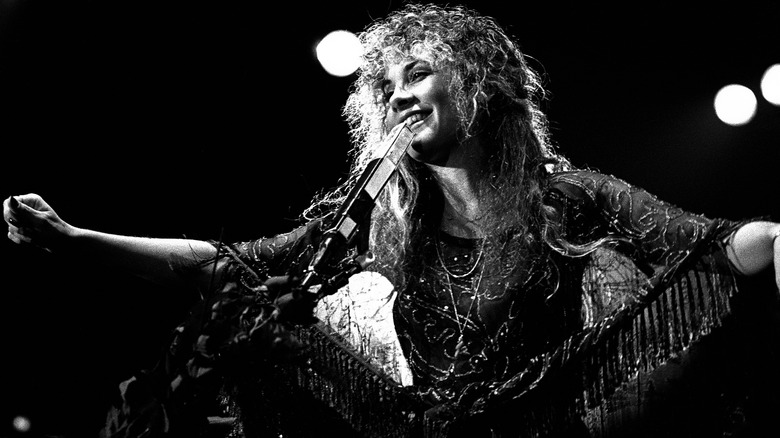
Musicians playing together can have all the chops, musical ideas, and swagger in the world, but they aren't a band until they have chemistry. It's not the lead singer, guitarist, or any other individual that audiences respond to; it's the way those elements mix, bubble, explode, and so forth. Time and again in rock from the '60s to the '90s, adding a new member to a band completely shifted that chemical reaction, shaking up their sound and forever transforming fortunes and legacy.
Often, the addition was the missing ingredient: think Stevie Nicks joining Fleetwood Mac, Bruce Dickinson taking Iron Maiden by the horns, or Faith No More hitting new heights with Mike Patton. In other cases, musicians with massive shoes to fill stepped up in massive ways, such as with AC/DC, Van Halen, and the Grateful Dead, which saw renewed surges and growing legacies thanks to new blood and musical energy. But a new band member can also be a double-edged sword; while Sid Vicious looked the part for the Sex Pistols, the band became more spectacle and less musical after he joined.
There are countless examples we could have picked for this list, with so many line-up shifts to track and plenty of hard choices. But there's no doubt these bands were completely reshaped by their new members. Whether they crystallized, exploded, burned bright, or vaporized, their critical chemistry shifted, and their music, audiences, and legacies were never the same.
AC/DC — Brian Johnson
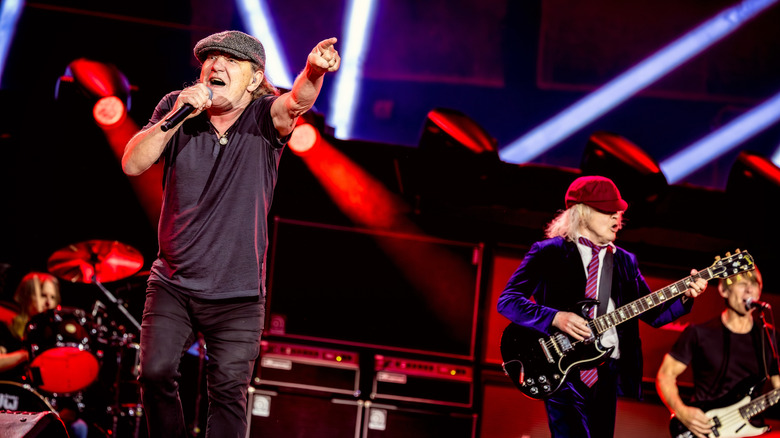
With Bon Scott (born Ronald Belford Scott) in front, AC/DC took on a harder, blues rock direction and made the leap from pubs in Melbourne, Australia, to the global stage. Paired with Angus Young's guitar work (and legendary schoolboy uniform), his growl on songs like "Highway to Hell" defined the band's sound and broke wide. Scott's tragic death at age 33 in February 1980 was a shocking gut punch, but AC/DC refused to unplug. Within a few months, Brian Johnson of the band Geordie was singing and writing lyrics, and the band were recording in the Bahamas.
With an uncompromising singing style — including an ability to belt out Tina Turner tunes — he fit right in. "We sang two songs or something and then there was some nods and smiles," he told Dan Rather on The Big Interview podcast, "...I guess it was just this wonderful moment where the stars aligned." Being dropped into Scott's boots couldn't have been easy — Johnson called it "beautifully scary" — but the results were undeniable. His first album with the band, "Back In Black," would become one of their most successful, hitting No. 4 on the Billboard 200 charts in December of 1980. Despite the bumps, bruises, and tragedies, AC/DC had taken the long way to the top, and with Johnson, they stayed there.
Fleetwood Mac — Stevie Nicks
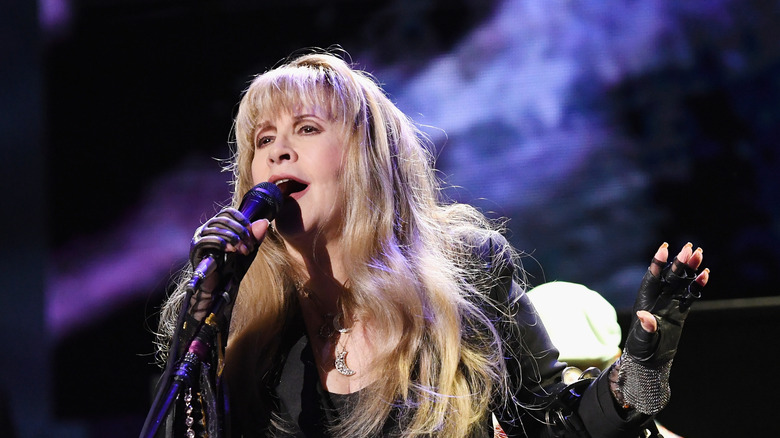
Stevie Nicks' legacy will always be intertwined with that of Fleetwood Mac. As part of that group's classic line-up, her songwriting, singing voice, and style are iconic on "Rhiannon" and "Landslide," one of Nicks' nearly perfect songs. She penned the band's only chart-topper, "Dreams," which spent a week atop the Billboard Hot 100 in 1977, and almost 50 years later, TikTok virality brought deep cuts like "Silver Springs" to mass audiences in 2025. With her in the fold, the band became an explosive and undeniable force in the '70s: selling records, touring, sleeping with each other, and sparking rumors.
Fleetwood Mac already had eight years and many miles under their belt by the time Nicks joined. The band formed in London in 1967, when guitarists Peter Green and Jeremy Spencer and drummer Mick Fleetwood tapped bassist John McVie to fill out a line-up to play blues and psychedelic rock. With Green as the leader, they scored hits in their native England like "Black Magic Woman" and "Albatross."
But by 1971, both Green and Spencer had walked away, with the latter disappearing mid-tour to join the Children of God cult. Nicks joined along with her creative (and then romantic) partner, Lindsey Buckingham, late in 1974. "I said, 'That's it, I'm never looking at another price tag,'" Nicks told Rolling Stone in 2015. "And I meant it."
Siouxsie and the Banshees — Robert Smith
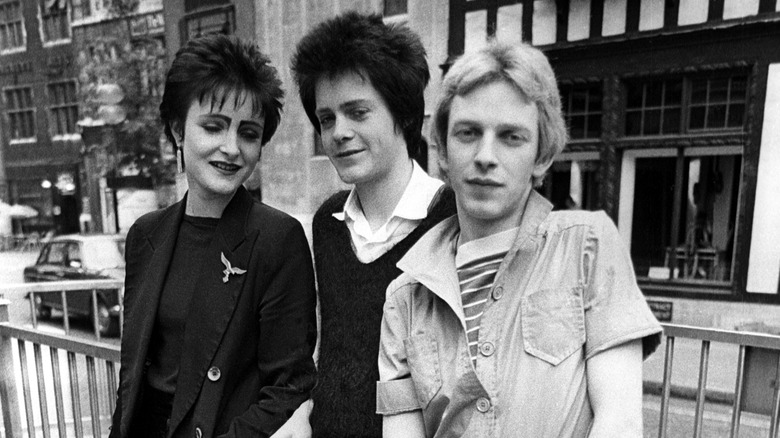
Siouxsie and the Banshees always had trouble holding onto guitar players; luckily, they had Robert Smith to call on. The Cure front man first filled in when John McKay abruptly quit on tour in 1979, and he stepped up again when John McGeoch (of the band Magazine) had to bow out due to health issues in Madrid in 1982. Coinciding with a temporary pause in his own band following the "Pornography" album, Smith became a full-time Banshee in his second stint.
In his short time in the band, he definitely left a mark. Smith plays guitars and keyboards on the "Hyaena" album, an atmospheric masterpiece that features a haunting cover of the Beatles' "Dear Prudence." The chemistry the band had at that time is palpable on "Nocturne," a live album recorded at Royal Albert Music Hall in 1983. The influences may have gone both ways; as part of Siouxsie Sioux's band and crew, Smith fully leaned into his iconic teased hair and poet goth style.
But the personnel problems continued for Siouxsie and the Banshees. Like others, Smith blindsided the band by quitting shortly before the "Hyaena" tour in 1984 to focus on the Cure. Perhaps because it had happened before, this triggered a serious, lasting rift with Siouxsie Sioux. "I'd given them two weeks' notice, which was longer than any guitarist had given them before!" he writes in his defense in the band's biography, "The Cure: Ten Imaginary Years" (via Post Punk).
Van Halen — Sammy Hagar
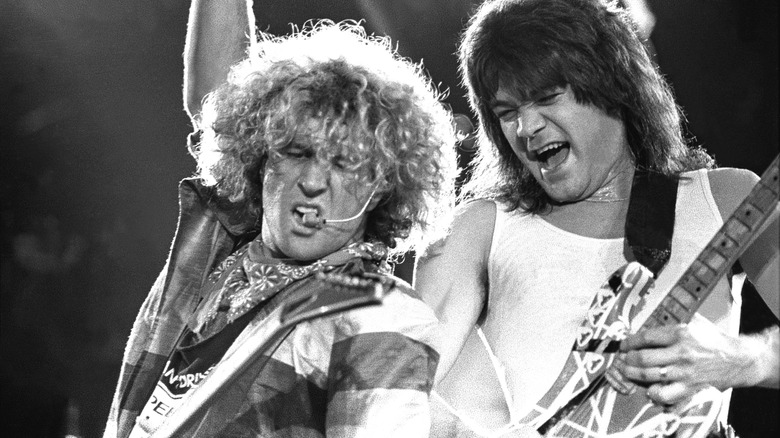
Among rock fans, opinions remain divided about which version of Van Halen is better. There's a lot to be said for the David Lee Roth era from the band's inception in 1978 to 1985. That's when the group catapulted from Pasadena, California, house parties to arenas, establishing themselves with hard-rocking early hits like "Runnin' with the Devil." It's also when the band hit a commercial peak with the album "1984," including the single "Jump." Many factors sent Diamond Dave packing, most involving tensions with lead guitarist (and bandleader) Eddie Van Halen, but the synthesizer sound on that song and album became a major point of contention. His replacement, Montrose singer Sammy Hagar, didn't have that problem.
"As artists, Eddie and I were really capable of doing a lot of stuff that he couldn't do before me," Hagar said in an interview on WRIF radio, "because the other guy [Roth] didn't want keyboards." With a new guy in front, the band's sound evolved, shedding youthful exuberance for a more adult sound. Fans weren't immediately sold on "Van Hagar," and some never will be. "Now, all the hardcore Van Halen fans [were] out there saying, 'No, no. You would've ruined it,'" he told WRIF, "... But it's all good, man."
That's an understatement; Hagar's first album with the band "5150" — poppier and heavier on ballads — became the first of four in a row to top the Billboard Hot 200 charts. The band took a leap, and to the extent that a hard rock band could, they aged like fine wine.
Iron Maiden — Bruce Dickinson
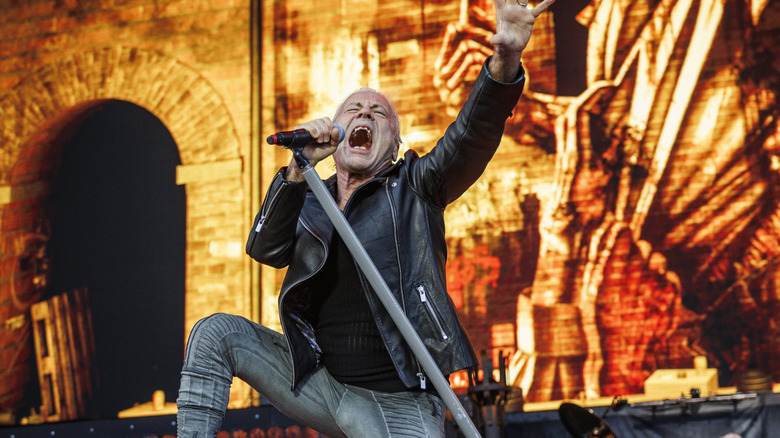
To become heavy metal royalty, Bruce Dickinson had to trust his senses. In 1980, Iron Maiden opened for his band Samson, bringing together two of the hottest bands in the second wave (or "New Wave") of British heavy metal. "Watching Iron Maiden was like getting hit by a runaway train," he told Classic Rock, "I knew then that I should be singing for that band." Iron Maiden first blasted off with Paul Di'Anno (the band's third singer) on their self-titled debut album and its follow-up "Killers," but he was booted due to worsening substance misuse issues. Not the first to lose a gig due to the rock 'n' roll lifestyle.
Dickinson was recruited by Iron Maiden bassist Steve Harris and manager Rod Smallwood at the Reading Festival in England in August of 1981. When asked to try out, he harbored no doubts. "I said, 'Before we start, you know that if I audition, I'll get the gig,'" he told Classic Rock, "'... it's exactly what the band needs. But be warned – I'm gonna be a pain in the arse.'" Be that as it may, his soaring, bombastic vocals became the ingredient that made his first album with the band, "The Number of the Beast," a stone-cold classic of the metal genre that debuted at No. 1 on the U.K. album charts in October of 1982.
The Doobie Brothers — Michael McDonald
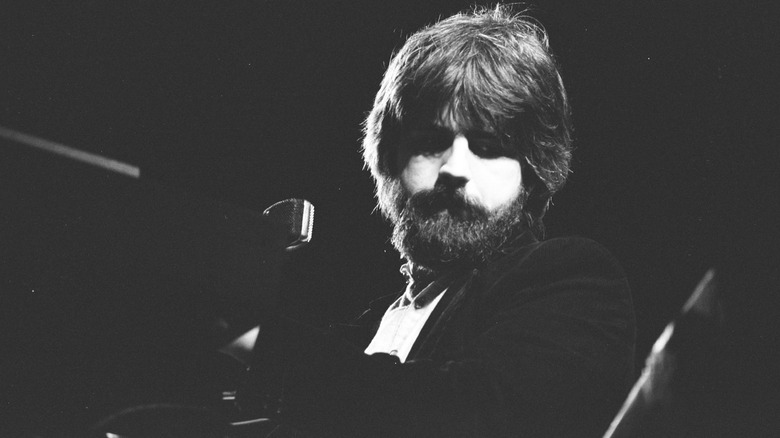
By the time crooner and keyboardist Michael McDonald joined the Doobie Brothers, they'd already made a name for themselves as a groovy Southern California boogie-rock band. With Tom Johnston singing, playing guitar, and writing songs, they scored hits in the early '70s with "Jesus Is Just Alright" and "Black Water." But the seismic shift in their sound began in 1975, when guitarist Jeff "Skunk" Baxter turned to his former Steely Dan bandmate, McDonald.
Stomach illness sidelined Johnston right before a tour, so Baxter recommended McDonald as a replacement. "I think, originally I was supposed to just fill in for Tommy, but I guess we clicked," he told Charleston.com in 2023, "... The rest as they say is history." And what a history it was. With his rich baritone voice, pop songwriting chops, and funky, soft-rock arrangements, he sparked something in the Doobies, completely shifting their trajectory and taking them back to the top.
As they picked up a mellower and more soulful sound, what would eventually be called "yacht rock" set sail. "What a Fool Believes," a Billboard Hot 100 No. 1 in 1979, is a prime example of the sonic waters they charted. With McDonald's smooth, buttery vocals soaring above an earworm, it's guaranteed to give boomers party flashbacks.
The Sex Pistols — Sid Vicious
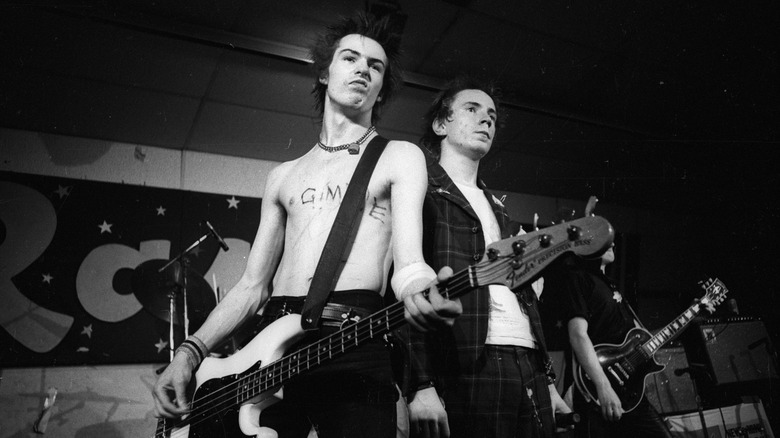
With "Never Mind the Bollocks, Here's the Sex Pistols," punk music kicked open the doors and declared anarchy. Driven by Johnny Rotten's vocals and Steve Jones' chugging guitars, it set the sonic template for the genre, provoked controversy and legal action, and surged to the top of the U.K. album charts as a result. And while the most recognizable name associated with the Sex Pistols may be bassist Sid Vicious, he replaced the original bassist, Glen Matlock. The only song Matlock played on was the debut single "Anarchy in the U.K.," but his fingerprints are all over the album.
Credited on 10 of the debut album's 12 songs, Matlock told the Post-Gazette, "I didn't write them all, but all the riffs and all the tunes ... and 'Pretty Vacant' was my song." Despite that, he was out of the group by February of 1977. What the Sex Pistols lost in Matlock's musicianship and songwriting, they gained in the reputation and look of his replacement: Sid Vicious, a fan and friend of Rotten's.
Never a great (or even capable) bass player — Jones took care of the recordings— he had everything else you'd need for the band: a leather jacket, spiky hair, and a spikier attitude. In his 11 or so months as a member, the Sex Pistols became the poster children of punk, before falling apart after the final show of a disastrous first American tour. It couldn't have gone any other way.
The Grateful Dead — Keith Godchaux
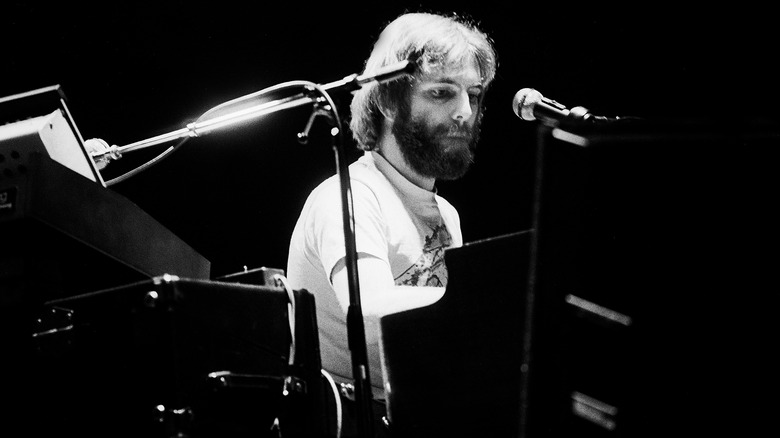
Keyboardist, organist, and harmonica player Ron "Pigpen" McKernan was part of the original line-up of the Grateful Dead, lending a harder rock, blues edge to the band's sound. He was a natural showman and a center of gravity during live performances. But by the early '70s, health issues caught up with him, and he died not long after a final show with the band at the Hollywood Bowl in 1972. Keith Godchaux, who'd fill the role, was nothing like Pigpen.
Classically trained, Godchaux had never played rock before and most often gigged with a cocktail jazz trio. Through his circle of friends, he discovered the Grateful Dead and met and married singer Donna Jean Thatcher. She brought lead guitarist Jerry Garcia and her husband face-to-face, and a jam session sealed his spot. The Dead bandleader was sold immediately. "I knew that Jerry was right," drummer Bill Kreutzmann once said (via the Good Ol' Grateful Deadcast, "... He was one of the best, if not the best, keyboardist that I've had the honor of playing with."
Godchaux fit right in, adding elegant, melodic flourishes to the band's sonic tapestry. The Grateful Dead had many line-up changes over the years, and with Godchaux on the piano bench (and Donna singing backup), they evolved, grew, and went further.
Faith No More — Mike Patton
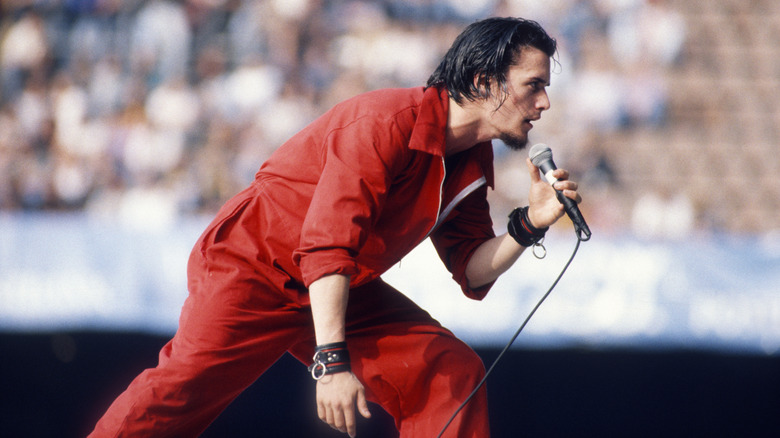
Chuck Mosley's joining Faith No More in 1985 kicked the groundbreaking San Francisco band into gear, yet it was his replacement, Mike Patton, who would take them to chart success. The band had gone through other singers — including a short stint with a young Courtney Love — but it was with Mosely in front that they got their first taste of recognition. On the title track of their debut album "We Care a Lot," his gritty vocals and Jim Martin's distorted guitar lines created a post-punk-inflected rap metal sound well ahead of its time in the mid-'80s. But it ended up being a short stint: When Mosley's intoxication and uncontrolled behavior threatened to derail a European tour in 1988, the band fired their front man.
Patton, then a college student, got the chance to try out for Faith No More on the strength of a demo tape he'd made of his high school band, Mr. Bungle. "We auditioned about five other people, and it was pretty clear that Patton had superior natural ability," Martin told Kerrang, remembering him then as a "Milk and cookies type" (via Far Out). Ever the prolific artist — over his career, he's led multiple bands and collaborated with countless artists — he flexed that "natural ability" right from the get-go by devising vocal melodies and writing all of the lyrics for the iconic "The Real Thing" album.
With his broader vocal range and more idiosyncratic approach to songwriting, the band evolved, crystallized, and exploded. The lead single "Epic" reached No. 9 on the Billboard Hot 100 in 1990, cementing Faith No More's status as a force to be reckoned with.
Black Flag — Henry Rollins
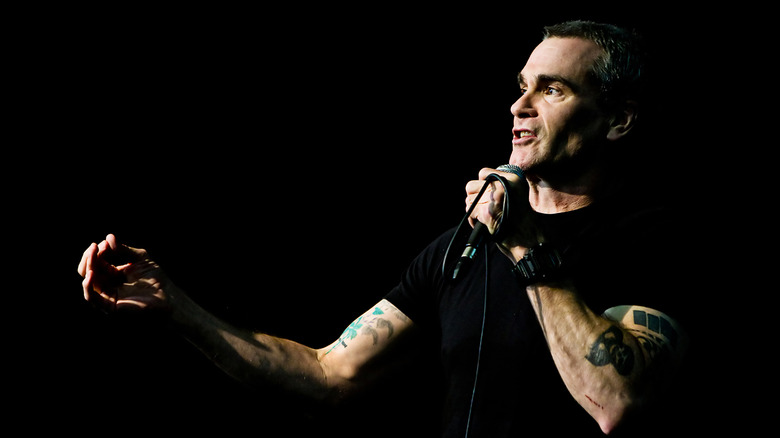
You need a flow chart to fully comprehend the shifting line-ups of Black Flag. From their formation in 1976 until Henry Rollins joined in 1981, the band cycled through three lead singers: Keith Morris, Ron Reyes, and then their guitarist Dez Cadena. In the early years, they crisscrossed the country multiple times, touring the circuit of clubs and venues that were the breeding ground for punk and hardcore music.
Working a minimum wage job and living in Washington, D.C., Rollins knew Black Flag from local shows in the punk scene. In 1981, he drove up to New York to catch them on tour. When he requested the band play "Clocked In" — because he was about to head back to work — Cadena handed him the mic. "I'll never forget looking around while we're doing the song at the rest of the band, and they're kinda looking at me like, 'wow,'" he told Artist Talk. The next day, he got a call and never worked a minimum wage job again.
Finishing out that tour as a roadie, Rollins rehearsed during soundchecks and sang on encores. Proper training began back in Los Angeles; "we would do these incredibly long rehearsal days," he recalled on the Peeling Onion podcast, "... it was about a month of like boot camp" (via Ultimate Guitar). With Rollins up front, Black Flag had their classic line-up, and they scratched their name into hardcore history.
Rush — Neil Peart
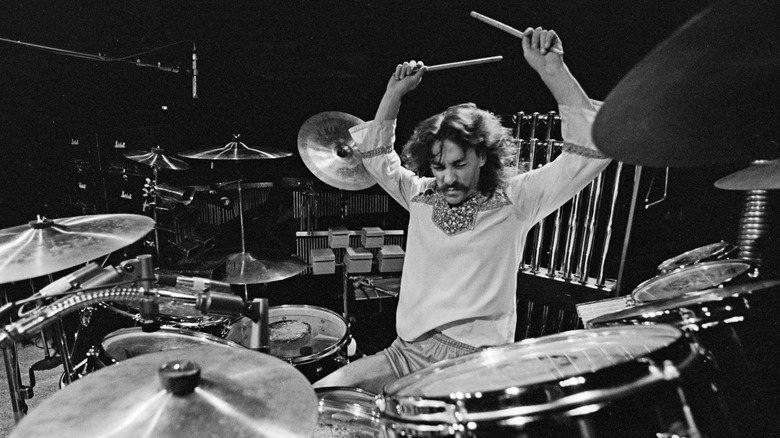
With due respect to bassist Geddy Lee and guitarist Alex Lifeson, Neil Peart's virtuosic drumming and intricate, philosophical lyrics are what set Rush apart. Mind-bending solos, intricate parts, and oversized drum kits; his contributions made for legendary prog rock and spawned hit albums like 1981's "Tom Sawyer." But when Peart joined up in 1974, the Toronto, Canada, rockers had been playing for six years.
Rush's first line-up crystallized in 1968, when Lifeson and original drummer John Rutsey teamed up with Geddy Lee. When their blues-oriented 1974 self-titled debut started getting heavy airplay in Cleveland, they gained traction in the U.S. and scored opening slots for bands like Kiss. But just as things were speeding up, Rutsey quit. His health is often cited as a cause, though creative differences also played a part. According to Lee, Rush's shift from blues to prog was also a factor, telling Matt Pinfield in an interview, "he wasn't really into playing like that because that required a real active drummer ... he was a real 'lay down the backbeat' kinda drummer."
Rush had auditions in the summer of 1974, and a 21-year-old Peart — then getting by selling parts at his father's farm equipment shop in St. Catharines, Ontario — won the job. The band members weren't sold when they first saw the gangly kid, but that changed the moment he counted off. "He pounded the crap out of those drums," Lifeson recalled in the documentary "Beyond the Lighted Stage" (via Ultimate Classic Rock), "He played like Keith Moon and John Bonham at the same time."