

Riffs That Still Rip: Lovin' Spoonful's Summer In The City & Other Classics Released 60 Years Ago This Week
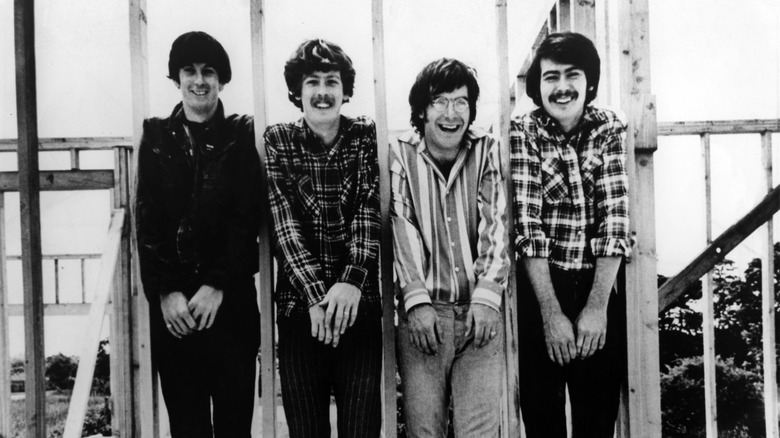
Welcome to the second edition of Riffs That Still Rip, a biweekly column where we unearth some absolute classics that deserve a modern spin.
Looking back 60 years this week to the end of June and start of July 1966, it's incredible how much of the great rock music released all those decades ago still sounds fresh and even challenging. Here, we've chosen four classic rock tracks released 60 years ago this week that still deserve a spin in the summer of 2026.
Rock music was exploring new, exciting avenues in 1966, and many of the tracks released in June and July that year have gone on to become timeless classics. While some of those to have made our list are by acts that have come to define the decade, they are also notable for being wildly experimental, either as expressions of the performers' confidence to step outside of the music they had released to that point to explore new styles, or, in the case of two artists on this list, debuts that proved to be game changers for the rock genre.
All Tomorrow's Parties – The Velvet Underground
One of the most legendarily low-key debuts of the 1960s, "All Tomorrow's Parties" was released at the start of July 1966, introducing the world to the sound of the Velvet Underground and their haunting chanteuse, Nico. The track is also central to the band's classic album "The Velvet Underground & Nico," released the following year to little fanfare but lasting retroactive acclaim and widespread influence.
Written by the band's leader, Lou Reed, especially to be sung by Nico on the advice of producer Andy Warhol, "All Tomorrow's Parties" plays to the latter's strengths, with a slow, funereal tempo and otherworldly instrumentation that gives the song a sense of ritual. The elliptical lyrics revolve around what appears to be a female socialite, whose humble, ragged outfits seem to reflect her insincerity or outsiderness. Nico's vocal style makes the song especially mournful; there have been many cover versions over the years, but few singers fit the song as perfectly as she does.
The single was barely promoted by the band's label, Verve Records, and the Velvet Underground failed to find the following outside of New York art circles that they deserved. But the music they made in their few years together is considered foundational to art-inspired rock, and "All Tomorrow's Parties" encapsulates much of what made the band so influential.
Summer in the City – The Lovin' Spoonful
Folk-rockers the Lovin' Spoonful wrote themselves into rock and roll history on July 4, 1966, when they released the ultimate song of the summer. "Summer in the City" followed on from the band's hugely successful debut single "Do You Believe in Magic," but where that was an unashamedly optimistic slice of bubblegum, "Summer in the City" reveals the Lovin' Spoonful's grittier, bluesier edges.
Indeed, the song memorably mentions actual grit, with its famous opening lyrics going: "Hot town, summer in the city / Back of my neck getting dirty and gritty." Frontman John Sebastian's breathless delivery gives a sense of the claustrophobia of navigating hot summer days, contrasting with the cooler choruses that describe the pleasures of summer nights.
It was a No. 1 smash back in '66, cementing the band's reputation as one of the era's most popular hitmakers, during a year in which they released two full-length studio albums. The Lovin' Spoonful didn't last long in their original configuration, with legal problems after the drug arrests of two members led them to direct police to their dealer, tarnishing their reputation among rock fans, who considered them to have snitched. But despite this, "Summer in the City" has remained continuously popular over the last six decades, soundtracking countless movies and TV shows.
Hungry Freaks, Daddy – The Mothers of Invention
Rock music was about to come on in leaps and bounds during the late 1960s, and one of the acts that heralded the turn toward more ambitious and conceptual work was the Mothers of Invention. The Frank Zappa-led group released their debut album, "Freak Out!," on June 27, 1966, and its opening track, "Hungry Freaks, Daddy," announced that the former bar band was looking to take their listeners to a new world of sonic weirdness.
Part of a greater satire of the Los Angeles freak scene of the mid-1960s that pervades the entirety of "Freak Out!" – the LP has been described as one of the earliest concept albums, prefiguring the Beatles' "Sgt. Pepper's Lonely Hearts Club Band" by almost a year – "Hungry Freaks, Daddy" sees the nation personified as "Mr. America," whom the lyrics criticize for his apparent conformity.
But while the droning vocals offer the song's critique, the instrumentation makes for a danceable, groove-laden track. Never released as a single, "Hungry Freaks, Daddy" nevertheless introduced the world to Zappa's innovative approach and exceptional musicianship on the guitar.
Mother's Little Helper – The Rolling Stones
The Rolling Stones had an imperial run of hit singles throughout the 1960s and early 1970s, and "Mother's Little Helper," released in the U.S. on July 2, 1966, sees the British Invasion band at the top of their game. Like Mothers of Invention, their release saw the band in a satirical mood, with a set of lyrics that critiques the intergenerational tensions of the era and the use of prescription drugs in suburban households, seemingly referencing Valium, which was often prescribed to women at the time. The track features an iconic Indian-inspired riff that gives it a memorable, jangled feeling reflective, perhaps, of the drug's effects.
Bizarrely, despite "Mother's Little Helper" being one of the Rolling Stones' most popular songs, it has rarely been played live. As drummer Charlie Watts explained in the 2003 book "According to The Rolling Stones": "We've often tried to perform 'Mother's Little Helper' and it's never been any good, never gelled for some reason — it's either me not playing it right or Keith [Richards, guitarist] not wanting to do it like that. It's never worked. It's just one of those songs. We used to try it live but it's a bloody hard to record and play, although we did perform it live on Ed Sullivan."
If you or anyone you know needs help with addiction issues, help is available. Visit the Substance Abuse and Mental Health Services Administration website or contact SAMHSA's National Helpline at 1-800-662-HELP (4357).