

5 Backup Singers Who Helped Put '70s Rock On The Map
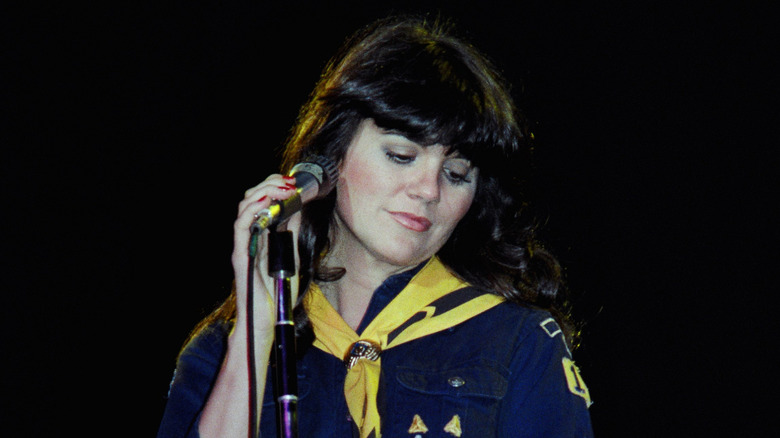
Backup singers hold a remarkable amount of sway over the artists they support. After all, there are backup singers who actually carried classic No. 1 hits and there are whole legendary groups that started as someone else's backup band. But irrespective of subsequent success, there's something about a stellar reinforcement of a lead vocal that becomes an art unto itself.
With that in mind, we wanted to take a look at some of the remarkable supporting vocal cameos that made '70s classics go hard. Some of these steal the show while others simply lend reinforcement to captivating arrangements — but all of them play a pivotal role in classic songs. From the glitter pop of David Bowie to the blue-collar folk rock of Neil Young and the slick jazz-fusion stylings of Steely Dan, we've brought together some of the hippest, grooviest, most far out backup performances of the decade.
Tina Turner and the Ikettes With Frank Zappa
Frank Zappa's band, the Mothers of Invention, features a sprawling roster of legendary members including Mahavishnu Orchestra violinist Jean-Luc Ponty and guitar virtuoso Steve Vai. But in 1973, his album"Over-Nite Sensation" featured backup vocals from the now-iconic Tina Turner along with the Ikettes, her backup singers in husband Ike Turner's band. On tracks like "I'm the Slime" and "Dirty Love," Turner and the Ikettes fill Zappa's cerebral prog rock with the scorching R&B soul that would soon rocket them to stardom.
The end result is as surreal as it is powerful. Turner and company commit to lines like "I am the slime from your video, oozing along on the living room floor" and "movin' to Montana soon, gonna be a dental floss tycoon" with the same righteous passion they brought to "Proud Mary." As Zappa later recalled, Turner was such a pleasure to work with that she even prepared a pot of stew and brought it to the studio for the band on her day off.
Michael McDonald With Steely Dan
While their initial lineup had the structure of a traditional rock band with fixed membership, the Walter Becker and Donald Fagen-led musical juggernaut of Steely Dan eventually evolved into a rotating roster of top-flight session players. Outstanding among them was Michael McDonald who lent his soulful, smokey voice to a support role across three massively successful albums, 1975's "Katy Lied," 1976's "The Royal Scam," and 1977's "Aja."
McDonald's signature low-end rasp sits comfortably alongside frontman Donald Fagen's nasally wise guy sneer. What stands out most in the resulting effect is just how tasteful and selective Becker and Fagen are in their vocal arrangements. Songs like "Bad Sneakers" and "Peg" stand out thanks to the creative and novel placement of harmonized accents on critical hooks. As such, McDonald appears and vanished just as quickly, but the result is some of the most satisfying musical punctuation marks in all of the '70s.
That late 1970s era would prove to be a pivotal stage in McDonald's career. In addition to work with Steely Dan, he joined the Doobie Brothers in 1977 and would play a central role in developing their sound.
Luther Vandross With David Bowie
By 1975, Major Tom was making major musical modifications. David Bowie had shed his beloved Ziggy Stardust persona and the surrealistic glam rock that came with it in favor of the funk/soul R&B heard on his "Young Americans" album. The album features an all-star cast with fusion jazz saxophone heavyweight David Sanborn, along with guitarists Earl Slick and Carlos Alomar. If that wasn't enough, John Lennon himself makes writing and performance appearances on "Fame" and a majestic take on the Beatles' classic "Across the Universe."
But it's a young Luther Vandross that emerges as the album's smooth soul lynchpin. His sonorous tenor voice emphasizes Bowie's wispy blue-eyed soul vocal stylings with a stabilizing undercurrent. Vandross' own composition, "Funky Music (Is a Part of Me)," appears on the album as "Fascination" and Bowie was so impressed with the overall result he invited Vandross to join him on tour, both as a backing vocalist and opening act.
The Beach Boys With Chicago
By the release of 1974's "Chicago VII," the titular band were no strangers to large scale ensemble arrangements that went well outside traditional rock band stylings. Having played a crucial role in the development of jazz/rock fusion, they managed balance electric instrumentation and horns in songs that were as intricate as they were radio friendly.
"Chicago VII" successfully continued that evolution owing in part to a series of hit singles, with "Wishing You Were Here" outstanding among them. The song is a reflective meditation on the strain that endless touring puts on performers and their personal relationships. It's a familiar theme in popular music — Bob Seger's "Turn the Page" and Metallica's "Wherever I May Roam" are also prominent examples. But "Wishing You Were Here" comes with haunting backup vocals from no less than Carl Wilson, Dennis Wilson, and Alan Jardine of Beach Boys fame. Where Beach Boys fare is generally chipper and upbeat, the song finds them adding world weary support to somber thoughts about the compromises of success.
Linda Ronstadt and James Taylor With Neil Young
The explosive success of "Harvest," Neil Young's 1972 masterpiece album, would enshrine him as a solo artist. What presents as a humble, country-infused folk-rock LP quietly morphs into a sprawling epic with appearances by the London Symphony Orchestra, wistful slide guitar, and lush ensemble vocal arrangements.
That latter facet is particularly noteworthy: no less than James Taylor and Linda Ronstadt appear as backing vocalists on the album's smash hit "Heart of Gold." By that point Taylor was already a superstar in his own right with hits like "Fire and Rain" and "You've Got a Friend" topping the Billboard charts. Ronstadt was still very green, having only had one minor hit with the Stone Poneys. While both contribute their own unique presence to the track, it's Ronstadt who stands out, soaring above the ensemble with the iconic final variation on the chorus theme.
Ronstadt would soon be a major pop diva in her own right with her albums "Heart Like a Wheel," "Simple Dreams" and "Living in the U.S.A." all going to No. 1 on the Billboard 200. That success would endear her to the record buying public the world over throughout the decade, not the least of which was future President of the United States Barack Obama who, during a ceremony to award Ronstadt the National Medal of the Arts, admitted to having a crush on the singer in his youth.