

Backup Singers Behind Huge Hits Who Quit Music For Ordinary Jobs
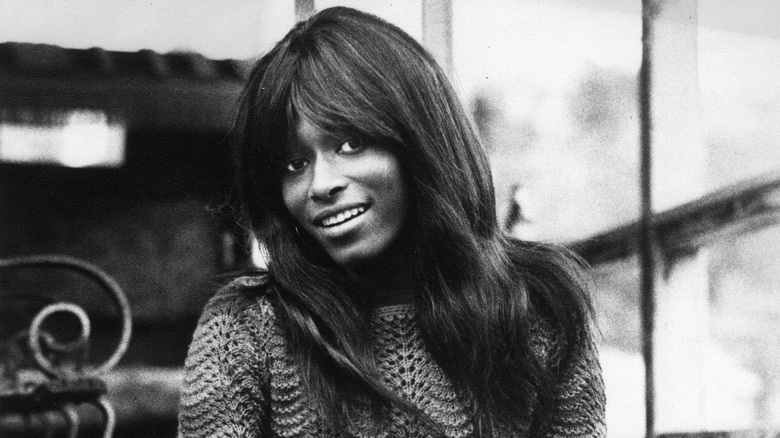
Backing singers are the unheralded heroes of popular music, and yet some have given it all up for a regular nine-to-five. Almost every major act has employed them at some point to give their music an extra burst, from James Brown to the Rolling Stones, whose classic track "Gimme Shelter" owes much of its power to the vocal contributions of Merry Clayton. Much of the time, these figures remain firmly in the background, never to become famous in their own right, and even if they become a featured vocalist, they can often be overshadowed by the lead.
Nevertheless, being a backing singer is a skill of its own, and one that can be lucrative as a career for many vocalists. And indeed, there are some benefits to relative musical anonymity. For one, it's far easier to return to everyday life if you tire of the music industry than for a famous star, as did these noteworthy backup singers, who worked with the cream of the music industry before returning to everyday life to pursue other careers.
Cindy Birdsong
Cindy Birdsong performed in a number of high-profile groups throughout her musical career. The New Jersey singer began her rise to prominence in 1961, performing alongside Patti LaBelle as a member of the Blue Belles, after honing her skills performing at local social events and parties. With LaBelle, Birdsong featured on several hit singles, such as "Down the Aisle (The Wedding Song)" and "You'll Never Walk Alone."
But Birdsong's biggest success was undoubtedly with the Supremes, with whom she joined as the replacement for departing feature vocalist Florence Ballard — whom she closely resembled in the eyes of the group's management — in 1967. Alongside Diana Ross and Mary Wilson, she featured on albums, TV specials, and lucrative tours in the late 1960s, though Ross left The Supremes in 1970, destabilizing the group. Birdsong took a sabbatical from the group in 1972, when she had a child, though she returned to the group the next year.
Birdsong officially left the Supremes in 1976, though she did continue to make live appearances in various line-ups until the mid-2000s. She had a varied non-musical career thereafter, working as a secretary, a nurse at the UCLA medical center, and as an ordained minister.
Claudia Lennear
Claudia Lennear has been the subject of some of the most celebrated songs in rock and roll, and is said to have inspired David Bowie's "Lady Grinning Soul" and the Rolling Stones' "Brown Sugar" (which admittedly is a song that has aged terribly over the years). But Lennear was more than just a muse to big-name rockers; for many years, she was also their go-to backing vocalist. She began her career performing with Ike and Tina Turner in 1967, having learned her craft in her early years in a West Coast doo-wop group. She later performed with artists including Joe Cocker, Humble Pie, and Ry Cooder, and moved into providing vocals for movies.
However, she made a radical departure from entertainment when she began to work as a teacher, specializing in Spanish, French, and English. Lennear's passion for languages was lifelong; as a child, she had dreamed of being a translator for the United Nations. Despite her talents as a singer, it seems only natural that she eventually returned to her first love.
Alfa Anderson
Alfa Anderson was a vocalist whose talent caught the ear of legendary soul singer Luther Vandross. Anderson had become adept through gospel singing at her local church in Augusta, Georgia, where she also played wind instruments. In 1977, Vandross brought her to the attention of Chic's Nile Rodgers, and she soon joined the band. As a member of Chic, she featured on several of the group's key works, including the 1978 album "C'est Chic," for which she was also the cover star. By then, she had been promoted to co-lead singer, and remained with Chic until the group split in 1983.
Anderson continued in the music industry, touring with Vandross and establishing herself as a session performer. However, by 1987, she returned to her former vocation as an educator, going to college and eventually working her way up to being a school principal. Despite no longer relying on singing as her profession, Anderson later joined Chic reunions and occasionally released music with her husband, the bassist Eluriel "Tinker" Barfield.