

'70s Artists You'd Actually Want To Meet In Real Life
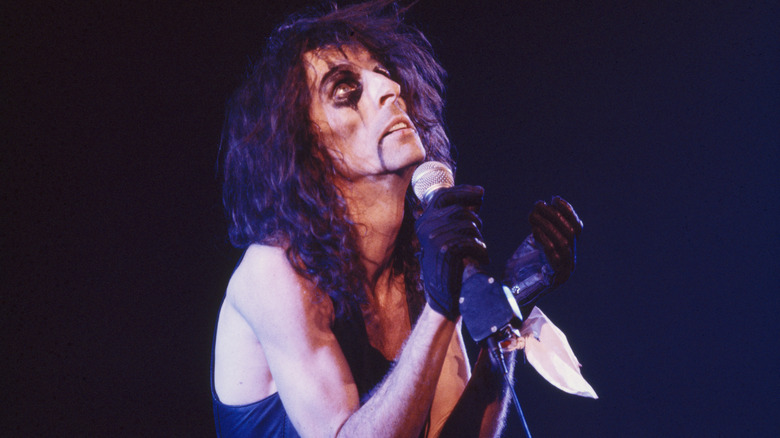
We, both meaning "here at Grunge" and "human society generally," talk a lot about the bad behavior and general wrongdoings of music greats. To an extent, that's natural: bad behavior is exciting, and sin makes great copy. That's why people watch true crime and not TV shows called "This Man Didn't Steal or Kill."
But nevertheless, it's good to take a break from focusing on the worst to look at some of the best. Among all the wrecked hotel rooms, legal trouble, rock stars who destroyed their relationships, and terrible late-career sellouts of the music biz, there are also some real sweethearts. Some of the most beloved musicians are philanthropists, helpers, and even faithful spouses. We've collected a few of our favorite class acts, one great lady and some good dudes — all-around top-notch human beings who also just happened to be ruling the charts in the 1970s (and, in several cases, beyond). Let this be a lesson: Good guys rock.
Ronnie James Dio
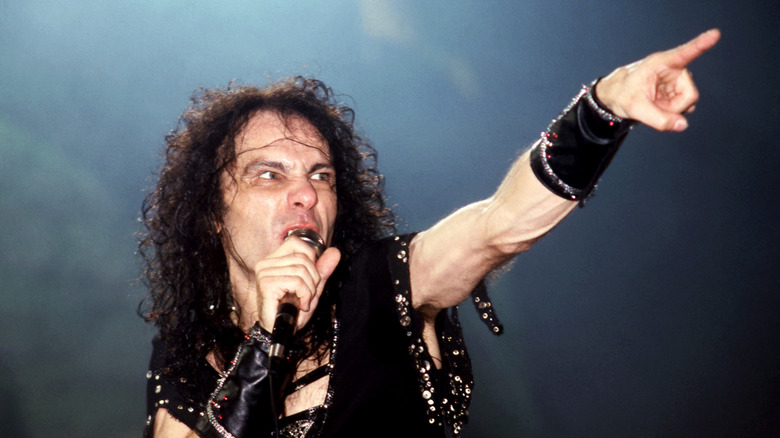
Though he died in 2010, Ronnie James Dio, the frontman of Rainbow, Black Sabbath, and Heaven and Hell, among other projects, had one of the best metal voices of all time, thanks to a secret brass-nerd youth that saw him teach himself the French horn and learn breathing techniques that he later used in singing. For a metal god whose pipes literally shredded cheap mics, though, Dio was apparently all sugar. When he was in Black Sabbath, he hand-delivered tickets to the dudes from Anthrax before they were Anthrax-the-famous-band and remembered the bands' name five years later once they got big, congratulating them on having made it. He was especially well-known for hopping out of warm cars to meet fans waiting in the cold and banking hours meeting fans.
According to Far Out, Dio was also the person who popularized the "devil horns" metalhead gesture, wanting a trademark to stand out from the Ozzy-ness of Black Sabbath. However people took it, the gesture has no Satanic origin at all: while it can be used to insult or hex someone, its most common use is to ward off the evil eye. Dio, a good Italian boy at his core, had learned it from his grandmother. (She probably rocked too).
Dio also married a stand-up lady. After his death from stomach cancer, his widow, Wendy Dio, has managed both her late husband's legacy and run a nonprofit funding cancer research, focusing on early detection.
Dolly Parton
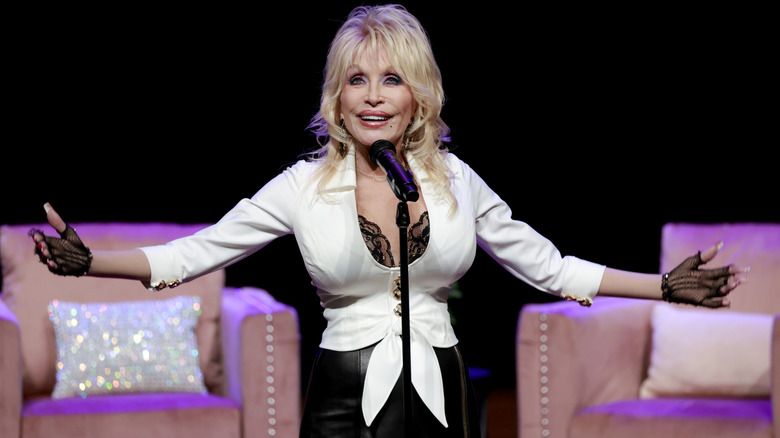
Look: You knew Dolly would be on this list. And you knew that because she's become nearly as famous for philanthropy and overall good vibes as she is for her '70s hits like "Jolene," "Here You Come Again," "Light of a Clear Blue Morning," and many, many others (both with and without Porter Wagoner).
Dolly Parton has done so much (especially by comparison to some of the other wealthy artists and entrepreneurs in America) that Billboard actually made a detailed timeline of her philanthropic efforts, starting with efforts to lower dropout rates in her native East Tennessee and running through helping injured eagles, sending books to children, funding coronavirus research and natural disaster relief, and more.
Dolly has also advocated for her queer fans, embracing the community for decades and advocating against hostile policies from the government and enforcing tolerant policies at her own properties. And she's turned down the Presidential Medal of Honor three times, under the first Trump and Biden administrations, to avoid the appearance of a political endorsement either way.
Alice Cooper
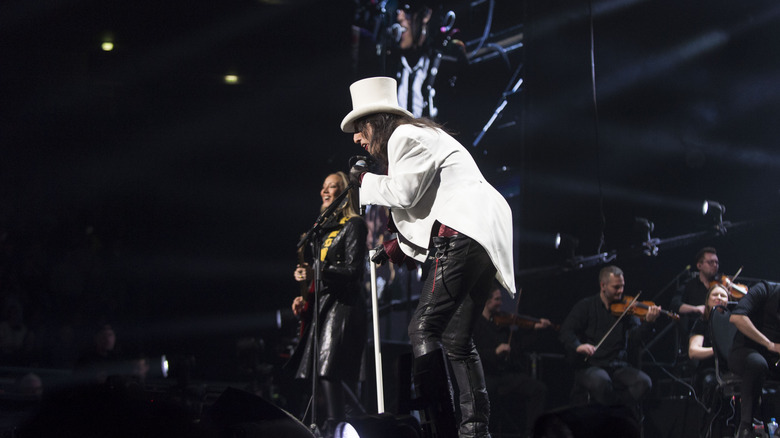
Alice Cooper's horror-movie-style stage antics and overall weird-guy vibe may have worried a lot of parents, but under his theatrical, mock-execution-conducting, snake-brandishing persona beats the big, warm heart of a grade-A softie. To raise money for worthy causes, Cooper plays (and runs) charity golf tournaments: apparently the dude loves golf, which is not necessarily a "good guy" thing but is charming when you think about how some of his peers traditionally spent their free time. He also loves helping kids, and founded a network of after-school programs in Arizona, Alice Cooper's Solid Rock Teen Centers, where teenagers can get hands-on training in the arts and in vocational programs (hey, someone has to make Cooper's stage guillotines).
He's also a wife guy. The threat of losing Mrs. Cooper (government name Sheryl Goddard) shocked the shock-rocker into taking his addiction issues seriously, leading him to pursue and maintain sobriety for decades. He once spoke of his devotion so intently that fans misunderstood Cooper as referring to a suicide pact, but no: He just meant that since he and Goddard are joined at the hip, whenever God chose to scoop the one up, the other would probably be right there for a twofer.
Willie Nelson
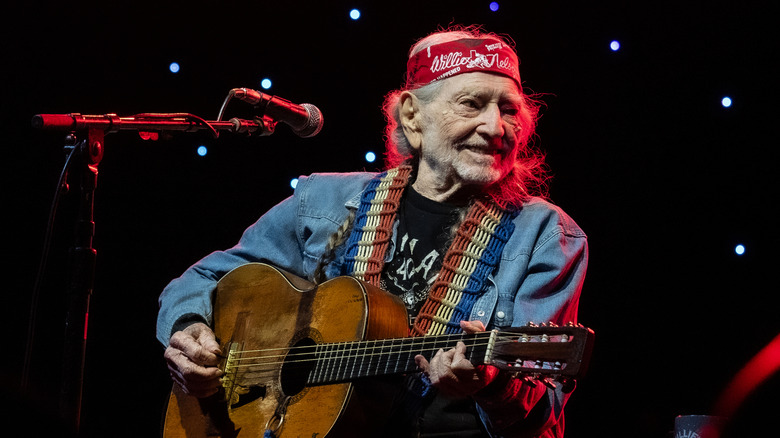
Willie Nelson could almost earn a place on this list for vibes alone. Still performing in his 90s, an age when most people are not alive, he's written some of the most enduring country songs of all time ("Crazy" alone would be a legacy, but he's also got "On the Road Again," "Angel Flying Too Close to the Ground," and literally dozens more classics). His only real legal trouble in all this time has been for marijuana possession and not paying his taxes, which are probably more likely to endear him to the average person than not.
But in addition to his near-peerless angel energy, for which his only real competition is Dolly Parton, Nelson has also worked to improve life for American farmers. In 1985, confronted with statistics announcing the collapse of the small family farm, Nelson co-founded Farm Aid, an annual concert raising money to help small-scale farmers, and has joined the farmers on protest marches. He's also well-known for making time for his fans, with one of his few ironclad rules for his touring bands being that they must be sweet to the people who came to listen. Or else.
Harry Chapin
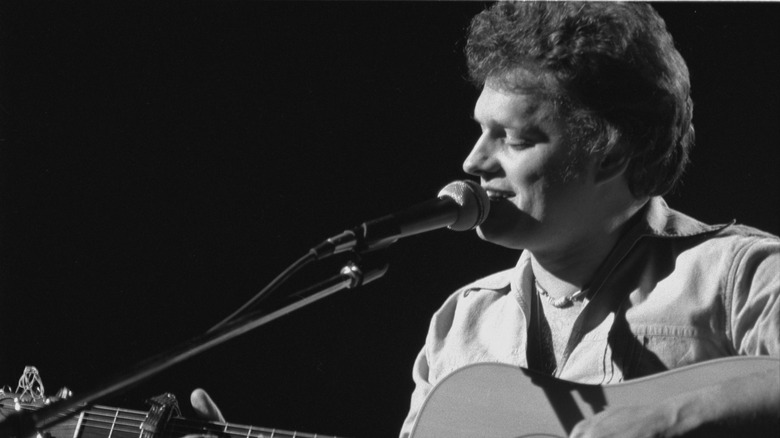
Harry Chapin was much more than the "Cat's in the Cradle" guy, and not just because he also wrote a hilarious but poignant song about (the true story of) 30,000 pounds of bananas spilling out onto a Pennsylvania highway. The late Chapin was also a ferocious advocate for humanitarian causes, most prominently the fight against hunger, leading him to cofound the still-active nonprofit WhyHunger. Chapin donated the proceeds from every other concert he gave to charitable causes.
Chapin died in an auto accident in 1981, at just 38 years old, but he made enough of a name for himself in those years that his legacy is widely maintained. ASCAP, the music licensing service, gives a Harry Chapin Humanitarian Award to musicians active in similar causes. A fundraising run, food bank, and Girl Scout merit badge, all in his native New York, bear his name as they build on his work to end hunger. A lot of people would like world hunger to end; Chapin put far more of himself into the struggle than most. Someone like that seems like a person you'd want to meet back in the '70s.