

5 Rock Musicians Who Chased College Degrees While Famous
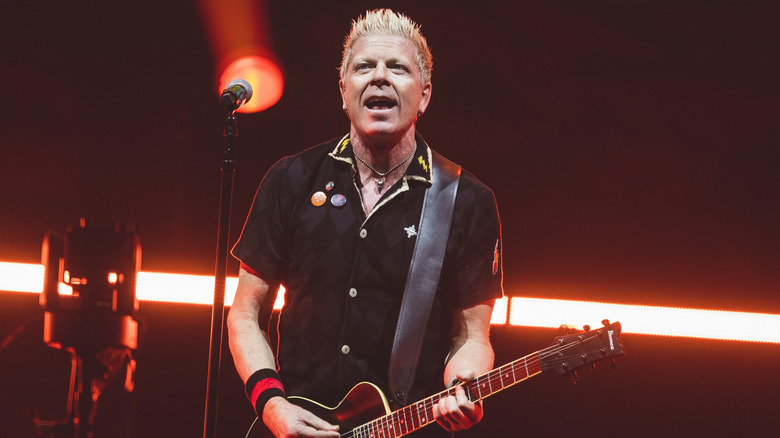
Being a rock star can be a full-time job. Between rehearsals, recording sessions, touring, and press sessions, not to mention business meetings with managers, agents, and record label owners, it's surprising that they find time to enjoy themselves. And yet, some of the biggest names in rock have managed their time so well that they have earned college degrees, usually in subjects unrelated to music, after they found fame.
Here are five rockers who decided to go back to college to pursue academic interests, and managed to graduate despite the trappings of fame and the potential pitfalls of the rock 'n' roll lifestyle — most notably the partying. It's arguable that, with a certain amount of financial security afforded to them and an enjoyable day job to come back to, rock stars may have it easier than most when it comes to taking on academic pursuits on the side. But we all know how difficult it is juggling multiple projects at the best of times, and earning degrees while maintaining a rock career is still a major achievement. Hopefully, the parallel academic pursuits of legends such as Dexter Holland and Brian May will serve as a source of inspiration for anyone looking to make their own music, write a novel, or pursue any other dream while working their usual nine-to-five.
Brian May
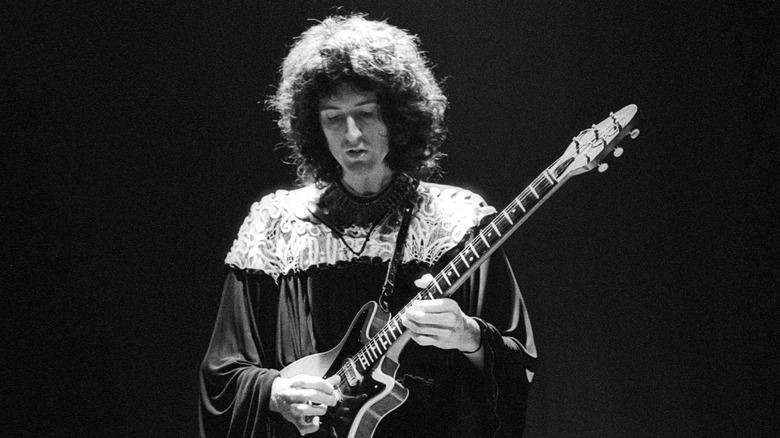
Possibly the most famous example of a rock star who chased a college degree while being a member of one of the biggest bands in the world is Queen guitarist Brian May. May has always been technically minded; as a youth, he and his father built the famous "Red Special" guitar that he has played for the majority of his career with Queen, and he is considered a guitarist with a particularly technical approach to playing.
May was studying for a PhD in astrophysics at Imperial College London when Queen began to take off in 1974, and he decided to put his studies on ice to commit fully to the band. More like a deep freeze, in fact, as May's sabbatical from academia lasted 33 years, with him finally returning in 2006 to finish his PhD, receiving his diploma the following year. Since then, he has balanced his life as a rock star with his academic interests, and even became the chancellor of Liverpool John Moores University in 2007.
Greg Graffin
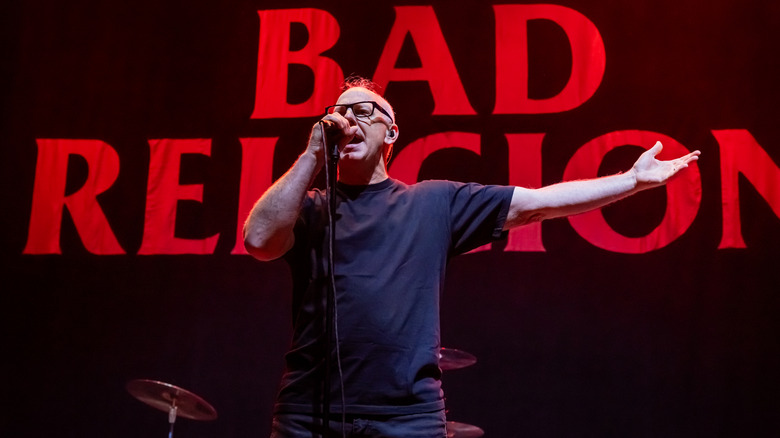
Bad Religion frontman Greg Graffin isn't just an iconic punk vocalist. He's also a respected scientist, whose career has seen him publish widely and teach at some of America's most respected institutions.
Graffin formed Bad Religion when he was just 15, with his band making a name for themselves in the legendary Los Angeles punk scene of the early 1980s. It was a milieu that could have consumed someone at such a tender age, but Graffin's curiosity also extended far beyond music, setting him up for a successful parallel academic career.
Long after Bad Religion had become established, Graffin was a student at UCLA, receiving an undergraduate degree in anthropology and a master's degree in geology. He earned his PhD in zoology from Cornell University in 2003. Since then, Graffin has established himself as a well-regarded lecturer and writer of several books, focusing often on evolution and — crossing over with the themes of his band — religion.
Rivers Cuomo
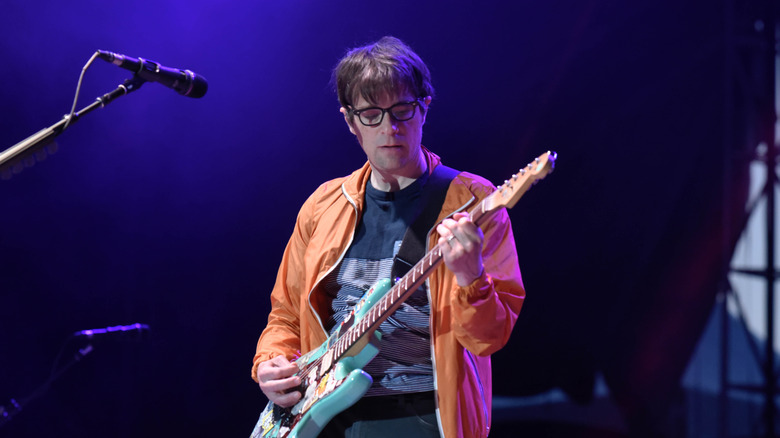
Rivers Cuomo first came to prominence as the primary songwriter and frontman of the alternative rock group Weezer in the mid-1990s. The group found a huge audience almost instantly with the release of their self-titled debut, known to fans as the "Blue Album," despite Weezer being uncomfortable with their first album. They have remained popular ever since, but even from the start, Cuomo had a keen interest in academia, seeing it as a perfect antidote to the chaos of rock 'n' roll.
With this in mind, he enrolled at Harvard University as early as 1995, shortly after recording Weezer's first album. He would return to Harvard again and again, breaking up his studies between tours and periods of recording. He first majored, understandably, in music, but soon realized that the music taught on such a course was not as directly related to his own art as he had assumed. He later switched to English, an understandable line of inquiry for a lyricist, and graduated in 2006.
Dexter Holland

The lead singer of platinum-selling punk rock band the Offspring, Dexter Holland enjoyed a huge amount of success and acclaim in his mid-1990s heyday, headlining major venues with a large, loyal fanbase. It would be no surprise to hear that, with Holland clearly so good at his day job, he would be satisfied to stay in his lane, if not rest on his laurels entirely.
But the truth is that Holland incubated a certain amount of academic yearning through much of his music career. A natural academic with an exceptional high school record, he had already begun studying for a PhD — researching the molecular biology of HIV — at the University of Southern California when his musical career with the Offspring took off. It was then that he understandably decided to take a hiatus from studying, believing that once the hype around the band had died down, he would be able to return to his studies.
It didn't quite work out like that. It was only years later that Holland finally found time to finish off his research and receive his PhD, studying part-time and spreading his studies over five years, graduating in 2017.
Sterling Morrison
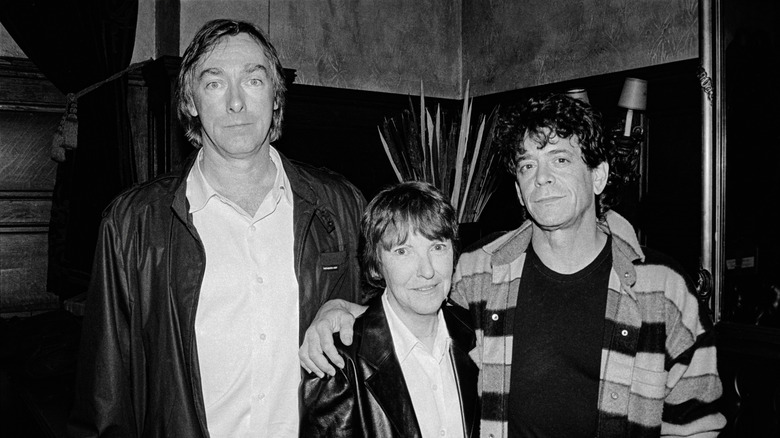
Sterling Morrison (pictured above on the left) was the imaginative and reliable lead and rhythm guitarist for the Velvet Underground, the band he formed with Lou Reed in 1965. The "VU," as they were also known, were one of the most avant-garde rock groups to emerge during that era, and Morrison's career was arguably as unconventional as the sound of his legendary band.
He and Reed had become friends at Syracuse University, where they both studied creative writing. The importance of literature to the band's identity is obvious through Reed's singular, cutting-edge lyricism, but despite not being a lyricist in the band, literature also remained close to Morrison's heart.
The guitarist largely retreated from the music industry after the dissolution of the Velvet Underground in the early '70s, channeling his creative energies into studying for a PhD in literature from the Middle Ages, as well as becoming a teacher at the University of Texas at Austin. He later worked as a tugboat captain and reunited with the Velvet Underground in the early 1990s, touring through Europe with the band.