

The No. 1 Song On July 15, 1960 Hits Harder Today
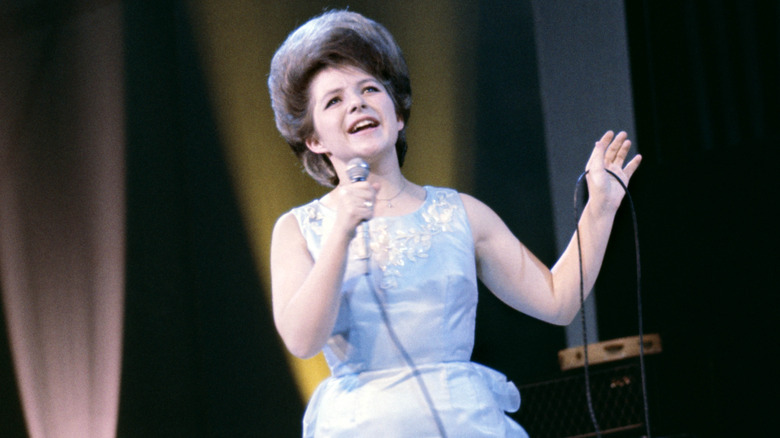
Back when Brenda Lee first released her 1960 hit, "I'm Sorry," the song made the record label's higher-ups nervous, even though it went on to be a chart-topper in mid-July that year and resonate even harder with modern listeners. After all, it was the '60s, the song was overtly romantic, and the musical prodigy Lee was only 15 years old.
However, despite being released as a B-side to the cheery "That's All You Gotta Do," "I'm Sorry" proved to be the real hit, with a moody through-line that's given it emotional heft and staying power decades down the line. Even Taylor Swift — who's written glowingly of her admiration for Lee — covered it at the 2008 Grammy nominations concert, mashing "I'm Sorry" up with her own "White Horse" for a moody musical two-punch.
"You tell me mistakes / Are part of being young / But that don't right / The wrong that's been done," croons Lee. As Swift and others' admiration proves, the narrator's ill luck in love is still commanding, though the exact nature of what's gone wrong is left up to the listener. Sung in Lee's bright voice and with the lush backing of strings and meditative beat of bass and drums, it calls to mind moody country-pop songs that came afterward, like Patsy Cline's 1961 hit, "Crazy," in which the singer likewise ruminates on the torment of lost love.
The lyrics of I'm Sorry created a bit of contention
Brenda Lee began singing professionally in 1952; the next year, following the sudden death of her father, she began singing to help support her family and had released her debut single, "One Step at a Time," by 1957. As she began developing "I'm Sorry," Lee had plenty of experience under her belt (including performing at the Grand Ole Opry, following in Patsy Cline's footsteps), but producer Owen Bradley was initially skeptical of the track.
To Bradley's mind, "I'm Sorry" was just too simple. Many years later, Lee remembered him and other team members saying it didn't even have a real chorus. "He said, 'You can't repeat that over and over and over,'" she recalled of his initial reaction. In response, Ronnie Self, a regular songwriter for Lee, added another verse, and Lee herself suggested a spoken-word recitation to further pad out the runtime and bring complexity to the simple tune.
That was apparently enough for Bradley and other decision-makers, so the song went ahead, though Lee and her fellow musicians weren't given the luxury of time when it came to getting it down. "I'm Sorry" was said to come into being during the last five minutes of a recording session, with the clock ticking down on the group's studio time. Speaking to Tammy La Gorce for the Grammys, Lee said, "We did it in two takes" and with only minimal planning for the song's arrangement.
The music of I'm Sorry speaks to its crossover power
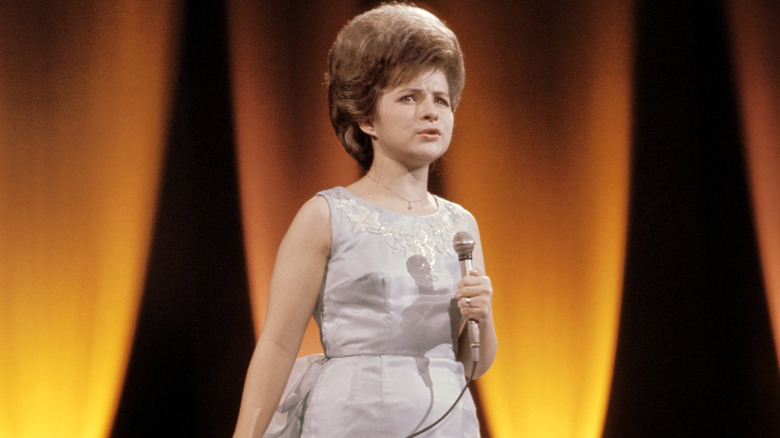
Even if the lyrics of "I'm Sorry" at first seemed too simple for producer Owen Bradley and too mature for Decca record executives, they were committed to its music. Bradley was a major figure in the development of the "Nashville sound," a dramatic departure from established country tunes. Where once there were twangy old-school guitars, now there was a more lush, pop-influenced musicality to the tunes coming out of country music central. Listen again to "I'm Sorry": The plunk of countryfied guitar and percussion is there, but it's in the background, dominated by strings.
Did the sea change make purists uncomfortable? Of course. But the audience reaction was hard to deny. While hitmakers like Patsy Cline deserve plenty of recognition for their contribution to the Nashville sound, Brenda Lee was there first with "I'm Sorry." She was part of the new sound's crossover success, with "I'm Sorry" bringing it to national attention (with some very happy music execs peeking at their bank accounts, besides).
By the end of the decade, the novelty of mixing country with other genres had begun to lose its shine, and it morphed into the even smoother countrypolitan style. But Brenda Lee stuck around, with a discography now encompassing dozens of studio albums and numerous accolades, including a Grammy Lifetime Achievement Award, induction into the Country Music Hall of Fame in 1997, and joining the group of country musicians inducted into the Rock & Roll Hall of Fame in 2022.