

The No. 1 Song On July 17, 1962 Is Even More Swoon-Worthy Today
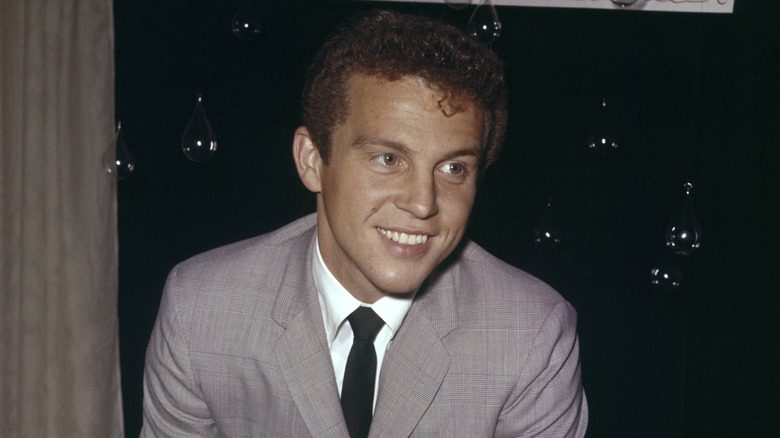
Love songs ruled the airwaves in 1962, with romantic ballads such as "Johnny Angel" and "I Can't Stop Loving You" climbing the charts that spring and summer. But for sheer, old-school romance, nothing beats Bobby Vinton's dreamy chart-topper, "Roses Are Red." Vinton's career-making hit conquered the Billboard Hot 100 the week of July 14, 1962, and stayed there until Neil Sedaka came along with the stone-cold classic "Breaking Up Is Hard to Do" four weeks later. Thanks to Vinton's gentle vocals, lush orchestral arrangement by famed bandleader Robert Mersey, and lyrics that spin a bittersweet tale of high school sweethearts who've gone their separate ways, "Roses Are Red" is just as swoon-worthy today as it was all those years ago.
Even in 1962, Vinton's music leaned into nostalgia and wistfulness. "Bobby brings back romantic memories," Teen Life editor Bessie Little wrote in the liner notes to a 1963 Vinton album (via Discogs). "Dates, proms, and everything that was delightful or bewildering in your young and wonderful world of crushes — and first love."
"Roses Are Red" captures all of that with its famous chorus describing a teen romance: "Roses are red, my love! / Violets are blue / Sugar is sweet, my love! / But not as sweet as you." But it's the fourth verse, when the young lovers reconnect years later, that gives the song its real emotional heft: "Is that your little girl? / She looks a lot like you / Someday, some boy will write / In her book, too." It's one of the defining love songs of the 1960s — and it almost didn't make it past the demo stage.
Bobby Vinton pulled Roses Are Red out of the reject pile
Born Stanley Robert Vinton Jr. in Canonsburg, Pennsylvania, in 1935, Bobby Vinton was earning a modest living as a bandleader by early 1962. Epic Records had signed him a couple years earlier, but only as a favor to an influential DJ. Vinton's early records — 1960's "Dancing at the Hop" and the following year's generously titled "A Young Man With a Big Band Plays for His Li'l Darlin's" — didn't sell, and Epic was ready to dump him. During a meeting where label executives tried to do just that, Vinton stalled and bought himself a few unsupervised minutes at Epic's headquarters. He used that time to rifle through a pile of rejected records, where he found a demo called "Roses Are Red."
Vinton, who never saw himself as a singer, needed a Hail Mary, and he needed one fast. "I just wanted to lead a band," he told the Newspaper Enterprise Association in 1962 (via the Illinois State Register). "Then I realized that the only people who were becoming stars were the singers. ... I didn't think I was much good. But I decided to try singing anyway."
Vinton convinced Epic to give him a shot on two songs, including "Roses Are Red." He first tried it as an R&B track, but he claimed it was "the worst-sounding thing you ever heard in your life" (via "The Billboard Book of Number 1 Hits"). Epic let him take another swing at it in February 1962, this time with a new orchestral arrangement and a choir backing him.
Roses Are Red made Bobby Vinton a star
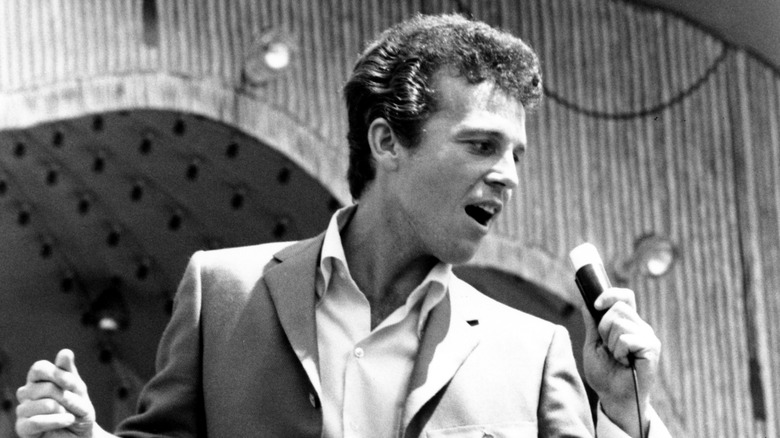
When "Roses Are Red" was released in April 1962, something unexpected happened: Instead of becoming another lovable '60s flop song, it lit up the market in Bobby Vinton's home territory of Pittsburgh, spurring the label to promote the single more heavily in other markets. Epic Records soon had its very first No. 1 hit — and a newly minted star.
What the label didn't know was that Vinton had taken promotion into his own hands and arranged for every DJ in Pittsburgh to receive a dozen red roses on the single's release day, delivered by, in Vinton's words, "a sexy-looking girl." The ploy worked, and Steel City DJs put the single into heavy rotation. "That wasn't so unusual," Vinton told Life magazine three years later, perhaps alluding to the darker side of the '60s music industry, "but a little later in the day, the kids started showing up at record stores to buy it."
By 1965, "Roses Are Red" was one of the best-selling records of the decade, and Bobby Vinton was an icon. That year, he bested Elvis Presley and Frank Sinatra in Cash Box's annual "The Nation's No. 1 Male Vocalist" poll. With one track, Vinton had gone from bandleader to superstar vocalist, launching a career that would move 75 million albums and earn him more than a dozen gold records. And as for the song Vinton pushed out of the top spot with "Roses Are Red"? Ironically enough, it was bandleader David Rose's instrumental orchestra number "The Stripper."