

5 Classic Albums That Define Heartland Rock
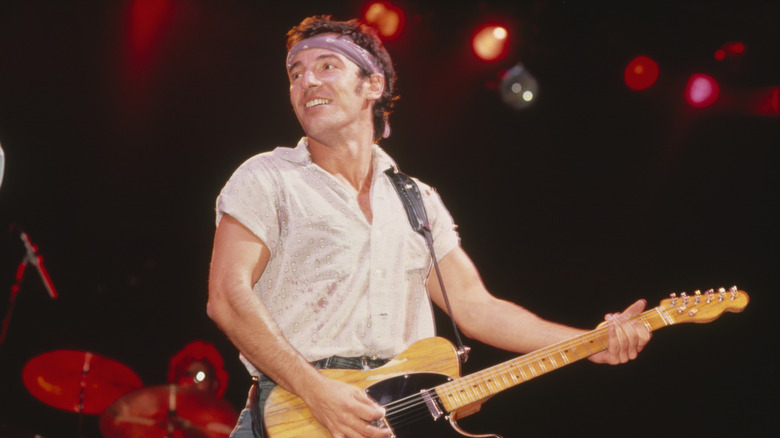
Defining heartland rock has never been an easy task. Yet there are a few iconic albums that everyone can agree exemplify the genre, and they're exemplary rock albums in general. These records all share common musical threads in their big guitars and walls of sound. They also have common themes of Americana, nostalgia, communalism, social justice, and, above all else, a deeply rooted sense of humanism. In other words, heartland rock has a strong core made from a respect for the common human experience and the power people have to uplift each other. Not to mention it just plain rocks.
Bruce Springsteen, John Mellencamp, Bob Seger, and Tom Petty have been cited as heartland rock's big four, and their music all shares the same working-class, anthemic spirit, the spirit that defines the genre. Here, we've chosen an acclaimed and representative album from each, alongside another pure everyman gem from Neil Young. Taken together, these albums go a long way toward explaining what heartland rock truly is and demonstrating why it has remained so beloved for so many.
Damn the Torpedoes — Tom Petty
Throughout his career, the late Tom Petty always existed within the umbrella of heartland rock — he did help define it, after all. But among the genre's pillars, he was always the strangest and hardest to pin down. Tom Petty and the Heartbreakers were always pure rock, yet Petty's lyrics and voice, both of which were often sarcastic and snarling, gave them a tinge of punk. The irony is that their 1979 album "Damn the Torpedoes," which undoubtedly has one of the best punk album names of all time, is one of the times Petty eases off the throttle and sings straight down the middle. In the process, he created one of the purest heartland rock albums out there, with all the anthemic Americana you could hope for.
The songs on "Damn the Torpedoes" are all different slices of working-class life, which combine to create a blueprint for reaching the heartland. Songs like "Refugee" and "Don't Do Me Like That" (which Petty almost gave away) are anthems for inveterate underdogs. Meanwhile, "Century City" and "Louisiana Rain" both assure Middle America that LA glamour is never as fulfilling as midland charm, and "What Are You Doin' in My Life?" implies that the same is true for New York. Then we have "Here Comes My Girl" and "Shadow of a Doubt (A Complex Kid)," songs that tackle the most universally consumed subject matter of all: Love, which may or may not be unrequited. Altogether, "Damn the Torpedoes" is a tribute to the ubiquitous and the everyday — core components of heartland rock.
Night Moves — Bob Seger
Bob Seger spent roughly the first decade of his career as a small-time musician, unable to make it on a national level. Instead, he kept plugging away in and around his native Detroit. Eventually, the years and years of centralized gigs, along with a well-earned underdog status, transformed him into a local hero. It's not hard to understand the value of such genuine grassroots support to an average Joe genre like heartland rock, and that's part of the reason why, when Seger finally hit with "Night Moves" in '76, he hit big. From his history alone, it was clear that Seger was the real deal.
That earnestness, alongside the desperation that would come to anyone failing to make it big for so long, is audible on "Night Moves" in both Seger's lyrics and voice. From the album's opening lines, "So you're a little bit older / And a lot less bolder than you used to be" from "Rock and Roll Never Forgets," he comes out of the gate with total honesty, along with total road-weary humility. The first lines of the very next song, the title track — "I was a little too tall, could've used a few pounds / Tight pants, points, hardly renowned" — certainly don't dispel the humility. Because Seger spent so long in Midwestern obscurity, his bona fides as a heartland rocker were legitimate. He had a lot in common with the genre's working-man audience, and that kept the songs on "Night Moves" relatable and therefore lovable.
Freedom — Neil Young
Neil Young, a Toronto native, is proof that the "heart" doesn't have to mean the center and the "land" doesn't have to be America (and it's worth adding that both Bruce Springsteen and Tom Petty were born and lived on the coast). Proving that point is his 1989 tour de force "Freedom," and in particular its sole single, "Rockin' in the Free World," which became as powerful an American anthem as any, despite its Canadian origins. Further proof is "Crime in the City," an epic that takes thin slices of urban life instead of the expected rural but blends them in the genre's usual way so as to craft a (bitter) ode to heartland rock's less traditional areas.
"Freedom" dips just as deeply into blue-collar life as any other heartland album, except that it doesn't consider it so sacred as to be above criticism. That, or Young finds it all so sacred that it's worth exposing its sickest corners so that they might be healed. Rolling Stone's review described the album's subject as "the cyclical whirl of pain, pressure and pleasure in real life," which also serves as a description of the heartland rock genre as a whole. With that said, Young used "Freedom" to pinpoint the pain and pressure aspects more than most would. The fact that "Rockin' in the Free World" both begins and ends the album says a lot. He's not disparaging the "people sleeping in their shoes" — he just wants to help them wake up.
Scarecrow — John Mellencamp
Of the foundational heartland albums on this list, John Mellencamp's "Scarecrow" is the most blatant in terms of what it's trying to evoke. With song titles like "Small Town," "The Face of the Nation," "Justice and Independence '85," and "R.O.C.K. in the U.S.A. (A Salute to 60's Rock)," it's obvious what Mellencamp is trying to say and to whom. But plainness isn't always synonymous with shallowness or unintelligence. When it comes to a genre like heartland rock, which reveres the simple life in all its iterations, that plainness can be a boon. And based on the album's critical and commercial success, there's no question that it was.
Like the everyman crowd Mellencamp plays to, his words and ideas are unpretentious and unadorned. The artist once told the AP that to find his subjects, "all [I've] got to do is look out the window." That's not because he imagines new worlds out there, either. The Indiana native is a straightforward and first-hand chronicler of Middle America and all the muck and struggle that permeate it, and "Scarecrow" is one of his best efforts. It's no wonder the album almost single-handedly earned Mellencamp his role in organizing the first Farm Aid. With lines from "Rain on the Scarecrow" like "This land fed a nation / This land made me proud / And son, I am just sorry / They're just memories for you now," it's hard to imagine anyone better suited for the role.
Born to Run — Bruce Springsteen
Bruce Springsteen's 1975 magnum opus "Born to Run" is a triumph of music in general, let alone a specific genre (though he hated it at first, if you can believe it). But it exemplifies the best of heartland rock more than most — in particular, the genre's ability to take microcosms of experience and turn them into sweeping anthems to the human spirit. Dichotomies like that are a huge part of the album's ineffable majesty. It feels both huge and small, blue-collar and godly, and despite decrying small-town life in lines like "It's a town full of losers / I'm pullin' out of here to win" in "Thunder Road," it still manages to celebrate them constantly.
It's likely not an accident that the album's bookends are "Thunder Road" and "Jungleland," two of its most celebratory of small-town America (again, despite the longing to leave), and that its two middle pieces are "Backstreets" and "Born to Run," arguably the other two in that vein. Springsteen values the country as much as the city, and it feels like his nostalgia is specifically for the duality of living rural but yearning to live urban and vice versa. That grass-is-always-greener philosophy is a common one, and it's one that helps explain Springsteen's crossover success with virtually every demographic. Part of living in Middle America is mythologizing the coasts, just as coastal Americans do the reverse. Springsteen has lived and romanticized both, and it's allowed his songs to capture a comprehensive everyman essence, one that plays a major role in defining heartland rock.