

The 5 Best Rock Albums Of 1971
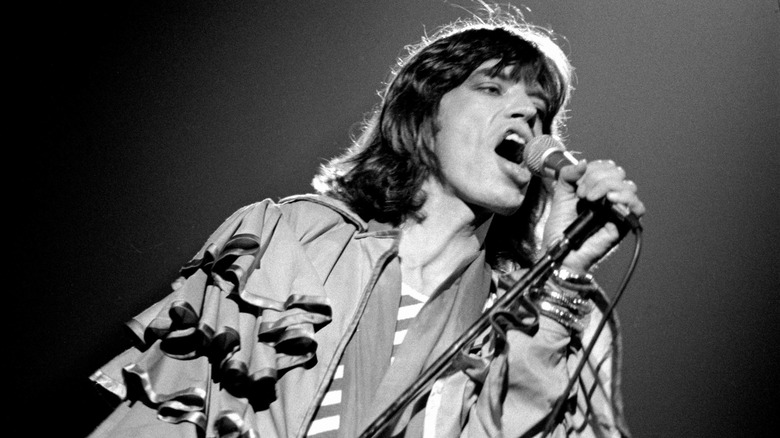
Looking at the plethora of albums released in 1971, with major releases from the likes of Led Zeppelin and The Rolling Stones, the year was a smorgasbord of outstanding rock music, and perhaps one of the genre's best. But even among such a star-studded crowd, there are a few truly extraordinary records that still stand as high points in the careers of rock 'n' roll's most legendary artists.
Choosing the best rock albums from 1971 isn't easy, and we're not just going by chart success or critical reception. After all, not everything in the rock pantheon ages well, and sometimes we look back at artists who once dominated the charts and wonder how listeners could have developed any affinity for them. Therefore, we've also considered those exemplary LPs that had a heavy influence on rock music, such as by Black Sabbath, and which demonstrated trailblazing adaptations that artists like David Bowie did so well. And of course, these five greatest albums from 1971 rock just as hard today as they did on the day they were first released.
Led Zeppelin IV – Led Zeppelin
The creative powers of Led Zeppelin grew in leaps and bounds since the band formed in 1968, with three self-titled albums earning the four-piece a huge fanbase for their uniquely heavy brand of blues-influenced hard rock. But their fourth LP, 1971's "Led Zeppelin IV," was arguably the greatest they would ever release, an epic achievement that was the apotheosis of their growing interest in folk arrangements and mystical lyricism.
"Led Zeppelin IV" was one of the bestselling albums of 1971, as well as one of the year's most boundary-pushing rock albums. Few songs to have come before were as sizzlingly heavy as the album's famous opener, "Black Dog," with its irresistible build-and-release structure. And then there's "Stairway to Heaven," arguably the ultimate hard rock ballad, which many fans consider one of the finest songs of all time. The album has sold over 30 million copies since its release, and is a must-listen for any rock fan looking to experience one of the guiding lights of the genre throughout the '70s and beyond.
Sticky Fingers – The Rolling Stones
The Beatles may have imploded just as the 1970s dawned, but their fellow countrymen The Rolling Stones, with whom they'd shared both a friendship and rivalry since the mid-1960s, were just hitting their imperial phase. They began the decade with a series of back-to-back classic albums that cemented their legendary status, with 1971's "Sticky Fingers" considered by fans and critics alike as being among the very best.
Following on from 1968's "Beggars Banquet" and 1969's "Let It Bleed," "Sticky Fingers" was the British band's first studio album following the death of founding member Brian Jones, as well as the disastrous December 1969 concert at Altamont, in which a music fan in the crowd lost his life at the hands of the Hells Angels. The album is characterized by the band's increasingly caustic world view, although it opens with a saucy blues number in the form of the No. 1 hit "Brown Sugar," and goes through permutations of blues and country that see Mick Jagger et al. veer from their most controversial on tracks like "Sister Morphine" and "Bi***" to their most sweet and sentimental on "Wild Horses" and "Dead Flowers." Ultimately, the album sold more than $3.5 million copies, and it's still an illustrious listen todya.
Master of Reality – Black Sabbath
In hindsight, the influence of Black Sabbath is obvious. Having broken into the mainstream consciousness with their self-titled debut album in 1970 and their classic sophomore, "Paranoid," just seven months later, the band achieved new levels of doom-laden heaviness with their third album, 1971's "Master of Reality."
For key tracks including "Children of the Grave," guitarist Tony Iommi down-tuned his guitar, loosening the strings and making it easier for him to play with his damaged hand, which had lost two fingertips when he worked in a factory as a teenager. It proved to be a happy accident; after bassist Geezer Butler's instrument was also downtuned, it gave the band a heavier sound than ever before.
The record was divisive on its release but has been hugely influential over the years, becoming the template for several subgenres, including doom metal and stoner rock (Sabbath also spearheaded that genre lyrically with the track "Sweet Leaf"). Black Sabbath's biggest songs, such as "Paranoid" and "War Pigs," may indeed be found on their earlier albums, but never were they so sonically radical as they were on "Master of Reality."
Hunky Dory – David Bowie
"Space Oddity" may have been the high point of David Bowie's early career, but "Hunky Dory" is arguably Bowie's first masterpiece, which deserves a place on our list for the career-defining track "Life on Mars?" alone. The iconic track, which Bowie wrote to get revenge on Frank Sinatra, sees the Starman again looking to the heavens, but with a new weirdness that would come to define his output throughout the 1970s. Indeed, after making a name for himself as a kooky folk singer, Bowie increasingly embraced an eclectic, glam-infused sound following the critically well-received 1970 album "The Man Who Sold the World," and "Hunky Dory" marks that transition beautifully.
The album contains other bombastic highlights, including the uptempo opener "Changes" and the riotous "Fill Your Heart," while the second half of the record culminates in soulful slow-burn deep cuts such as "Song for Bob Dylan" and "The Bewlay Brothers," which fans have long considered an ode to his difficult relationship with his elder brother, Terry Burns.
Who's Next – The Who
The Who are famous for the grandeur of their artistic vision, with the bestselling 1969 rock opera "Tommy" arguably being their most famous release. But among classic rock fans, no album in their discography stands up to the front-to-back brilliance of 1971's "Who's Next" — despite it being the result of a failed project in the eyes of their primary songwriter, Pete Townshend.
The album was created from songs intended for the Townshend-helmed follow-up rock opera to "Tommy," given the working title "Lifehouse." The story featured a fantastical, futuristic suit through which people received all their life experiences, but despite being ambitious, it was impossible at the dawn of the 1970s for the band to realize as a cohesive whole.
All the better for classic rock fans, who instead received a no-frills, nine-song classic made up of banger after banger. From the innovative synth-heavy opener "Baba O'Riley" to the closer, "Won't Get Fooled Again," which is considered by many fans to be the ultimate The Who track, "Who's Next" is one of those unskippable albums that flows seamlessly like a perfectly curated setlist.