

5 David Bowie Vinyls That Every True Fan Should Already Own
We may receive a commission on purchases made from links.
Fortunately for humanity, the late, great David Bowie is survived by his extensive and iconic discography, including on its original, high-fidelity form, vinyl. The medium has long been known for its characteristic warmth and sonic faithfulness, which is exactly what is demanded when replicating rock's most famous chameleon. Over the course of his roughly 50-year career, Bowie released almost 30 studio albums, seemingly exploring every possible inch of art rock and glam, alongside forays into blues, disco, electronica, and a host of other genres. They're all worth collecting for their historical import alone, but a few are absolute must-haves for any true Bowie fan.
By far the biggest reason to collect any Bowie album is to hear it again and again, but that's not the only reason. Vinyls are also the perfect medium for visual display, and some albums that bring the heat musically don't exactly scream "wall piece." In addition, there are more than a few versions of Bowie records that, thanks to limiting pressing, misprints, or other factors, are rare and valuable. Here, we've gathered five Bowie albums that are must-haves for true fans thanks to their music, monetary value, iconic art, or any combination thereof. Whatever the reason, Bowie is worth a spot in any collection, especially the albums we've gathered here.
Hunky Dory
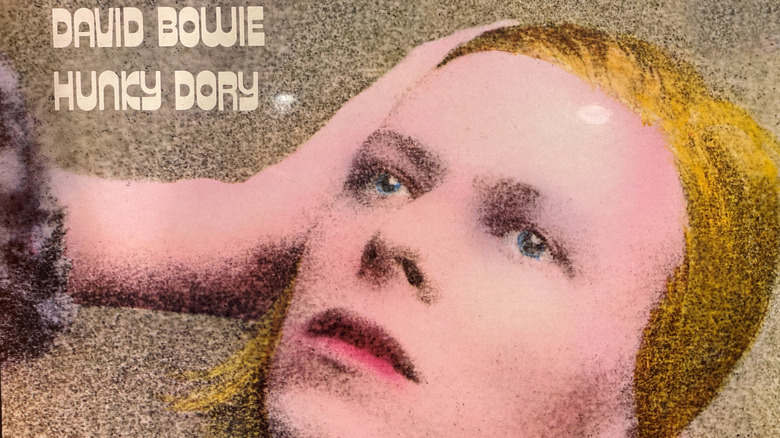
David Bowie's classic 1971 album "Hunky Dory" is one of those vinyls that is worth collecting for any number of reasons, starting with its sleeve art. It's the type of image that makes a perfect display, whether it's hanging up on the wall or propped on a shelf. The cover is Bowie from the neck up, saturated with so much chromatic noise that it looks as if he's dissolving to sand (fitting for the album that contains "Quicksand").
When it comes to value, especially for the oldest and rarest versions, "Hunky Dory" can fetch a pretty penny. One of the earlier pressings of the album has come to be known as the "BowPromo," and partially thanks to its limited run of only 500 copies, it has remained a sought-after and pricey collectible. An even older version — which would make it perhaps the earliest — once sold for over $10,000 on eBay, and that's not even counting the acetate records used to create early promo copies, which can sell for far more.
The best reason to own "Hunky Dory," however, is its music. Many critics over the years have cited the album as the one in which Bowie became Bowie, his first masterpiece, the album that saved his early career, or some variation thereof, and with good reason. It is Bowie blossoming into the art-rock king he would become and features all-timers such as "Changes," "Life on Mars?," and "Queen B****."
The Rise and Fall of Ziggy Stardust and the Spiders From Mars
A great many fans and critics alike agree that "The Rise and Fall of Ziggy Stardust and the Spiders From Mars" is David Bowie at his peak, and if nothing else, the best of Bowie is always a must-own. So much of Bowie's legacy is tied to the album's music and, even more so, the image and persona he created for it, which became the most famous among his many. As Billboard put it, the album "ensured [Bowie's] long-term career and infamy," and its songs "aren't simply glam classics — they're rock classics."
"Ziggy Stardust" was Bowie's follow-up to "Hunky Dory" and took that album's angular, alien eccentricity and wrapped it up in distortion and proto-punk energy reminiscent of his friend Iggy Pop. The end result was not only a masterpiece of its own unique variety, but also a blueprint for a lot of glam rock that came after. The same can be said for the album's central sci-fi premise. Bowie certainly wasn't the first to introduce science fiction to rock music, but "Ziggy Stardust" is the most well-known and best-selling example of the theme.
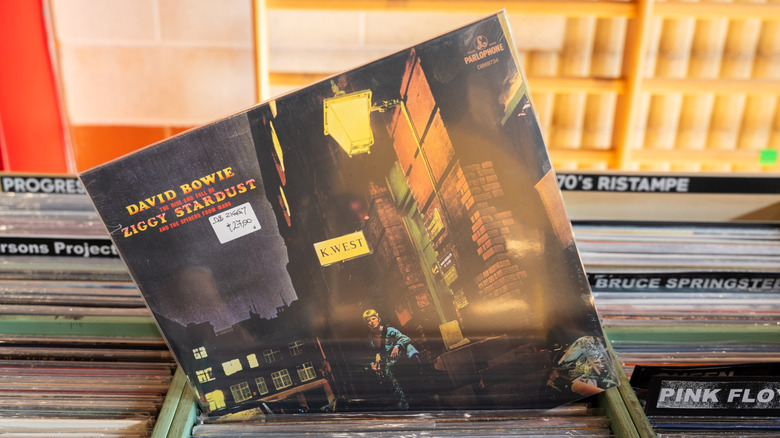
Interestingly for those into the visual side of record collecting, the album's cover art eschews the sci-fi look altogether. Instead of Bowie in full Ziggy makeup playing guitar in space or some such as you might expect, it features Bowie in a starkly contrasted, blue and yellow city street, evocative of Edward Hopper's "Nighthawks." Even without the chrome and lasers, it still looks iconic.
David Bowie, aka Space Oddity
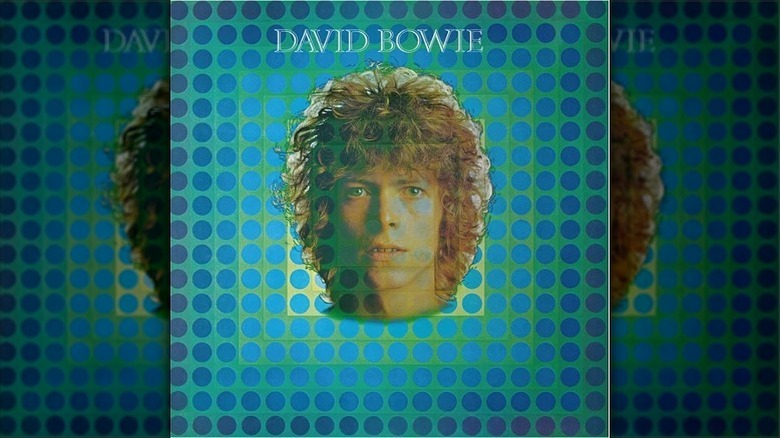
In 2016, an original pressing of David Bowie's second self-titled album sold on Discogs for $6,826, at the time making it the single most expensive transaction in the site's history. At multiple times in the years before, the same album had been valued almost as highly. Part of the collector's appeal of the album is that, though titled "David Bowie" originally, it was later renamed "Space Oddity," making albums with the original name limited to only its first few pressings. And to top it off, there were a few years in which it went by "Man of Words/Man of Music" in the U.S. before also switching to "Space Oddity."
There's more than just rarity behind the value of owning "Space Oddity," though. Bowie had released another self-titled album in 1967, but it didn't make much impact by any major metric. That meant that when the soon-to-be title track "Space Oddity" became a hit, it also became the world's first real introduction to Bowie. Before "Space Oddity" took off into outer space critically and commercially, Bowie's only single from his first album, "Love You Till Tuesday," hadn't even touched the charts. Bowie's haunting sci-fi epic is what made him famous, and it even played a role in the events surrounding the Apollo 11 moon mission when the BBC banned the song for its potentially negative effect on public morale.
Let's Dance
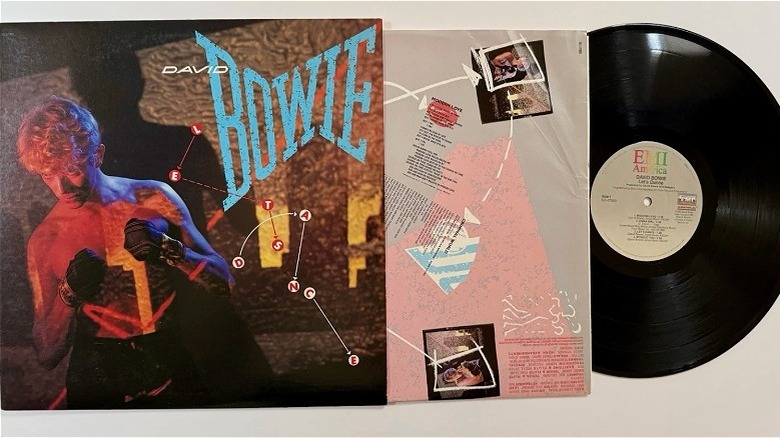
Setting aside the musical value of an album like "Let's Dance," its role in music history alone makes it an album to own. It's one of those precious few that is integral to more than one artist's collectors because aside from being a David Bowie album, it was also the world's introduction to possibly the greatest blues guitarist of all time, Stevie Ray Vaughan. "Let's Dance" was released in April of '83 and at that time, Vaughan was still months away from electrifying audiences with his debut album, "Texas Flood." Since the opening song on "Let's Dance" doesn't have a solo, the solo on the second track, "China Girl," is the first time the vast majority of people would have heard Vaughan. In retrospect, it's textbook Vaughan, made from traditional blues licks but delivered with his singular fire.
In addition to "China Girl," the album also boasts two of Bowie's other big hits, "Modern Love" and the title track, which has a legacy all its own. "Let's Dance" has been called his most popular song, and that's mainly due to its exceptionally universal appeal, as evidenced by it topping 19 different charts globally, as well as the unprecedented heights to which it took Bowie in terms of sales and radio play. Some fans, and for a time, even Bowie himself, were torn about "Let's Dance," which is only natural for such a stark change of style, but regardless, it is a huge signpost in Bowie's evolution and a worthy inclusion in any collection.
Aladdin Sane
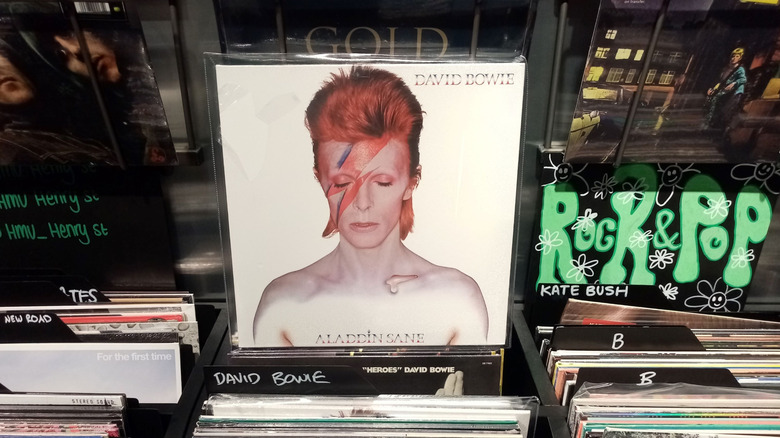
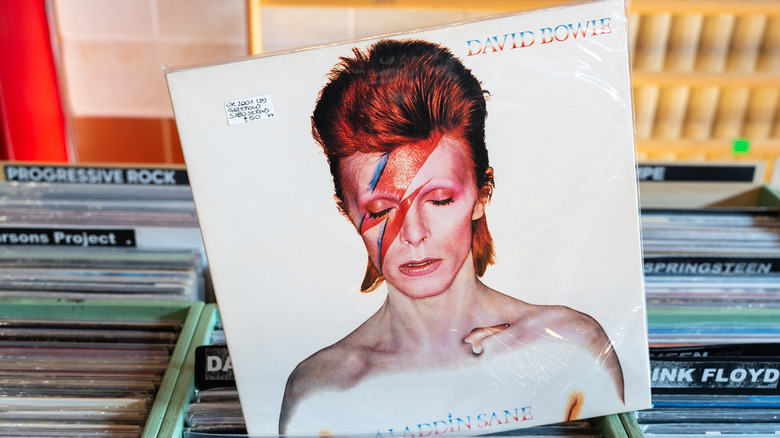
If there's any one David Bowie image that is sure to be displayed on walls, shirts, and even duplicated for Halloween costumes, it's the lightning-bolted and ginger-mulleted Bowie from the cover of "Aladdin Sane." Despite often being confused with the Ziggy Stardust persona, it's Aladdin Sane and Sane alone who sports Bowie's iconic lightning bolt and pink, glam-rock-defining makeup. The look is so iconic, in fact, that in 2025, the original photograph used for the "Aladdin Sane" cover sold at auction for $496,000, the highest of any album art in history (beating the previous record-holder, the Hindenburg photo used for the cover of "Led Zeppelin," by a cool $171,000, per Artnet).
Beyond the cover and the persona attached to it, "Aladdin Sane" also has a unique place in Bowie's evolution as a musician. It was Bowie's follow-up to "Ziggy Stardust," a near-impossible standard to reach, and Bowie approached the challenge in his usual way: by getting weirder. The album was written while Bowie and the Spiders From Mars were touring in promotion of "Ziggy Stardust," and it reflects a lot of the grit and grime he witnessed in the U.S. as well as his own increasingly rock-star-like lifestyle. The reflection adds a dark tinge to the album, which isn't a value Bowie painted with often up until that point. "Aladdin Sane" is an important example of Bowie changing his voice with, and ahead of, the times, and also an album true Bowie fans should already own.