

Essentials Every '70s Diehard Needs In Their Listening Room
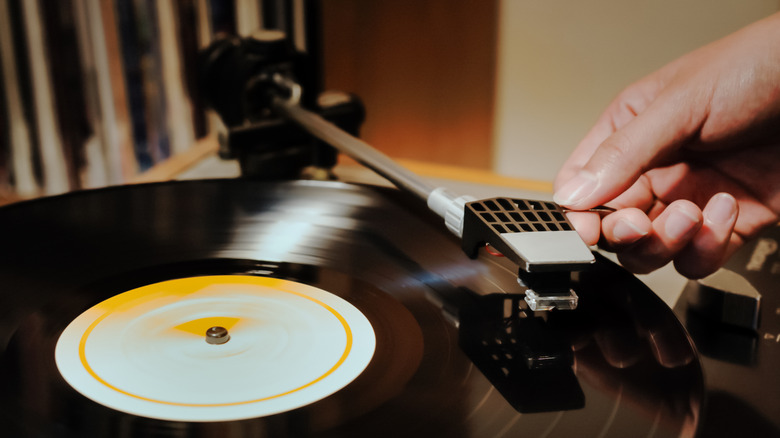
While the cultural aesthetic of the 1970s may have been associated with the club scene (mirror balls, illuminated tile floors, and the rest of Warhol's Studio 54 chic), there was a quieter, more introverted but no less far-out experience to be found in rumpus rooms all over the nation. So when the boogie-down gives way to chilling at the pad, it's important to set the right vibe — especially for one's listening experience. Whether it's one of the 10 vinyl albums every true disco fan should own or a headphones-clad deep dive into the decade's most iconic guitar riffs, we need to get the atmosphere copacetic.
With that in mind, let's confab on the fab essentials. From high-end furniture to record players that look like high-end furniture, here's the skinny on the required elements for any well-put-together '70s-style listening room. Beanbag chairs and lava lamps are far too cliché — this is a list for the audiophile of exquisite taste. Can you dig it?
A copy of Steely Dan's Aja album
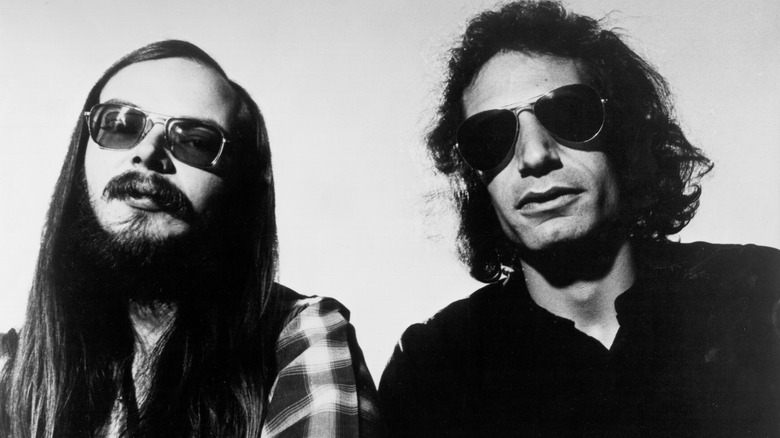
While any self-respecting audiophile should have "Aja" in their collection, it has a striking connection to listening-room home essentials. For decades, Steely Dan albums have been used to test audio equipment, with "Aja" outstanding among them. Donald Fagen and Walter Becker's 1977 magnum opus has even reportedly been used to mix sound systems in giant outdoor stadiums.
That sonically perfect mix was born out of Becker and Fagen's notorious studio perfectionism. Where many producers opted to focus on sculpting high-quality audio in post-production, the duo behind the Dan prioritized fiendishly precise attention to front-end considerations such as microphone placement and acoustic ambience, creating a sonically pristine end product that trumps anything else on the market. Thus, as you prowl the room checking for dead spots or pops and hums from your stereo, you can rest assured that none of it is the result of limitations from your test tracks.
In addition to being a decade-defining classic, "Aja" is the perfect test case for your acoustically immaculate sound pad. So that's two birds down with just one very groovy stone. We wouldn't want you tossing back a Brandy Alexander to anything less.
A 3rd or 4th generation Eames lounge chair with ottoman
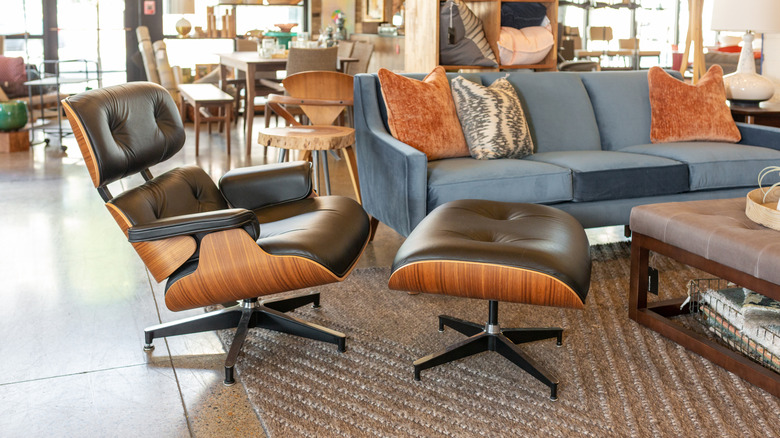
Every generation-specific listening cave requires the ideal seating. If we were talking 1980s here, we might be getting blown away by Wagner in a Le Corbusier Grand Confort LC2 armchair like in the legendary Maxell cassette tapes commercial, but mid-century modern was still chic among discerning elites of the '70s, so a good Eames chair is the prime choice.
First introduced in 1956 by the Herman Miller furniture company, the Eames lounge chair and its accompanying ottoman quickly caught on as a staple of luxury chic with its sleek look and excellent support, making it the perfect spot to kick back and soak in the warm vibes from your vinyl collection. Period-accurate connoisseurs will want either the third generation (1971-1974) or fourth generation (1974-1991) designs, with the main difference being a five- or seven-ply build, respectively.
If the chair's look alone weren't intoxicating enough, it even comes pre-approved by Steely Dan, the audiophile gold standard for the 1970s. In "Things I Miss the Most" off their 2003 final album "Everything Must Go," Donald Fagen name-checks "the comfy Eames chair" in a list of material comforts and emotional connections lost in the dissolution of a relationship. That list also includes an Audi TT and a private vineyard, so we hope you're pulling six figures.
A wood-paneled record player cabinet
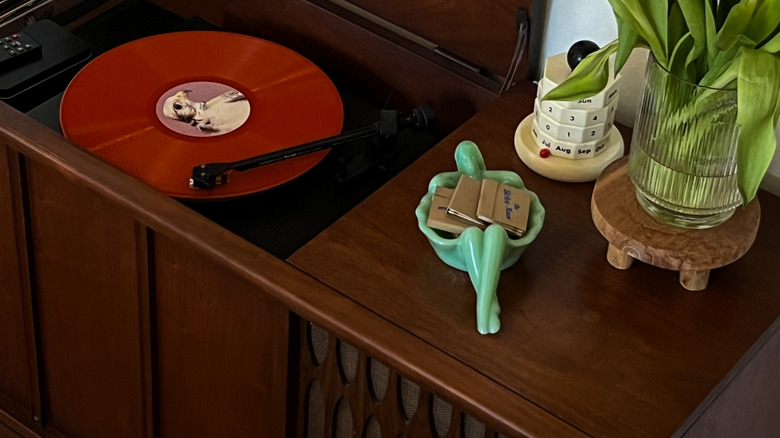
It doesn't matter whether it's got a Pioneer PL-12D or a Marantz 6300 under the hood; what matters is that your record player is housed in a gigantic, handcrafted wooden entertainment console. The more wall space it takes up, the better. A proper 1970s listening room needs a home stereo that can support a table lamp and an arrangement of potted ferns.
Whether you're scoring a fresh retro-modern throwback piece off Etsy or scouring eBay for the genuine article, it's the ritual that matters. The selecting of a choice record from the shelf, the opening of the cabinet, the placing of said record on the turntable like oblation at the altar of the audiophile gods: All of it is a part of the pre-listening preparatory process. And if that weren't enough, you're going to need a lush rosewood finish to stare at distantly as you listen to Al Di Meola lay down searing solos on that first edition vinyl of Return to Forever's "The Romantic Warrior."
The right lighting choices
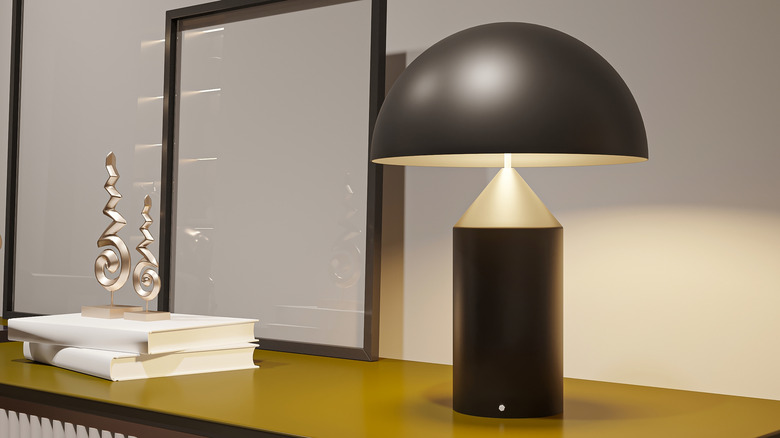
The right lighting defines not just the room itself but the cultural epoch at hand — just think about what cities looked like before electricity was discovered and work forward from there. In the case of '70s decor, there are, to borrow from Led Zeppelin, two paths you can go by. The '70s were defined by two schools of thought when it came to lighting. On the one hand, there was the flashy, flamboyant, and wildly variegated over-the-top response to mid-century minimalism. On the other hand, there was understated naturalism.
For our purposes, the latter option makes more sense. After all, we're aiming for a mellow and introspective night at home, not hitting the dancefloor with Tony Manero. With that in mind, let's explore some low-key options: The 1977 Atollo table lamp by Oluce (pictured) is great for providing gentle ambient light, while the 1979 Funiculi table lamp is an ideal accompaniment for reading as you chill with a Carlos Castaneda paperback and Sun Ra on the speakers.
Shag carpet
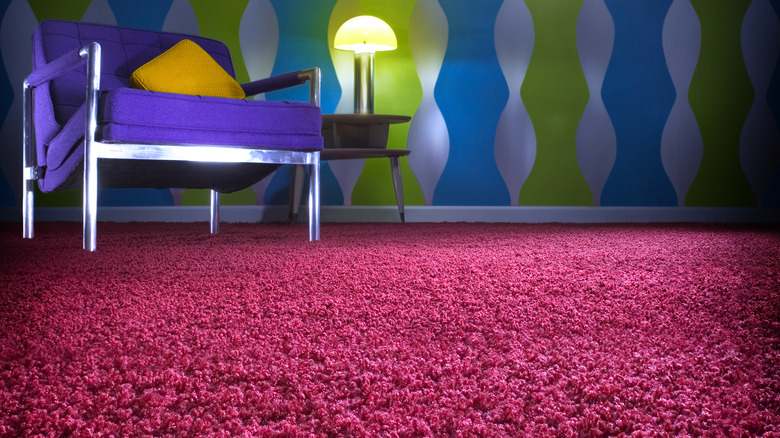
Okay, this is the one piece of cheesy '70s pastiche we're allowing on this list. Shag carpet is not here because there's anything tasteful about it; we just know that it will feel super fly to walk around on after you kick off those platform pumps or brown oxford wingtips. And after all, isn't that satisfying walk from the stereo to your chair as the opening strains of Chicago's "Just You 'n' Me" fill the room a crucial part of the ritual?
Early incarnations of what we now know as "shag" carpet go all the way back to the ancient Greeks, but the style caught on in the 1970s when synthetic fibers drastically reduced production costs. The lavish design went out of style in the 1980s, but for that brief, beautiful decade that was the '70s, it was all the rage in home decor. While modern demand for a full-floor installation is limited, shag rugs provide an excellent alternative to a complete makeover.