

One Of Rock's Most Famous Folk Songs Has No Known Author
The origins of many classic American folk songs have been lost to history, and "John Henry" is no different: The folk song, like many of its kind, has no known author. What is known is just how popular this folk song is in rock music and how it likely came about.
If you don't happen to know the story or don't quite remember all of the details, here are the basics: John Henry was a once-enslaved free person who drove steel for the railroad. The exact job he had or how he secured his freedom tends to change per story. One day, the massive man, often portrayed as stronger than multiple workers, faces off in a race against a steam-powered machine that threatens to replace Henry and take away jobs on the railroad crews. Henry takes up his hammer and swings like nobody else could, beating the machine and having his heart go out on him from the effort he exerted.
The story is one of a Black American folk icon, a working-class hero who saved the livelihood of his peers and sent the corporate machines back to the fires they came from. Folk heroes like this make powerful subjects for music, and rock grabbed ahold of this one without hesitation.
John Henry in rock music
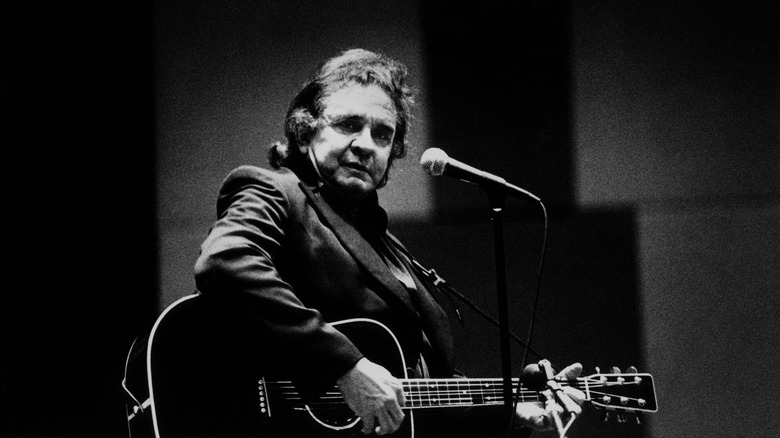
Jerry Lee Lewis relayed a fairly classic story of John Henry in 1960 that sticks pretty close to the core tale. Johnny Cash, on the other hand, put out an elaborate version of John Henry's story on his "Blood, Sweat, and Tears" album in 1963, called "The Legend of John Henry's Hammer." Cash's version adds its own details, fleshing out the story in a way no other popular rock artist would (to date anyway). He included flourishes such as John Henry swinging his hammer to pay for his children's medical treatments and even particulars about the folk hero's love life; there's a lot going on in this eight-minute song.
Four decades later, Bruce Springsteen would release a classic retelling of this tale on his 2006 "We Shall Overcome: The Seeger Sessions." This album is traditional folk, and since "The Boss" is undoubtedly a rock star, it's worth a listen.
The most contemporary use of John Henry in rock music so far comes from John Bonamassa. His 2009 track "The Ballad of John Henry" is far less story-driven than the other rock songs about this folk icon. It does, however, bring an interesting mix of blues and modern hard rock to the game, while the lyrics equate John Henry's struggles to the battle between good and evil. That said, it didn't quite capture the story of old, one that likely has roots as a workers' song.
John Henry was probably a workers' song
Many Americans learned the legend of John Henry in elementary school thanks to picture books like Julius Lester's "John Henry or "John Henry: An American Legend" by Ezra Jack Keats, but it's much older than either of these illustrated masterpieces. Many have tried throughout the years to track down the real John Henry, as well as the author of the first folk song about this near-mythical figure, but all attempts have led to debate at best or fallen flat at worst. For historians, this wasn't a big surprise.
One of the defining features of folk tales and folk songs is that they're passed down by oral tradition, which is notoriously difficult to track. The song is thought to be a workers' song — the type that workers would sing to pass the day before they had access to boomboxes and headphones — which would imply it was originally put together by groups of people working the railroad tracks. And it likely dates back to the 1870s, when the steam drill — the machine John Henry races in the myth — was first used by the industry.
Regardless of who originally wrote the song, John Henry remains one of the most important working-class folk heroes today, showing the sweat of the oft-overlooked people of color who built the United States, and we probably haven't seen the last of him in rock music.