

The 5 Longest Rock Songs Of The '60s Actually Worth The Runtime
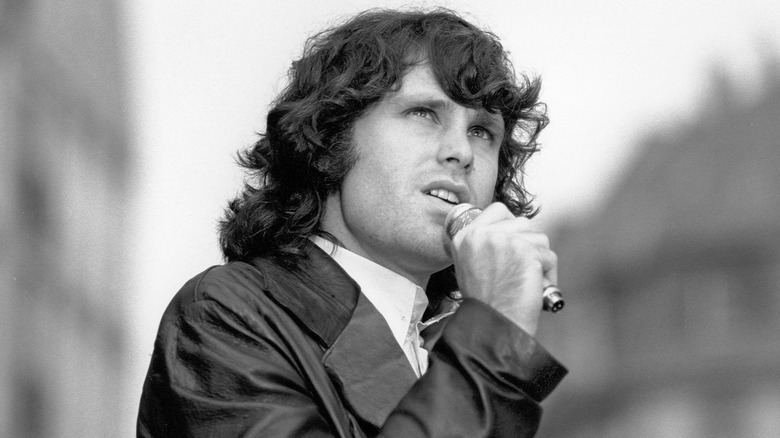
A lot of songs in modern music barely go over the three-minute mark. Early on, that was all that would fit on vinyl records, and radio rules dictated long ago that a song could only be played for a certain amount of time so that one track didn't monopolize a broadcast. But some people don't want just a three-minute, in-and-out listening experience, preferring instead to sit with a song, live inside it, and soak in all of its details. So, we picked the five best rock songs of the 1960s that are truly worth their runtime.
All of these songs were singled out because their length isn't just warranted; it's absolutely necessary to house all of the parts of the song — whether it's multiple verses sung to complete a narrative, various musical changes from numerous instruments, or artists wanting to mimic a live performance in the studio. It's safe to say that every one of the songs we've selected wouldn't be the classic they're considered to be if not for their length, as their runtime is just as important as the other elements.
Voodoo Chile — Jimi Hendrix
A lot of rock songs can easily change form, because they can sound one way during a studio recording and have a completely different sound in a live performance. Oftentimes, the on-stage version sounds bigger, looser, and has improvisation.
Jimi Hendrix, along with his band the Experience, wanted a live performance feel for their 1968 classic "Voodoo Chile," a song with a very interesting meaning. In fact, Hendrix told Rolling Stone's late managing editor, John Burks, that he wanted to mimic the same feeling and sound as when he played at one of his favorite New York City music clubs. Hendrix was famously discovered at one of those small clubs, Cafe Wha?, on Greenwich Village's MacDougal Street by the Animals' Chas Chandler.
To help achieve that live sound on "Voodoo Chile," Hendrix recruited Jack Casady of Jefferson Airplane and Steve Winwood of Traffic. The end result is a long smokey-sounding, down home blues offering that clocks in at around 15-minutes-long, and the length is completely justified. The song is nothing short of a masterpiece. "I like after-hour jams at a small place like a club," Hendrix told Rolling Stone in 1970. "Then you get another feeling. You get off in another way with all those people there."
In-A-Gadda-Da-Vida — Iron Butterfly
From a slow, one-and-a-half-minute ballad to a 17-minute psychedelic rock thriller, that's how Iron Butterfly's 1968 cut "In-A-Gadda-Da-Vida" could be described since it was first written as a slow country song. In 2020, the band's drummer, the late Ron Bushy, told It's Psychedelic Baby! Magazine that Doug Ingle, the band's founder and lead singer, was playing something at their house in Laurel Canyon on his Vox keyboard.
"It was hard to understand him because he was so drunk," Bushy recalled. "So I wrote it down on a napkin exactly how it sounded phonetically to me, 'In-A-Gadda-Da-Vida'. It was supposed to be 'In the Garden of Eden.'"
Along with bassist Lee Dorman and guitarist Erik Braunn, Iron Butterfly recorded the lengthy tune in just one take, which is quite an amazing feat. "In-A-Gadda-Da-Vida" ended up being the band's biggest hit, reaching No. 30 on Billboard's Hot 100 and spending 17 weeks on the chart. "In-A-Gadda-Da-Vida" can easily be described as a full-on immersive experience rather than just a song, as it takes listeners on a long, twisting sonic journey that slows down, speeds up again, and includes various solos by different instruments.
The End — The Doors
A major release of a debut album is extra special because it's the first time an artist or group gets to show their songwriting capabilities on a global stage. Artists also get to take advantage of the rare chance to release songs they've crafted prior to fame and before the record label, music pundits, and finicky fans weigh in with opinions. That's possibly why the Doors' debut album has so many top-notch songs, including the rebellious and high-energy "Break On Through (To the Other Side)," the hit single "Light My Fire," and the love ballad "The Crystal Ship."
Then there's the album's final cut, "The End," which covers topics like death, pain, and permanent goodbyes in six verses. Singer Jim Morrison also references the play "Oedipus Rex," written by the Greek playwright Sophocles. So, between the several themes addressed, Morrison's Oedipus section, and the instrumentation, "The End" needs every second of its nearly 12-minute runtime.
The length of the song allowed Morrison to improvise as well, especially on stage, where the song evolved over time. "It just started out as a simple goodbye song," Morrison told Rolling Stone in 1969. "Those were kind of constantly changing free-form pieces but once we put them on record, they just kind of stopped. ... It starts off with a rhythm and you don't know how it's going to end up or how long it's going to be or really what it's about, until it's over. That sort I enjoy best."
The Beatles — Hey Jude
The Beatles' 1968 song, "Hey Jude," which held the No. 1 spot the longest when it came out, could be considered an over seven-minute-long motivational speech, as it's full of positive assurances. Paul McCartney wrote the gorgeous tune to help John Lennon's son, Julian Lennon, get over his parents splitting up, changing the name from Jules to Jude. The length of the song is ideal, considering one needs a good stretch of time to instill confidence and healing in someone. Clearly, the bridge sums up the cut's theme and overall intention perfectly.
"Anytime you feel the pain, hey, Jude, refrain / Don't carry the world upon your shoulders / For well you know that it's a fool who plays it cool / By making his world a little colder," sings McCartney.
But it's not only the theme that necessitates the song's runtime, but it's the splendid outro that lasts almost four minutes, as a full orchestra comes in with 10 violins, numerous cellos, violas, trombones, trumpets, double basses, a clarinet, a bassoon, and other instruments.
Sad-Eyed Lady of the Lowlands — Bob Dylan
Bob Dylan's classic, "Sad-Eyed Lady of the Lowlands," which is on his 1966 album "Blonde on Blonde," was written about his first wife, Sara Dylan, and it wasn't supposed to be over 11-minutes long. But the Minnesota-born musician got lost in the creative process in the best way possible, and allowed himself to explore freely without restraint. That could be why he considers "Sad-Eyed Lady of the Lowlands" the best song he's ever written.
"It started out as just a little thing, 'Sad-Eyed Lady of the Lowland,' but I got carried away somewhere along the line," Dylan explained to Rolling Stone in 1969. "I just sat down at a table and started writing ... And I just got carried away with the whole thing ... I just started writing and I couldn't stop. After a period of time, I forgot what it was all about, and I started trying to get back to the beginning."
Dylan spent eight hours writing the tune in a Nashville studio and didn't call the musicians to play until 4 a.m. It only took them a single take to lay down the final version and to get Dylan's approval. It could be said that the best songs with a long runtime aren't planned to be lengthy during the writing process. They start off as a seed of an idea, eventually blossoming into something epic and justifiable in its length, which is certainly the case with "Sad-Eyed Lady of the Lowlands."