

9 Features You Should Never Overlook Before Buying A Vinyl Record Player
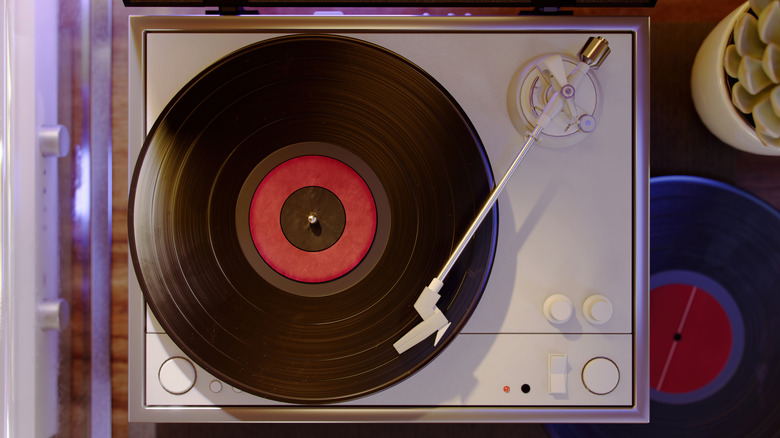
Though some may think of it as an archaic or perhaps even pretentious practice, listening to vinyl records never really went out of style for music enthusiasts, and certainly never went away. Chances are, you're reading this precisely because you're planning to get into the hobby by purchasing a vinyl record player of your own. But selecting which one to buy can be daunting, especially if you don't know which features you should be looking for.
Be assured, however, that the task isn't as daunting as you might think. For starters, there is a wide variety of excellent vinyl record setups for beginners. And if you have the budget for a decent model, there are numerous highly rated vinyl record players worth your money that you can easily find online. Nonetheless, it helps to have a list of the things that you want your first record player to be able to do.
Keep in mind that not all vinyl record players are created equal — and depending on your preferences and listening habits, some features are definite must-haves, while others are just nice-to-haves. To make sure that you don't end up spending money on a setup that leaves you wanting (or that has too many expensive bells and whistles that you don't really want or need), you'll want to pay attention to these features.
Adjustable counterweight
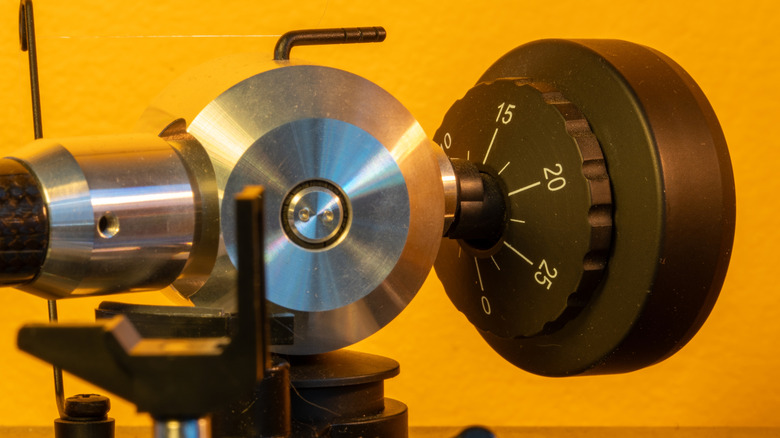
A turntable is able to play music from a vinyl record when the needle (aka stylus) on the tonearm hits the surface grooves of the record; the needle vibrates as it follows the patterns, creating electrical signals that dictate what sounds to produce. However, too much or too little downward pressure from the tonearm's weight can affect the sound quality or even damage the record. This is where the counterweight comes in: Located at the opposite end of the tonearm and adjusted via a dial, it controls the pressure exerted by the tonearm. Not all record players have the ability to adjust the counterweight, so be sure to check for it.
Removable headshell or cartridge
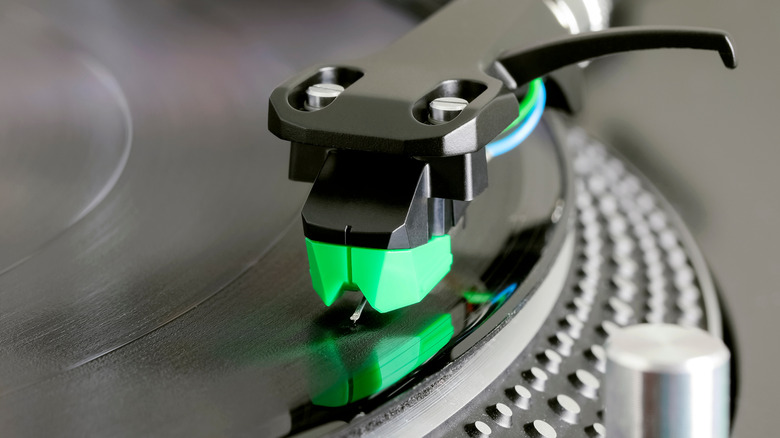
The needle is attached to the tonearm via the cartridge, which is in turn attached to the headshell. This setup is the mechanism responsible for turning the needle's vibrations into the electrical signals necessary to produce music. From time to time, the cartridge may require realignment or even replacement. Hence, a removable headshell can be advantageous: Instead of having to unscrew and mount a different cartridge every time, you can simply swap headshells with specific cartridges whenever necessary. Interestingly, until the end of the 1970s, turntable headshells were removable by default, so expect older models to have this feature.
Manual anti-skate control
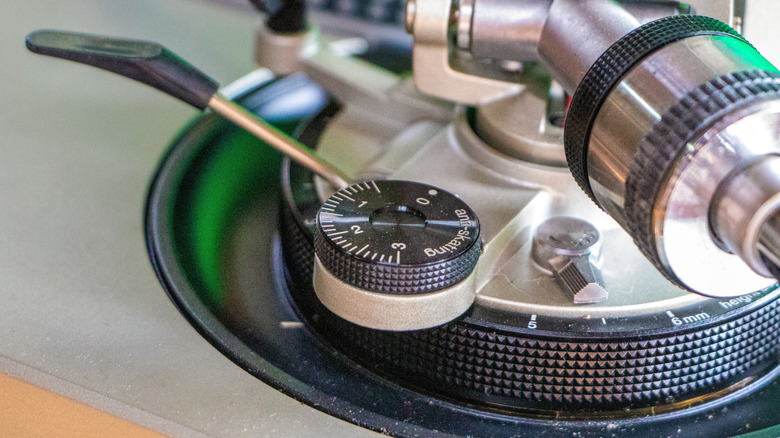
As the needle strikes the surface of the record spinning on the turntable, the rotating motion may cause the tonearm to gradually move (aka "skate") toward the center of the record. This is to be expected, as that's just how physics works, but unchecked, it can distort the sound and wear down both the record and the needle. Enter the anti-skate dial or knob, a feature on certain turntables that, when calibrated correctly, ensures that the needle stays centered in the record grooves.
Speed control
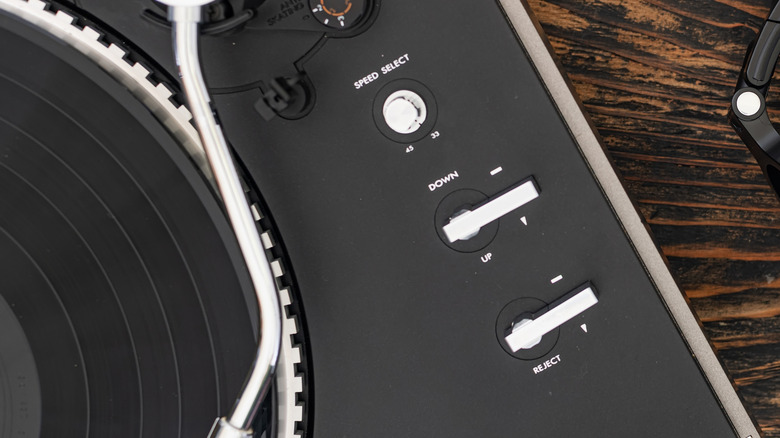
Records made from shellac (an insect-derived resin) sized 10 to 12 inches spin at 78 rpm (revolutions per minute), which was the standard until the mid-20th century; newer vinyl records spin at 45 rpm and 33 (or 33 1/3) rpm, offering higher audio quality and the ability to store more minutes of music. These days, many turntables have speed control settings that accommodate 45 rpm and 33 rpm playback, perfect for listening to singles or full albums on modern records. But players designed for 78 rpm are rarer, which would be a concern if you're an old soul who enjoys vintage blues and jazz on pre-1950s records.
USB port
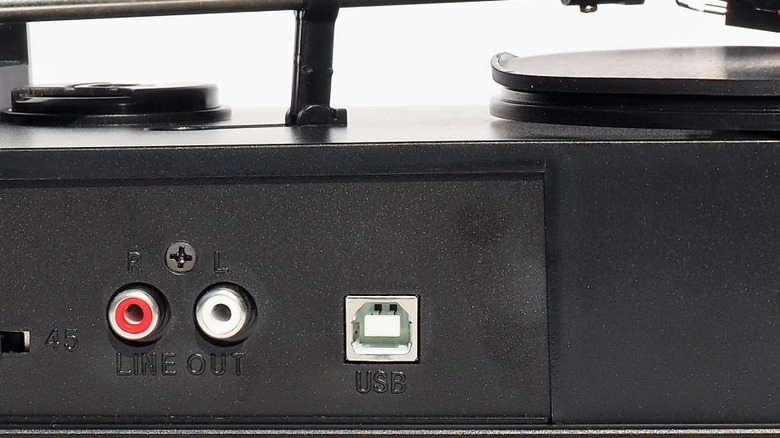
You will come across some turntables with USB ports, and you may find yourself wondering why. It all boils down to whether or not you are planning to create digital copies of your collection, perhaps for archiving or listening to songs via your computer or mobile devices. A turntable with a USB port can hook up directly to your computer, enabling you to back up your favorite tracks. However, unless you're ripping rare albums, you may be better off just purchasing CDs or streaming them (and ultimately forgoing the USB port feature).
Bluetooth connectivity
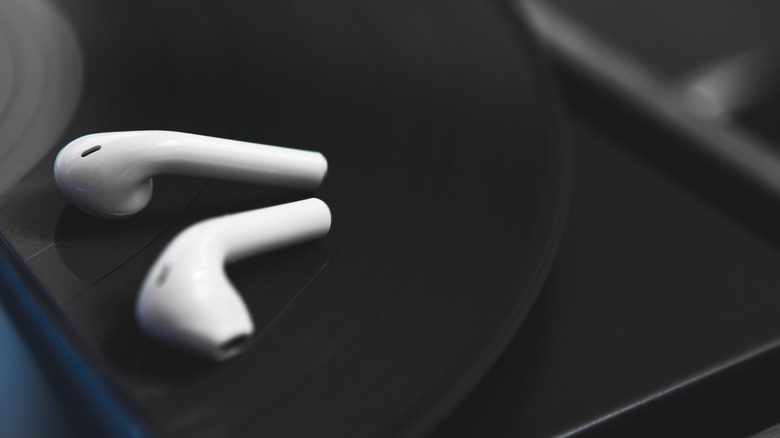
Simply put, Bluetooth connectivity allows you to listen to your vinyl records through your wireless headphones, earphones, or speakers. Though this feature may not be a deal-breaker for many vinyl enthusiasts who prefer the old-school analog way of listening to their records, it's hard to deny the practical purpose of the option, particularly if you want to be able to enjoy music in private or, on the opposite end of the spectrum, play it loudly or remotely for a wider audience. Note, though, that Bluetooth-enabled turntables may be a bit pricier, and that records played via Bluetooth tend to produce lower-quality sound.
Preamplifier
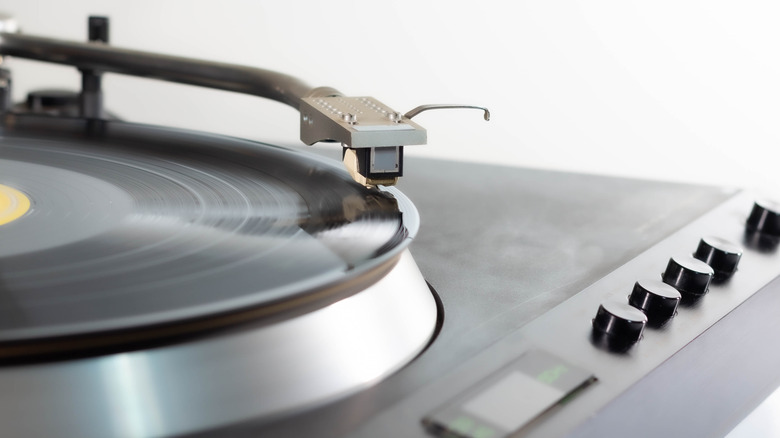
Turntables produce very weak, low-voltage signals when they play vinyl records, which means they need an initial amplification step before they reach the regular amplifier and/or speakers. Also called a phono stage, a preamplifier serves as the bridge between the player and the rest of your setup, boosting the signal while also evening out the ultra-low bass and elevated treble frequencies (both of which are inherent to vinyl records) to create a balanced sound. Some turntables come with a built-in preamp, and if not, you'll need an external one.
Direct drive vs. belt drive
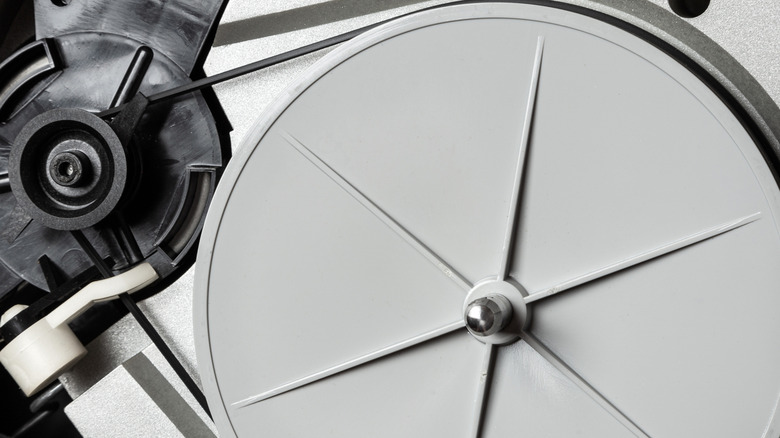
Deciding between getting a belt drive or a direct drive turntable depends on what you'll be using your record player for. In a belt drive configuration, the platter spins via a rubber belt connected to the motor; with a direct drive configuration, the platter sits on the motor, rotating alongside it. The former setup can prevent sound distortion by compensating for motor kinks, making it a suitable choice for at-home listeners; the latter, which is ideal for consistent speed, sudden stops, and optimum sound quality, is useful for musically inclined creators, like club DJs or turntablists.
Portability
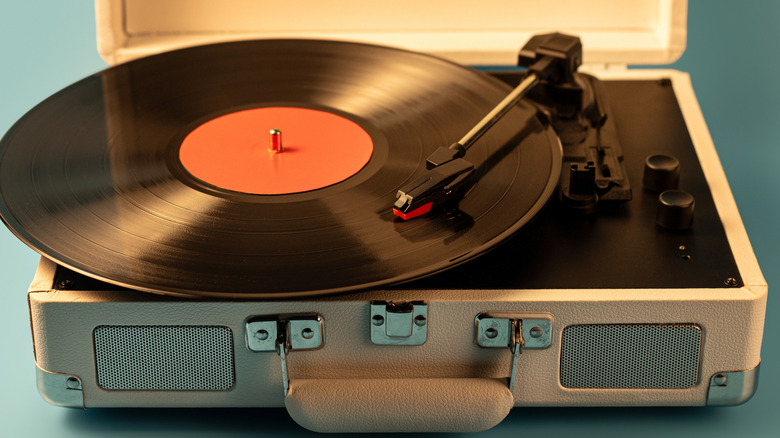
Portable record players can be a controversial topic for some. For music fans who are always on the go, having the option to enjoy their vinyl records while traveling in a vehicle, staying at a hotel, or attending a party at someone else's house would likely be an important consideration. However, portable record players are also known to produce reduced sound quality, consume a lot of battery power (especially when used in conjunction with, say, Bluetooth headphones), and wear down vinyl records faster than non-portable players. And often with cheaper construction, these vinyl players aren't the longest-lasting.