

If You're A Boomer Born In The '60s, You Got Your Money's Worth At These Concerts
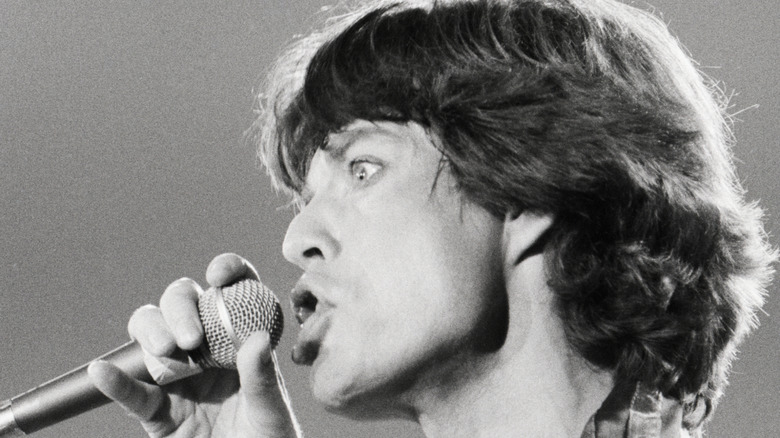
The Boomers born in the 1960s may have been too young to experience the Monterey Pop Festival, Woodstock, or the Isle of Wight Festival, and may have missed their chance to witness the Beatles, Jimi Hendrix, or Crea. But the fact is, the younger members of this generation had the chance to catch some of the greatest shows of all time. We're highlighting some of the most fabled shows that younger Boomers may have seen in their teens or early twenties that were well worth the price of admission.
From tours by veteran rockers such as Led Zeppelin and the Rolling Stones, to legend-making concerts by the Boss himself, Bruce Springsteen — as well as a pair of charity shows that, looking back, really were once-in-a-lifetime in scale and historical importance — these are some of the finest shows of the 1970s and 1980s. Anyone should count themselves truly lucky to have experienced them — especially in their youth.
Led Zeppelin at Madison Square Garden, 1977
By 1977, Led Zeppelin were the biggest live rock act in the world. Having released four self-titled albums and later masterpieces including "Houses of the Holy" and "Physical Graffiti," and toured together extensively with no changes to their four-man lineup, the band had grown to mythic proportions.
Their North American tour included a legendary six-night residency in New York City's Madison Square Garden, performed each night before a sold-out crowd of some 20,000. Although the opening night reportedly began with poor sound quality and teenage fans throwing firecrackers on stage until vocalist Robert Plant stepped in to admonish them, the three-hour sets showed the band at their peak, ranging from high-octane rockers like "Kashmir" to intimate acoustic numbers such as "Going to California," with pieces specially selected to showcase the solo abilities of each band member.
Led Zeppelin's Madison Square Garden residency has added poignancy, too, as it took place as part of the band's final ever American tour. By the end of the decade, Plant, whose career had already been interrupted by a car crash, would also suffer the devastating loss of his son, while the band suffered the death of its gifted drummer John Bonham, after which the band disbanded. They reunited once for Live Aid in 1985, and Plant and Page revisited some of their Zeppelin catalog in the 1990s as a duo. They performed once again with John Paul Jones under the band's name for a reunion show in London in 2007, but for many these Madison Square Garden shows would have been their last realistic chance to see arguably the decade's greatest live rock show.
The Rolling Stones' Some Girls tour, 1978
The late 1970s was a dangerous time for classic rock groups. In 1976, the Ramones released their debut album and the U.K. had its own punk revolution with the arrival of the Sex Pistols. Suddenly, rock music, which had largely moved toward the cerebral and, arguably, the self-indulgent with the rise of progressive rock and concept albums, returned to year zero, featuring fast-paced songs delivered with a snarl.
But the Rolling Stones, who had risen to prominence during the British Invasion of the mid-1960s, weren't ready to be written off as dinosaurs just yet. The band's No. 1 1978 album "Some Girls" saw them embracing new sounds, with the disco-infused single "Miss You" taking them once again to the top of the Billboard Hot 100. But it was during their live shows, particularly during their 1978 North American tour, that they sought to reconcile their discography with the dawn of punk and new wave, with Mick Jagger, Keith Richards et al. charging their sets with greater pace and aggression to suit the tastes of late 1970s listeners.
The tour also mirrored punk's effect on rock in that it saw the Rolling Stones returning to their roots, with shows typically opening with a cover of Chuck Berry's "Let It Rock," and featuring their bluesier hits as well as a cover of Robert Johnson's "Love in Vain." Some critics have suggested that the band wasn't in ideal form for the tour, with Richards' health suffering from drug use and his legal troubles putting a dark cloud over the tour. But for many fans, the back-to-basics tour showed the Stones' timelessness as a rock 'n' roll outfit, who could pull it out of the bag even when times were tough.
Pink Floyd's The Wall tour, 1980-81
But that's not to say that punk killed off progressive rock entirely. Pink Floyd had become revered for their mind-bending live shows that exploited the use of visual effects to produce a level of theatricality that few bands of the era could muster. And by 1980, they were growing even more ambitious, with the tour of their seismic 1979 double album "The Wall" unlike anything a rock band had attempted to stage before.
"The Wall" is a concept album devised by Roger Waters, the band's bassist whose creative control of the band had grown throughout the decade. The album was inspired by his own experience of the draconian punishments handed out by the English school system that Waters experienced as a child, by issues engulfing his private life, and also the growing sense of isolation he felt as a rock superstar. The titular wall, which represents a walled-off mentality, was represented onstage by a gigantic wall separating the band from their paying audience.
The tour comprised 31 shows in just four locations — Los Angeles, New York, London, and Dortmund — a testament to the technical complexity of the live shows. And despite the popularity of "The Wall" as a whole, those would be the only chances fans would have to see it until Waters resurrected it as a solo venture in the 1990s.
Live Aid, 1985
The two Live Aid shows, which took place simultaneously in London and Philadelphia on July 13, 1985, together represented the biggest global rock and pop show of the 1980s. Featuring the cream of modern music, the shows were watched by billions across the globe on television, and a comparatively lucky few in Wembley and JFK Stadiums.
89,000 people in Philadelphia and 72,000 in London bore witness to Live Aid, with star-studded line-ups performing for the benefit of the charity created by Bob Geldof and Midge Ure. Tickets were $35 and £25 respectively, with American audiences treated to performances from Bob Dylan, Madonna, Mick Jagger, and the Beach Boys (as well as the famously troubled Led Zeppelin reunion). Altogether, it amounted to an incredible 16 hours of live music from some of the biggest acts in the world.
But if you happened to be in London, you arguably had a better time of it. There were some misguided reunions there, too — Black Sabbath being a notable example — but the British audience was also treated to Queen's incendiary performance, which many classic rock experts tend to agree may amount to the finest rock set of all time.
Bruce Springsteen, Born in the U.S.A. tour, 1984-85
Bruce Springsteen achieved huge acclaim thanks to his iconic 1984 album "Born in the U.S.A.," and the corresponding tour, which took him across the world playing some of the biggest venues and made him a rock legend. For those who were there, it was the Boss in his prime. As well as the title track, over the course of 156 shows in 66 cities, Springsteen's band performed "Dancing in the Dark" and other huge hits from the album cycle that would become mainstays of his setlists for decades afterward.
This was the tour that saw Springsteen and the E Street Band perfect their anthemic setlists and achieve a look and style that would remain definitive for the performers involved. The final leg of the American tour saw the E Street Band in Los Angeles, where over the course of four nights at the Memorial Coliseum Springsteen and his band performed to more than 320,000 fans. Like the album it was named after, the "Born in the U.S.A." tour cemented Springsteen as one of rock's true greats and set him up as one of the world's biggest touring rock stars.