

1964 Pop No. 1, Later A Hit With Gen X In The '80s, Topped The Charts 62 Years Ago Today
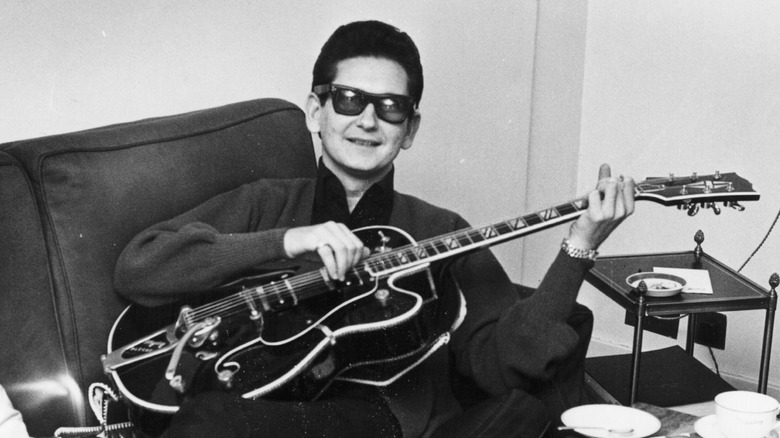
Roy Orbison gave the world one of early rock music's most distinctive voices, put to its best use on "Oh, Pretty Woman," a tune that straddled the line between twangy rockabilly and crooning pop. It was Orbison's musical tribute to his wife, Claudette Frady, inspired by her strolling down the road — just like the lyrics describe. The sound was a sensation for boomers when it dropped in the fab mid-'60s, rising all the way to No. 1 on September 26, 1964. Nearly 20 years later, rockers Van Halen would put their signature sound on a cover of the '60s classic, reintroducing it for an '80s audience that gave Gen X listeners their own version to bop along to.
"Oh, Pretty Woman" was Orbison's second trip to the peak spot; it stuck around at the top for a solid three-week run, the longest of his career. The crooner would experience a resurgence as part of the 1980s supergroup the Traveling Wilburys, which led to a revisit of "Oh, Pretty Woman" for a star-studded tribute called Black and White Night 30. But for the post-boomer listeners who were more prone to headbanging than doing the twist, Van Halen's 1982 version became the template, and it came with a whiff of scandal to deepen the rebellious rock-star shenanigans the band had become known for.
Van Halen gave Roy Orbison's classic a buzzworthy '80s hard-rock redo
"Oh, Pretty Woman" was an album-free single meant to tide Van Halen over between the band's last tour and the next album. The piano-and-guitar arrangement of the original was transformed into attitude-driven hard rock, complete with lascivious growl. The accompanying video is a classic rock fan's must-see '80s clip was a mini-film, as energetic and playful as the song itself, with each band member dressed as cinematic characters assembling Avengers-style to rescue a damsel in distress ... who turned out to be a man in drag. It was a deviously subversive twist that would have had music-labeling council, Parents Music Resource Center (PMRC) of the mid-'80s clutching their pearls — if they'd existed at the time.
As it was, the wig-snatching reveal at the end of the video was considered too controversial for the notoriously provincial (read: corporate advertising-minded) MTV. Regardless, the song went all the way to No. 1 on the Billboard Mainstream Rock chart in March 1982 and No. 12 on the Hot 100. The unexpected chart success pushed the band into high gear to finish "Diver Down," the album the cover would be a part of. The video brouhaha was likely helpful in driving interest in Van Halen's cover of the Roy Orbison hit, giving it a boost nearly two decades after the original set radio waves alight. Thanks to each audience's unique sensibilities, "Oh, Pretty Woman" became a rock classic twice over, for two distinctly different generations.