

One Of Psychedelic Rock's Most Beloved Covers Has No Known Author
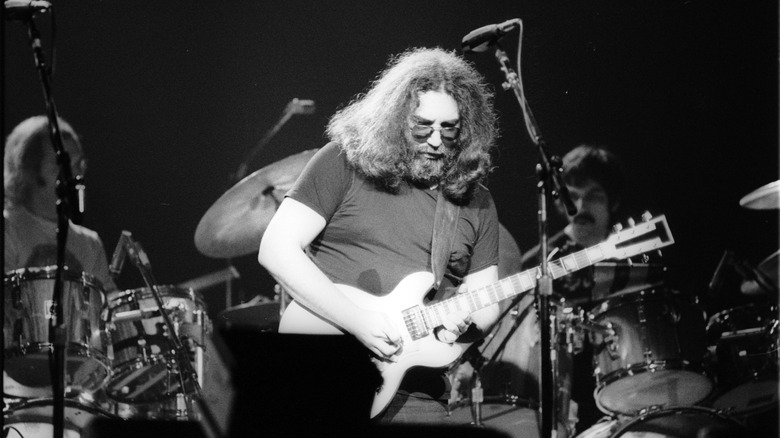
If you had managed to attend a Grateful Dead concert at nearly any time prior to Jerry Garcia's death and the band's subsequent breakup, chances are pretty good that you would have heard "I Know You Rider" at some point. But, while the Grateful Dead deserves credit for some 151 original compositions, this one isn't among them. In fact, this old-school blues song (often meant to address a wayward lover) has no known author but has been covered by many artists in many different forms, going back in one way or another to at least the 1920s. While the Grateful Dead's take on "I Know You Rider" showcases plenty of the band's hallmark groovy psychedelia, it also speaks to the folk and blues influences that were there from the band's very beginnings.
As such, there have been no real attempts to copyright the song. Given its dense and tangled history that includes seemingly every blues, folk, and folky rock artist to ever pick up a guitar, no copyright lawyer in their right mind would attempt such a mad venture. That left Jerry Garcia and the other members of the Grateful Dead to arrange their rock-forward take on "I Know You Rider" however they chose. Just like earlier artists going back generations, the Grateful Dead trimmed "I Know You Rider" down quite a bit (even if the band became known for legendarily long jam sessions). It was often blended with "China Cat Sunflower," another favorite that, together, became a frequent flyer at live performances, with more than 500 renditions of "China Cat Sunflower/I Know You Rider" performed for fans over the course of the Grateful Dead's time in the spotlight.
The folk revival brought the old-school song to the Grateful Dead's attention
Concerning how "I Know You Rider" became a beloved part of their oeuvre, Jerry Garcia later said it was a standard of coffeehouse performances during the mid-20th-century folk revival. He suggested covering it in the mid-'60s, when the Grateful Dead was still going by its early moniker of the Warlocks.
Tracks from the early 20th century contain similar lyrics, like 1930's "No Special Rider Blues," by Little Brother Montgomery, which speaks of a "rider" and his romantic partner. In 1933, father-son folklorist duo Alan and John Lomax — who also recorded an early version of the rock one-hit wonder fave "Black Betty" – recorded a version titled "Prison Rider Blues" while visiting a Mississippi prison camp. A young woman there was recorded singing, "Oh rider rider rider, rider where have you been so long? / Yeah I ain't had no lovin' baby, rider since you been gone."
The Lomaxes released this unnamed performer's adaptation as "Woman Blue" in "American Ballads & Folk Songs," a songbook published in 1934. They couldn't resist putting their own spin on the arrangement just like earlier blues musicians did, too. Folk musicians eventually picked up the songbook, leading to a steady stream of covers by artists like folk legend Joan Baez, the Kingston Trio, the Byrds, and Janis Joplin, all continuing the tradition of mixing and matching musical elements at will. All this morphing means that attempting to uncover an original author is quixotic — go tilt at windmills, and you'll get just as far. Instead, simply put on the Grateful Dead version, tune in, and jam out.