

'60s Bubblegum Pop Hits Even The Artists Didn't Expect To Be Huge
It makes sense that bubblegum pop peaked in popularity in the 1960s, since there weren't a lot of pop or rock bands marketed to young audiences at that time. Let's face it — songs by the Doors, Jimi Hendrix, and Bob Dylan probably didn't resonate with a lot of elementary and junior high school students.
But not every artist who scored big in the bubblegum pop genre wanted to be there. Many were forced into it by their labels and had little faith in the songs that would eventually take them to the top of the charts. Some of them, like the Lemon Pipers and the Supremes, dismissed their soon-to-be hit songs as too juvenile or wildly inappropriate for their group's sound. It caused tension in some cases and a high level of anger in others, and band members often weren't shy when it came to expressing their frustration about making songs they considered too childlike and lighthearted. Here are five bubblegum pop songs that became hit singles, despite the artists not expecting them to chart or sell at all.
Sugar, Sugar — The Archies
First off, the Archies are a fictional, animated band that came from Archie Comics as well as "The Archie Show," which ran in the late '60s. So, those who voiced songs for them didn't expect to create a bubblegum smash with the 1969 cut "Sugar, Sugar," especially since many thought it was a throwaway track.
It didn't exactly get a warm welcome from DJs when it was first released. "I had no idea what was going on except a lot of people were putting the song and the record down, as if it was fluff, as if it didn't mean anything, there was no value to it," said "Sugar, Sugar" co-writer and background vocalist Andy Kim in 2019 in an interview with NPR.
"The year of Woodstock, the year that we landed on the moon, the year everyone was talking about Charles Manson, and the Beatles were breaking up, and they had that concert on the roof, there was this song that just showed up," he added. "Sugar, Sugar" ended up securing the No. 1 spot on the Billboard Hot 100 for four weeks, proving that some songs considered juvenile or frivolous by rock and pop tastemakers and even their own artists can actually resonate with people of all ages.
Green Tambourine — The Lemon Pipers
It happens all the time: A band gets together to create a certain type of sound, rehearses that sound, and probably lays down a few tracks. They gain some momentum and score a record deal, but soon after a producer who works for the label wants to change their style completely.
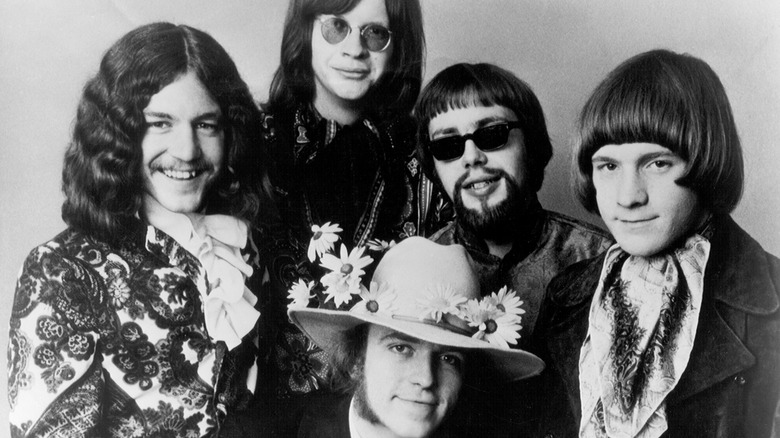
That's exactly what happened to the Lemon Pipers when producer Paul Leka sat down with the band and started coming up with material. Right away, Leka, who was a producer for the band's label Buddah Records, began playing stuff that was nothing like the experimental, soulful rock the Lemon Pipers championed.
One of the songs Leka crafted was "Green Tambourine," a jovial, highly accessible tune that the band eventually agreed to play. It's not like they had much of a choice if they wanted to keep their deal, since newly signed acts typically had little to no say on what songs would be released. "We thought of ourselves as a psychedelic blues band," said Lemon Pipers member Bob Nave in an interview with Cincinnati Magazine. "We knew we could play ['Green Tambourine'], and you can't look a gift horse in the mouth." That gift horse ended up galloping all the way to No. 1 on the Billboard Hot 100 in 1968, but the band broke up not too long after.
The Supremes — Where Did Our Love Go
By the time the Supremes' "Where Did Our Love Go" was released on June 17, 1964, their lead singer Diana Ross was 20 years old, as was Mary Wilson, and Florence Ballard was about to turn 21. So, it's not surprising that they weren't eager to record a song that seemed tailormade for preteens. Thankfully for them, they recorded it anyway, and the cut spent two weeks at No. 1 on the Billboard Hot 100.
"Where Did Our Love Go" isn't bubblegum pop in the traditional sense and it predates the trend by a couple of years, but the Supremes themselves used that term to describe the song. "[Motown's founder] Mr. [Berry] Gordy believed in us, and so he put us in with his best songwriting team, Holland-Dozier-Holland," Wilson detailed in The Guardian. "The first song they showed us was 'Where Did Our Love Go,' which we didn't want to record. It sounded sweet and bubblegum."
Wilson also shared her initial feelings about the song in her autobiography, "Dreamgirl: My Life as a Supreme," writing that she thought the lyrics were redundant and way too juvenile. She didn't care for the melody either and didn't think the buying public would latch onto the song. "To my ears, 'Where Did Our Love Go?' was a teenybopper song," she wrote. It ended up being the Supremes' first No. 1 single.
Simon Says — 1910 Fruitgum Company
When the New Jersey band 1910 Fruitgum Company signed a deal with Buddah Records in 1967, they saw themselves releasing adult-themed rock music with serious lyrics and loud guitar riffs, but producer Jeff Katz had other ideas for them. Katz, along with his partner Jerry Kasenetz, known collectively as Super K Productions, became successful producers for Buddah Records and came up with "Simon Says," released in 1968. Let's just say the band wasn't very fond of the new musical path they were forced to walk down.
"It was a difficult time for us, because we felt we had been snookered," group member Frank Jeckell told Spotlight Central in 2020. "We thought we would be recording our original material, and suddenly Jeff came out of left field with 'Simon Says' ... Our initial reaction was, 'We're not interested in playing something like that' and, in fact, there were a lot of expletives among the band members regarding that discussion."
The song reached No. 4 on the Billboard Hot 100 and No. 2 on the U.K. charts, something that thrilled the band but also permanently linked them to the bubblegum sound, which Jeckell spoke about with ClassicBands.com. "We were much closer to a hard rock band than anything," he specified. "We didn't play bubblegum music, and we didn't intend to play bubblegum music. Suddenly we made this song they gave us into a hit, and we were bubblegum superstars." 1910 Fruitgum Company released several other bubblegum hits, including "1, 2, 3 Red Light" and "Goody Goody Gumdrops," before splitting up in 1970.