

The Greatest Self-Taught Pianists In Rock History
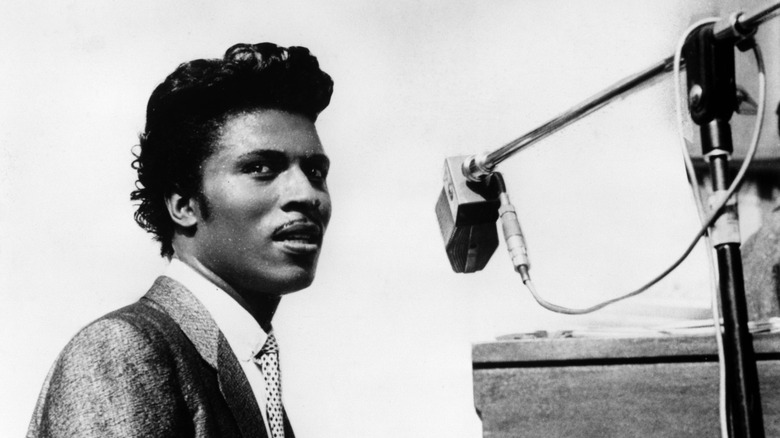
Piano-playing is most closely associated with technically complex genres such as classical and jazz. But pianists have also played a decisive role in rock music, with key musicians (no pun intended) in the early years of rock 'n' roll often developing idiosyncratic playing styles that helped shape the sound of the budding genre.
Here, we take a look at five pianists who proved hugely consequential in the history of rock music — and who, for the most part, were self-taught on their chosen instrument. From Sun Records stalwart Jerry Lee Lewis to the party-starting New Orleans legend Professor Longhair, each of these pianists became a star, having worked out their own distinct playing styles at an early age. It is striking that each of these self-taught pianists is something of a prodigy, demonstrating an innate ability to turn the music they were raised around as children into something new, challenging, and above all, fun.
Jerry Lee Lewis
Rock 'n' roll's defining pianist, Jerry Lee Lewis, became renowned for his high-energy performances that could truly get audiences whipped into a frenzy. Signed to Sun Records, just like legendary label mate Elvis Presley, Lewis helped pioneer rockabilly and became a major star in the late 1950s with riotous singles such as the classic "Great Balls of Fire."
Raised in poverty in Louisiana, Lewis first played piano at the home of his aunt and became obsessed with the playing style of his local preacher, learning to imitate him and other local musicians at a young age, with almost no formal training. He set the template for the "wildman" rock pianist, exerting a huge influence on later artists such as Elton John, whose own performances during his 1970s heyday were similarly incendiary.
It is impossible to ignore that Lewis was a controversial figure, with several scandals throughout his life tarnishing his reputation. But as a performer, he could not be faulted, and his records have remained popular where those of a lesser artist might have been shunned.
Fats Domino
Fats Domino is an interesting case when it comes to self-taught rock pianists. Born and raised in a large musical family in New Orleans, he first encountered the piano when his household was given an upright, which the 10-year-old immediately started playing. In the early days, Domino did receive some instruction from his brother-in-law, Harrison Verrett, a jazz musician who showed him the fundamentals of the instrument.
But when it came to developing his own signature style, Domino learned almost entirely by ear, with the Songwriters Hall of Fame describing him as "almost entirely self-taught" through listening to records. As Domino explained: "I used to hear 'em, listen at 'em five, six, seven, eight times and I could play it just like the record because I had a good ear for catchin' notes and different things" (via Offbeat Magazine).
Domino became rock 'n' roll's premier purveyor of boogie woogie, with early hits like 1949's "The Fat Man" proving incredibly influential on the rhythm of pop records later in the decade. He was also a pioneer as a Black musician, headlining over white acts and playing to non-segregated audiences, an indicator of his huge crossover appeal.
Little Richard
While Fats Domino made his way into rock 'n' roll history through jazz and boogie woogie, Little Richard, the pianist whose 1955 signature song "Tutti Frutti" is, for many, one of the defining recordings of the decade, was in his early life ensconced in gospel and church music. Having learned music organically through church performances at a young age, he was adept enough to join the "Chitlin' Circuit" through the Deep South at the age of 14, touring widely. It was here that he built on the skills he had learned at church and gained some direct piano mentorship from a fellow pianist called Esquerita, who taught Richard phrasing, though Richard is widely accepted to have developed his own unique style by listening to records.
Richard moved seamlessly between the popular styles of the early 1950s, from jump blues to R&B. But by the middle of the decade, he had begun to develop his own signature style, which, as well as exuberant piano performances, featured his idiosyncratic vocal style, for which he often employed his trademark high-pitched scream. He would veer between his rock 'n' roll career and a religious calling, sometimes touring as a preacher instead of a musician, deriding the budding genre as the devil's music. But the impact of his classic recordings is unarguable, and he dubbed himself the "architect of rock 'n' roll" after his influence over artists as diverse as the Beatles and Captain Beefheart became clear.
Billy Preston
Billy Preston was one of the most distinguished keyboard players of the classic rock era, remembered as the so-called "Fifth Beatle" thanks to his involvement in their late recordings for "Abbey Road" and "Let It Be," as well as his appearance alongside the Fab Four as part of their famous final concert on the roof of Apple Corps on London's Savile Row. But he had already risen to prominence as a child, beginning to hit the keys at just three years old. Self-taught on the instrument, by the age of 10, he was skilled enough to tour with gospel singer Mahalia Jackson.
He was also a sideman for legends including the Rolling Stones, Ray Charles, and Little Richard. His solo recording career began while he was still a teenager in the early 1960s, but reached its apex in 1973, when his instrumental "Outa-Space" won him a Grammy Award, setting him up for two No. 1 hits soon after. Though his career was often derailed by personal problems, he remained one of the most respected organists in the industry for his immense talent, and he continued to perform with other artists, appearing on the Red Hot Chili Peppers' "Stadium Arcadium" the year of his death in 2006.
Professor Longhair
Henry Roeland Byrd, better known as Professor Longhair, thanks to his intricate musicianship and long locks, rose to prominence in New Orleans in the 1940s as one of the scene's most eccentric and unique players. Largely self-taught, Longhair developed his distinctive style with guidance from his mother and other New Orleans pianists. Merging jazz, Creole, and barrelhouse blues, as well as driving instrumentation that still sounds riotous on record today, Longhair's New Orleans sound was ahead of its time in pointing the direction of rock 'n' roll to come. The proto-rock pianist undoubtedly helped shape the sound of 1950s rock pianists such as Fats Domino, but also was a major influence on later New Orleans musicians, particularly Dr. John.
Longhair dropped out of the music industry in the mid-1960s, though he was rediscovered in the early 1970s, touring widely and remaining a feature on the New Orleans circuit until his death in 1980. Though he may not be as recognizable a name today as many of those that followed in his wake, Longhair's playing style, which is inherently party music, is a reminder that, at its core, rock 'n' roll is about having a good time.