

Quote Of The Day By Chris Cornell: 'When I'm At Home, I Don't Talk To Anyone; I Don't Go Out Socially. My One...'

When someone dies by suicide, questions like "Why?" and "Were there signs?" abound. And in the case of a prominent public person and voice like Chris Cornell of Soundgarden and Audioslave, who died that way in 2017 at the age of 52, it's hard not to lionize and idolize the man to the point of losing sight of him. Thankfully, Cornell's own words can help us understand him and ourselves a bit better.
Cornell was born on July 20, 1964, in Seattle, Washington, to a working-class family in Greenwood, north of Seattle's downtown. He went to a Catholic elementary school, Christ the King, which Cornell said in an early 1994 interview with The Seattle Times was close enough that he could literally throw rocks at it. He also told The Seattle Times that he was a delinquent kid who sold drugs, burgled houses, and stole cars (but rarely got caught). After Cornell's death, his daughter Toni told ABC News that both of her father's parents abused alcohol, which led a young Chris towards substance use as early as 14 years old, even before he finished high school with a GED at age 15.
Cornell always had an interest in music, and got involved in his local music scene as a teenager. Gifted with all the trappings of a rockstar, he shifted from drums to frontman duties before Soundgarden formed in 1984. But even amidst Soundgarden's burgeoning musical success and eventual, tragic story, Cornell remained acutely aware of his demons. He was open and honest about them, lyrically and otherwise, which is why he gets our quote of the day.
If you or someone you know is struggling or in crisis, help is available. Call or text 988 or chat 988lifeline.org
Quote of the Day by Chris Cornell
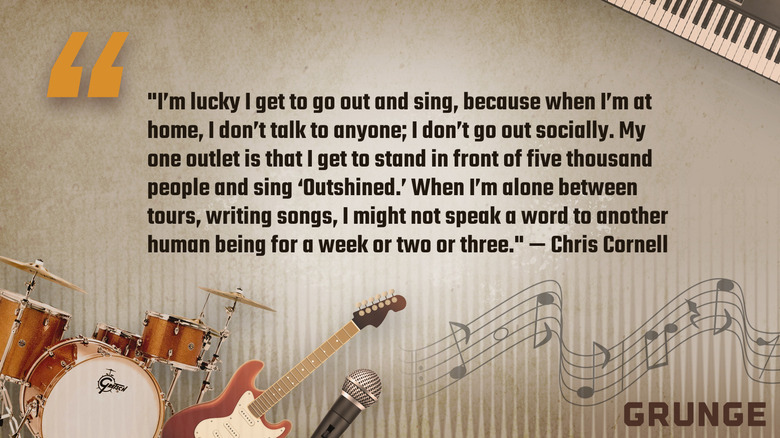
"I'm lucky I get to go out and sing, because when I'm at home, I don't talk to anyone; I don't go out socially. My one outlet is that I get to stand in front of five thousand people and sing 'Outshined.' When I'm alone between tours, writing songs, I might not speak a word to another human being for a week or two or three."
That quote comes from Pitchfork in 1996, Cornell's first solo interview at the height of Soundgarden's fame and commercial success, right after the band released 1996's "Down on the Upside" on the heels of "Superunknown" and masterworks like "Black Hole Sun" that defined '90s grunge. He fidgeted during the interview a lot, remained painfully shy, and grinned when the interviewer told him a (non-satirical, honest-for-goodness) 1992 study in the Journal of Medical Ethics that proposed classifying happiness as a neurological disorder dubbed "major affective disorder." Echoing his own response, and also "Down on the Upside's" title, Cornell said later in the interview, "People just don't realize how much fun it is to be depressed."
Along those same lines, and mirroring Cornell's own above-cited quote about solitude, the interview quotes Soundgarden guitarist Kim Thayil about how Cornell shut off after shows. No matter how vibrant and powerful he was on stage, "He doesn't belong to you" once the set is over. This tendency to self-isolate most certainly did not help Cornell over time, though he did always have his one way to connect to others, one that persisted through his marriages and role as a father.
Deeper Meaning of Chris Cornell's Quote — Passing the Torch
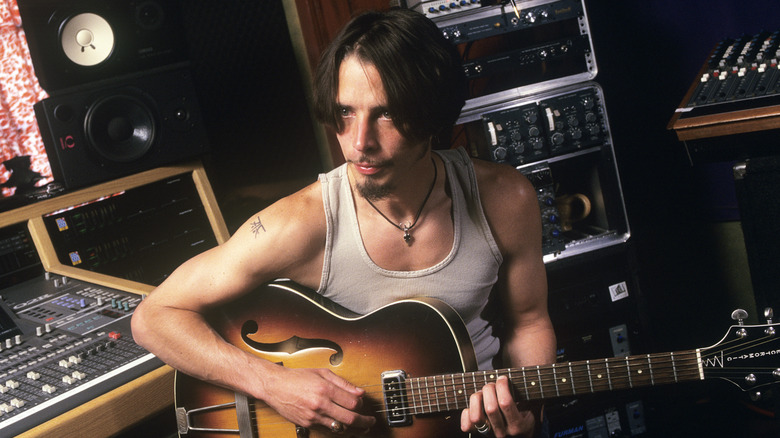
We all likely recognize the title and opening line of John Donne's poem, "No Man Is an Island," which has become a catchphrase in and of itself. It might seem a bit cliché to apply that phrase to a person like Chris Cornell, who buried himself away from others, accessible only via one musical, on-stage lifeline, but it's still true. And it still wasn't enough. He might not have been alone "for a week or two or three" as a married father, like he was in 1996 when he spoke to Pitchfork, but whatever plagued him from a young age plagued him regardless of person-to-person contact, right to the very end.
So is the lesson here something akin to Linkin Park's "I tried so hard and got so far / But in the end, it doesn't even matter" chorus line from "In the End"? Far from it. No matter Cornell's innermost world and ultimately unknowable state of mind across his life and in the days leading up to his death, he wielded music as long as possible to understand himself and his world. He even did so without any understanding of what made a song successful or not, as he once said. And, as his daughter Toni told ABC News, he did so in a way that was so far-reaching that he saved other people's lives — people who might have followed a self-destructive path.
This is the final lesson behind Cornell's quote: He vocalized what others couldn't. In the moment he did, in the recording booth and on stage, he formed a connection that lasted a moment but endures beyond his one life.
More Quotes From Chris Cornell
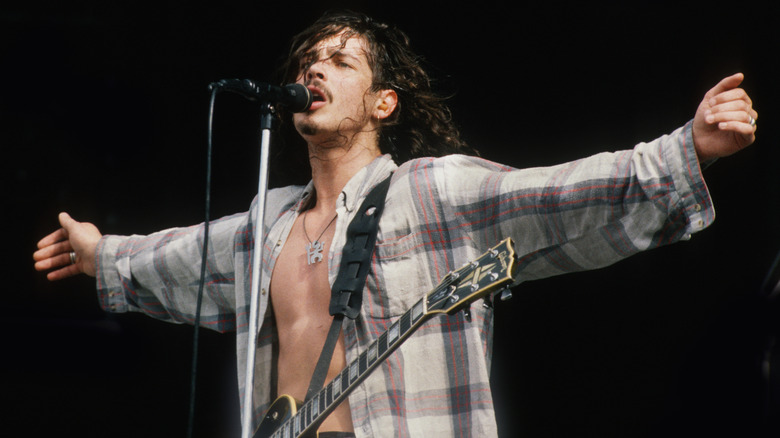
- "I never wrote music or arranged songs or lyrics when I was under the influence of anything but coffee. That's not gone away."
- "Music was my escapism, and that has a lot to do with why I write songs the way I do."
- "The feeling that you're true to yourself translates almost every time to your audience."
- "Anyone that suffers depression and addiction, as it relates to the entertainment business, often there can kind of be a cocoon [around them]."
- "The higher truth is really just the simple version of what we're like and how we feel about life when we come into the world, instead of complicating it and corrupting it and getting swept away in all the bulls*** of mysticism and religion and philosophy and vanity and all that crap. It's who we were before any of that happens."