

The 5 Albums Of 1970 With The Most Hit Singles
Of the many albums released in 1970, a handful sent multiple singles into the upper reaches of the Billboard Hot 100. Many of those songs hit the Top 10, and some went as high as No. 1, becoming gems that helped make the new decade into a rocking occasion from the jump. Flipping through the singers and players who were able to make this multi-hit magic happen is like leafing through a musical yearbook and discovering that some of the best-loved classics in the American songbook also represent early moments of massive success for some of the world's biggest music makers.
We were as exhaustive as we could possibly be without reviewing every album released in 1970. We used the number of singles plus chart positioning to compile our list; if two or more albums had three singles each, we chose the one with singles that were more successful. In our sonic adventures, we learned that several of the year's highest-selling albums, like "Bridge over Troubled Water" by Simon & Garfunkel and "Cosmo's Factory" by Creedence Clearwater Revival, were littered with hits. In addition to becoming treasured collections, these slabs of premium vinyl spun a high volume of singles that still get heads spinning whenever the needle drops.
Cosmo's Factory — Creedence Clearwater Revival
One of the biggest hit-producing albums released in 1970 was "Cosmo's Factory" by Rock & Roll Hall of Famers Creedence Clearwater Revival. This certified banger spent a mind-blowing nine weeks at No. 1 on the Billboard 200 album chart and launched six-plus hit singles. Chances are, if you have a favorite CCR song — or are even simply familiar with one of their better-known tunes — it's on here. It might as well have been a greatest hits collection, released as a premonition of how long-lasting the love for these songs and the band's success would prove to be.
Songs were released as double-sided singles, with winners on both sides, which tipped the hit-making scales in the band's favor. Now-standards like "Travelin' Band/Who'll Stop the Rain" went to No. 2 in March 1970; "Lookin' Out my Back Door/Long As I Can See the Light" also hit No. 2 in October. "Up Around the Bend/Run Through the Jungle" made it to No. 4 in June of that year. These songs were all part of the L.P.'s historic line-up — among the most beloved songs from both the band and the classic rock era.
"Cosmo's Factory" also contained CCR's rock version of the R&B classic, "I Heard it Through the Grapevine," an 11-minute epic that was re-released as a shortened single in 1976 and topped out at No. 43 in March of that year — a seventh Top 100 hit ... but who's counting?
Bridge Over Troubled Water — Simon & Garfunkel
Folk masters Simon and Garfunkel released one of their peak collections, "Bridge Over Troubled Water," in 1970. It may have become the best-selling album that year, but it signaled the beginning of the end for the duo. It also happened to be chock-full of tunes destined to become classics, including four timeless singles that turned into Top-20 hits.
One of the most stirring Simon and Garfunkel songs ever, the heart-wrenching and soaring "The Boxer," had already reached No. 7 in May 1969 after its release as a stand-alone single that March. The title track, "Bridge Over Troubled Water," a hymn-like ode to devotion that's become an American standard, went to No. 1 in February 1970 and marked the pair's last appearance at the top of the Billboard Hot 100.
The spry, percussive "Cecilia" was a No. 4 smash in May 1970, showing off the playful side of Simon's songwriting as he describes being kicked to the curb in the middle of a sensual afternoon with his titular paramour. And with the global-spirited "El Condor Pasa (If I Could)," a No. 18 hit that came in October 1970, Simon demonstrated his love of world music. Andean flutes and Latin rhythms decorated a distinctly South American melody created in 1913 by Peruvian composer Daniel A. Robles; Simon added lyrics, with the now-famous "I'd rather be a hammer than a nail" joining the folk music lexicon.
Signed, Sealed & Delivered — Stevie Wonder
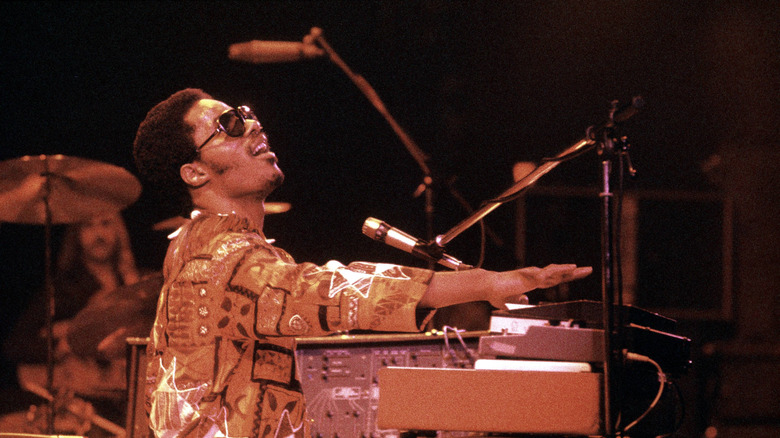
Motown wunderkind Stevie Wonder dropped his stellar album "Signed, Sealed & Delivered" in August 1970 and pushed all comers out of the way with a quartet of singles that each had its own unique personality. It was a sonic bouquet that represented the past Wonder had built as a young musical prodigy and previewed a future that would take him even further into superstar territory as the '70s and '80s unfurled.
The single "Never Had a Dream Come True" led the way in March 1970, making it all the way to No. 26 with its be-bop country-adjacent tones extolling the virtues of finding true love. It cleared a path for a hit that became one of Wonder's trademark hits, "Signed, Sealed, Delivered (I'm Yours)," the sunny title song that celebrated the joy of reconciliation that became a No. 3 single in August 1970 and the highest-charting tune from the collection. It was also Wonder's sixth trip into the top 5.
In autumn, Wonder shifted gears and released "Heaven Help Us All," a soulful musical prayer for social justice in the midst of the Vietnam War. It moved listeners enough to crack the top 10, settling at No. 9 in November 1970. His final single, a funky reworking of the Beatles' classic "We Can Work It Out," showed up in February of 1971 and took its time reaching No. 13 on the first of May of that year.
Déjà Vu — Crosby, Stills, Nash & Young
The high-heaven harmonies and folk-rocking sensibilities of Crosby, Stills, Nash, and Young filled their March 1970 multi-platinum chart-topping album, "Déjà Vu," with divine textures that few acts of the time could challenge. It was their first outing with Neil Young as part of the crew, and there seemed to be something rich and rewarding in the alchemy; the L.P. spun out three hit singles, each of which can be held up as some of the band's finest work in any era.
"Woodstock" was a cover of Joni Mitchell's bard-like ode to the happenings in Bethel, New York, during that historic 1969 concert. It became the better-known iteration, reaching No. 11 on the Billboard Hot 100. This was the album that also housed "Teach Your Children," Graham Nash's No. 16 country-lite swinger inspired by his father's arrest, a tune that espoused breaking family cycles to offer a better life to the next generation. Both songs represented the social themes that the band made a focal point of their music.
But with Nash's "Our House," a love song celebrating sweet domesticity in Laurel Canyon with his then-girlfriend Mitchell, a simple love song became the band's third top 40 hit from "Déjà Vu" when it reached the No. 30 spot. This sort of chart action from a sole L.P. gave the band footing as one of a handful of top-selling bands with high-charting singles that would become classics of the era.
Chicago II — Chicago
Chicago was still a jazzy adult contemporary phenom-in-the-making in 1970 when they dropped "Chicago II," a second album that contained some of the band's best-known songs. Their sound was more experimental than in later works, but listeners were picking up the groove these players were putting down well ahead of the power ballad era of the '80s. With three Top 10 singles among its many tracks, the L.P. set a high bar for the band's future releases. For the moment, though, they were on top of the world.
The intense, up-tempo love song "Make Me Smile" from a suite on side two of the album called "Ballet for a Girl in Buchannon" became a No. 9 smash in June 1970, an auspicious sign that the band had come up with a winner of a collection. It took a few months for another tune to rise up like this. But when the blazing "25 or 6 to 4," one of the band's biggest fan favorites, finally scorched the charts in September 1970, it turned into a No. 4 hit — the highest the band had achieved to date.
When "Colour My World," another selection from the "Ballet" suite, reached No. 7 alongside "Beginnings" in August 1971, it created a trio of charting singles that all reached the Top 10. It also gave evidence that experimental jazz-pop-rock could be commercially successful.