

The Best Hi-Fi Setups For Beginners
We may receive a commission on purchases made from links.
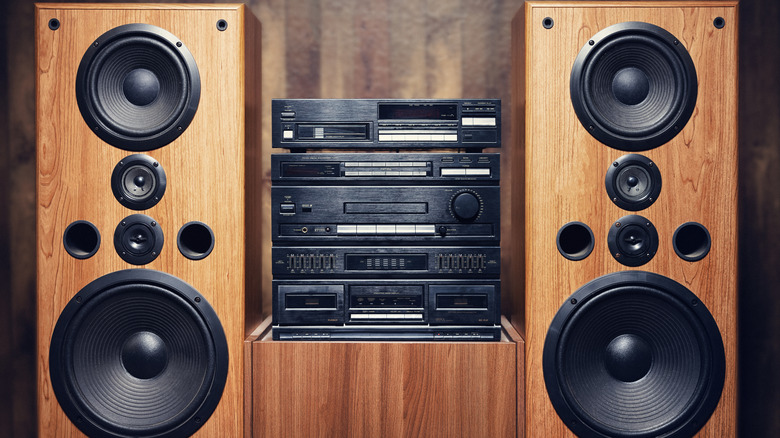
The wonderful world of hi-fi is the inevitable destination for any music lover who loves listening at home. Every music lover had one in the '60s — and they deserve a comeback. Whether you collect vinyl records, CDs, or even cassette tapes, a hi-fi system will greatly enrich your enjoyment of the music you love. And if you're not into physical media, many modern hi-fi systems feature integrated streaming and digital media playback, perfect for those new to such a setup.
For those completely new to this topic, "hi-fi" is short for "high-fidelity," which simply means the quality of playback is as close to the original recording as possible. That means a rich, full sound, free of unwanted distortion, missing bass, or thinness. While JBL speakers or Victrola record players play music just fine by themselves, a complete hi-fi system will elevate the listening experience, allowing you to hear more of the subtleties in the mix, performances, and production.
Hi-fi systems have multiple components with a wealth of options, and broadly speaking, there are several different kinds of setups: stereophonic (two speakers), quadrophonic (four speakers), and surround sound (typically five or more speakers). We'll be looking solely at stereophonic options for entry-level music lovers, and we'll be sticking to mid-tier technology. Hi-fi listening is not a cheap hobby, but by investing in high-quality equipment, you can immediately enjoy incredible sound that will leave you satisfied for years to come, and still leave room to upgrade.
Speakers
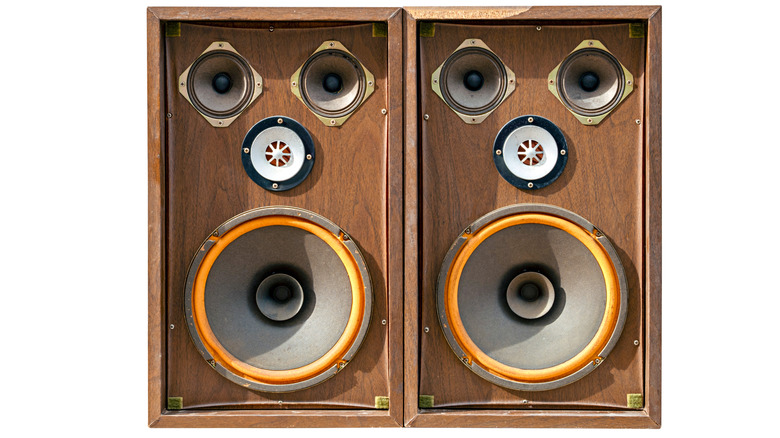
The first thing to decide before purchasing speakers is where they'll be located, as the size of a room can have a significant impact on your sound quality. If you plan to have them at your desk or in a small bedroom, you'll want bookshelf speakers, such as the low-cost but highly reviewed Sony SS-CS5M2 passive speakers. To fill larger spaces such as living rooms, we recommend floor-standing speakers, and a great place to start are JBL's Stage 2 260F floor-standing speakers, but speakers of that size will cost significantly more than bookshelf speakers.
Aside from size, there are two kinds of speakers to choose from: passive and active. Passive speakers are powered by the components of your hi-fi setup, whereas active speakers must be plugged into their own power source, and typically have their own knobs and buttons to adjust the balance of the sound. For beginners, we recommend passive speakers; while active speakers can help a seasoned listener dial in the perfect tone, those differences are negligible to a beginner, and active speakers are typically more expensive.
If you're craving an extra bass boost, say for watching movies or for bass-heavy genres and artists like IDM and Death Grips, consider adding a subwoofer. These are box-sized standalone speakers that produce low-frequency sounds that regular speakers just can't quite reach. A subwoofer is usually placed across the room from your speakers and low to the floor, so make sure you have adequate space before purchasing one. Golden Ear makes a reputable entry-level subwoofer, the ForceField 30, but it will still run you upwards of $600.
Amplifier
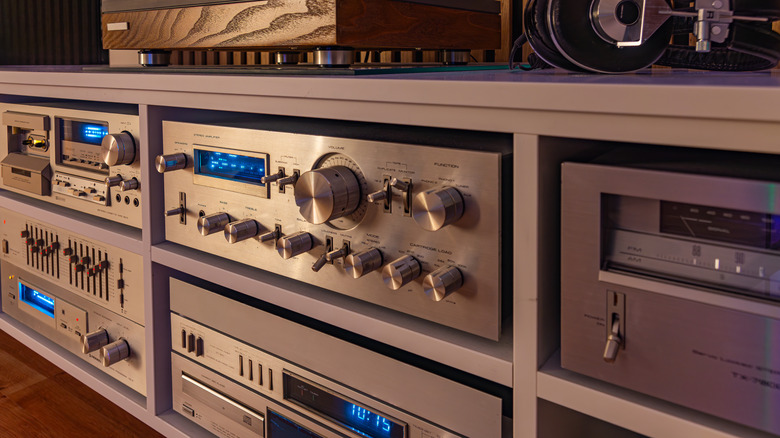
The amplifier is the beating heart of your system, and if you're wondering what to invest the most money in at the beginning, this would be it. The amplifier is responsible for receiving the audio signal from your vinyl, CD, or digital music player, amplifying it, and sending it out to your speakers. In addition to its costly but worth-it premium amps, Marantz also makes high-quality, entry-level amps, such as the Marantz PM6007, which retails at around $700.
There are two kinds of amplifiers, and this is very important: Integrated and non-integrated. An integrated amplifier has a built-in pre-amplifier, which boosts the signal from your music-playing device and equalizes it, allowing your amplifier to work with a higher-quality signal. If you purchase a non-integrated amplifier, you will almost certainly need a separate pre-amp, although this does allow more freedom to choose a higher-quality pre-amp.
Another advantage of many integrated amplifiers is that if you have several audio inputs, such as a turntable and a CD player, they will allow you to switch inputs at the push of a button. A non-integrated amplifier will usually require a receiver to change inputs and/or speakers.
Receiver
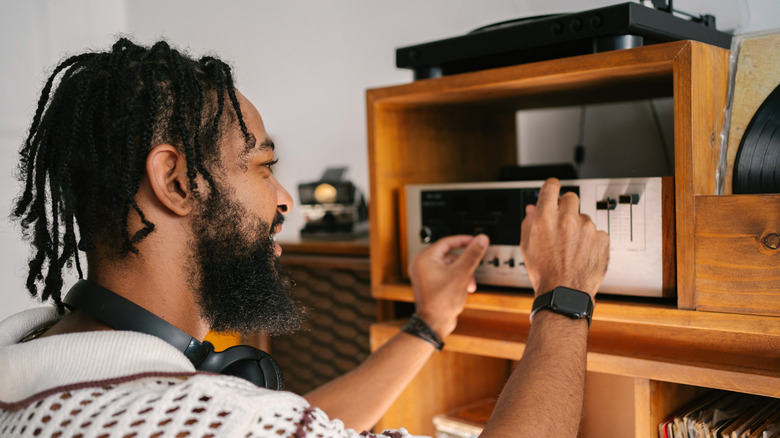
A receiver might not be necessary if you have an integrated amplifier, but it's a must-have if you're combining a non-integrated amplifier with a turntable that lacks a phono preamp, and if you're using passive speakers. Second, this will operate as the command station of your hi-fi, the machine that will allow you to operate the whole setup. A receiver has an interface that allows you to change the input device of the music player you are using (CD, Vinyl, Bluetooth), change which speakers are producing sound if you have multiple sets, and connect to the radio.
There are two major types of receivers: a stereo receiver and an AV receiver. A stereo receiver is better suited for a hi-fi system that is solely dedicated to listening to music. It has a radio, more input knobs, and is better calibrated for music audio. An AV receiver has more input jacks, like HDMI and AV, and is better suited for connecting to home theater systems. Both will provide you with incredible sound, but each is optimized for those particular media.
With the amount of interface options available on modern amplifiers, for a beginner we recommend an AV receiver. The AV receiver's ability to connect your hi-fi to other media like your TV, computer, or projector will stretch your buck and allow you to use your hi-fi for a wider range of media. We recommend the Marantz NR1510, which has six HDMI inputs, digital music streaming via Bluetooth, a small, sleek design, and an easy-to-use interface.
Analog/Digital Music players
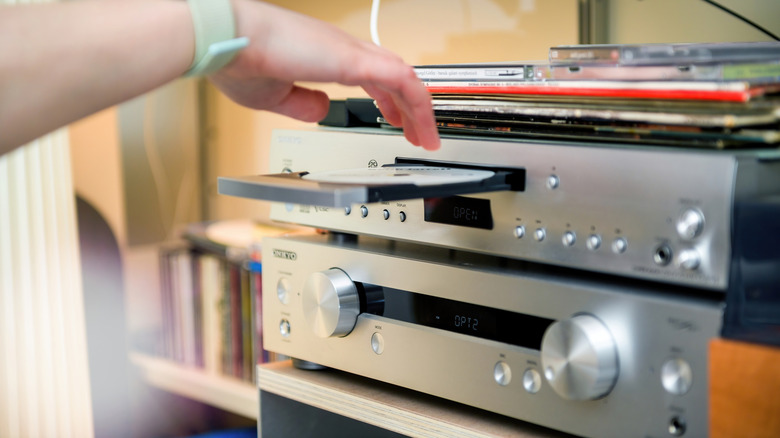
Depending on your preferred music media, your hi-fi setup can include a combination of a turntable for vinyl records, a CD player, a cassette player, a digital streaming device, or all of these (and more). There are many great vinyl record player setups for beginners, but we recommend one with an adjustable tonearm, an easy-to-access speed adjuster, and a removable headshell for changing the cartridge and needle. There are many features you should never overlook before buying a vinyl record player, but the ability to customize the cartridge and adjust the tonearm will have the strongest effect on your sound quality.
Most CD players are simple and don't have many features, making it one of the easiest elements of a hi-fi setup. We recommend the Yamaha CD-S303 for its reliability and easy-to-operate features, but any well-known, established brands within your budget will do a great job. Cassette decks are less common now, but many vintage receivers come with a built-in cassette deck, giving you more bang for your buck.
Lastly, one of the newest hi-fi components is the digital music player. Many modern receivers include Bluetooth for streaming music from phones and other sources, as well as aux and USB ports for playing digital files such as MP4s. If digital listening is your primary music source, it would be worth adding a digital receiver to your system, and some even store your files or host streaming apps directly on the machine to avoid fidelity loss from a Bluetooth connection. For a beginner, we recommend the Marantz NR1510 receiver, which doesn't have USB ports, but the Bluetooth connection and entry-level price range are worth the trade-off.
Cables and Power Strips
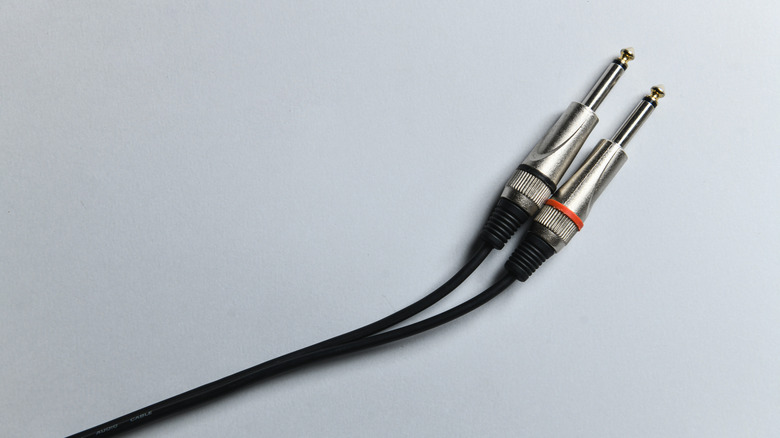
You'll need cables and perhaps wires, too, to connect the components of your hi-fi, but their quality is not as critical as some aficionados will have you believe; trust us, you don't need gold-plated cables to get a great sound. What's the difference? Cables have solid metal heads that connect your music-playing devices to the amplifier and receiver, and typically come with dual inputs, red and black (or left and right). Cables come with a variety of connectors, such as RCA, banana, and optical, so check your system's specifications to make sure you're getting the correct types.
Wires are often — but not always — used to connect speakers to the hi-fi, typically the amplifier or receiver. Instead of plug-in connectors, their ends are exposed wire that needs to be secured to a terminal. Quality wires are typically made of copper and come in different thicknesses. The thicker the wires, the lower the electrical resistance, and the more signal reaches their destination; if your speakers are across the room from the amplifier, you will want thicker cables to retain the fidelity of the sound. Again, check the speaker's specifications before purchase so you know what type to get. Fortunately, cables and wires are the most inexpensive element of your system, and a variety can be found at electronics stores such as Best Buy.
A high-quality power strip with surge protection is a must for your new hi-fi, which will protect your equipment from voltage spikes, filter out excess noise created by electric current, and improve power distribution. If you want to enjoy your system at any hour without bothering those around you, consider a pair of over-the-ear headphones. The Bose QuietComfort series is a great place to start with Bluetooth headphones, or if you're looking for wired models, the Sennheiser HD 560S are very reputable and are compatible with either 1/4 inch or 1/8 inch hi-fi input jacks.