

Born 85 Years Ago Today In New Jersey, This Legendary Songwriter Never Played By The Rules
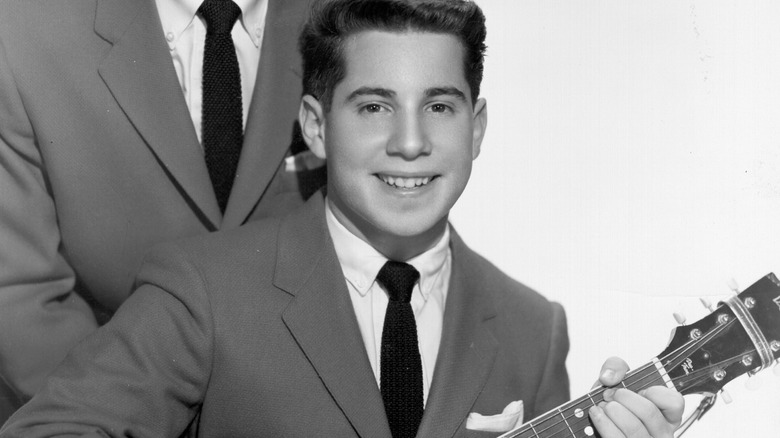
Born October 13, 1941, in Newark, New Jersey, Paul Simon shirked convention at every turn, even as mainstream audiences were devouring the music he made as half of the legendary folk duo he formed with collaborator and childhood friend Art Garfunkel. With a slew of hits that prove they were the ultimate folk duo of the '60s, Simon & Garfunkel became one of those acts that defined a generation and cranked out nearly perfect songs that should be required listening for younger generations.
Initially finding minor one-hit-wonder success as a '50s vocal combo under the Tom & Jerry moniker, the duo parted ways after subsequent singles failed to generate much interest. Moved by the burgeoning folk music scene, the duo adopted their signature turtlenecks and acoustic guitar to create the incarnation that would make them cultural mainstays for generations to come.
Though the tragic real-life story of Simon & Garfunkel is one of decaying friendship and concurrent professional corrosion, it nonetheless set the stage for Simon to quietly challenge the status quo in his own unique way.
He was a subtle iconoclast
Though astronomically successful, Simon & Garfunkel faced criticism for playing up the polished, upper-crust facet of their musical personas in a scene dominated by everyman rockers like Bob Dylan and Neil Young. It was an image reinforced when the group's music became a centerpiece for the soundtrack of Mike Nichols' iconic film "The Graduate," which follows the post-collegiate life of wayward preppie Benjamin Braddock. It's an ironic notion, but sometimes conformity is the best way to rebel.
Yet, Simon's solo career magnum opus, 1986's "Graceland," likely proved to be his most controversial artistic statement. An album that deeply embraces world music, Simon first came to the idea after discovering South African mbaqanga music and became captivated by the possibilities of incorporating world music into his own. Simon was enthusiastic about the style, seeing its connections to early rock 'n' roll. It was an inspired musical journey but one that took him deep into the heart of South African apartheid, a move that led to widespread condemnation for violating the United Nations' resolution on international relations with the region. Nevertheless, extraordinary music was born out of the controversial transgression.