

Not Iron Maiden: The '60s Band That Bridged Acid Rock And Heavy Metal
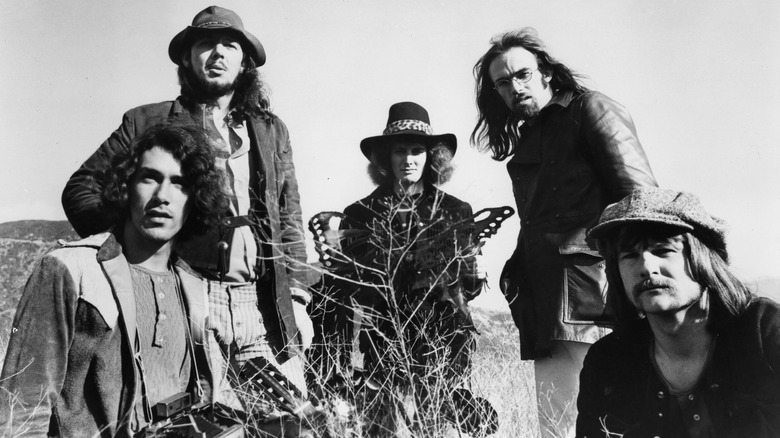
When bassist Steve Harris put together the very first Iron Maiden lineup in 1975, he created a group that would become pioneers of a headbanging, hard-hitting, amplifier-destroying sound dubbed the New Wave of British Heavy Metal. Maiden was and still is a major player in metal, but nearly a decade before its formation, another "Iron" band from San Diego had already bridged the acid-infused rock of the '60s with this new, harder, heavier sound. That group was Iron Butterfly.
Keyboardist and vocalist Doug Ingle formed the band in San Diego in 1966, creating a psychedelic mammoth that would thrive on Los Angeles' Sunset Boulevard, as Iron Butterfly opened for bands like Spirit, the Doors, and Jefferson Airplane. After releasing their debut album, "Heavy," at the start of 1968, the band began working on the follow-up, which would cement their legacy as the connection between the SoCal hippie counterculture and the metal maniacs: "In-A-Gadda-Da-Vida."
The original 17-minute title track remains an epic in the truest sense of the word. The truncated three-minute version of the oddly titled song climbed all the way to the Top 40 on the charts. While this wasn't the first proto-metal song to chart — Blue Cheer's cover of Eddie Cochran's "Summertime Blues" reached No. 14 five months before "In-A-Gadda-Da-Vida" peaked at No. 30 — there was something more foreboding about Iron Butterfly. But how did they end up as another one of those pioneering proto-metal bands that time forgot?
How Iron Butterfly soared with In-a-Gadda-Da-Vida
Iron Butterfly's biggest hit is an acid rock classic, but it came from a gallon of Red Mountain wine. In 1967, the band was living together. Drummer Ron Bushy came home late one night to hear Doug Ingle playing his Vox keyboard. "Doug had been drinking," Bushy told It's Psychedelic Baby. "It was hard to understand him because he was so drunk. So I wrote it down on a napkin exactly how it sounded phonetically to me: 'In-a-Gadda-Da-Vida.'"
The foreboding, organ-driven rocker would have such a clear impact on metal that Slayer eventually recorded a version for the "Less Than Zero" soundtrack. Other groups like Blind Guardian, Boney M., and the Incredible Bongo Band all covered "In-A-Gadda-Da-Vida," but Iron Butterfly wasn't around to enjoy this notoriety. Ingle left the group in 1971 due to the pressures of being a rock star , and the band broke up. Bushy revived Iron Butterfly in 1974; Ingle reunited with the group a few times in the following decades before retiring for good in 1999. (Bushy died in 2021, and Ingle passed in 2024. The band continues to perform, but with none of the original members.)
Looking back, did Doug Ingle consider himself metal? Sorta. "We've been accused of such," said Ingle (via Classic Bands). "Def Leppard once accredited us as being the father of heavy metal. The only reason I shy away from that reference is simply because I'm not convinced that I really like where heavy metal has gone."