

5 Songs That Prove 1969 Was The Best Year For '60s Bubblegum Pop
The concept of "bubblegum pop" has been the subject of multiple different definitions over the years. Some critics and music fans stretch it out to include any and all pop music with an upbeat sound primarily aimed at teenagers, or more broadly, all commercial pop music. Others, meanwhile, use it to refer to a specific subgenre and stylistic movement that emerged from the '60s musical cauldron and held court on the charts for several years: Mixing the gentle swing of doo-wop and traditional pop with the roaring energy of garage rock, '60s and '70s bubblegum pop was the short-lived signature sound of an entire historical juncture.
What's interesting is that, if we go by this definition, bubblegum pop needn't be slight or disposable at all. In fact, there are plenty of great '60s bubblegum songs out there that demonstrate how musically interesting and textured the genre could be even at its most commercially orthodox — and the best year for such songs was 1969. As the '70s drew near, the encroaching influence of prog and psychedelia on mainstream rock music was decidedly beginning to pull bubblegum away from its early, sunny simplicity; at the same time, 1969 was the year in which some of the most iconic "conventional" bubblegum pop tracks came out, including the genre's biggest hit ever.
In other words, if you're a fan of pop rock's sweetest subgenre, 1969 was an embarrassment of riches, and we've listed five incredible songs to prove it. Don't listen to any of these unless you're willing to get them stuck in your head.
Sugar Sugar — The Archies
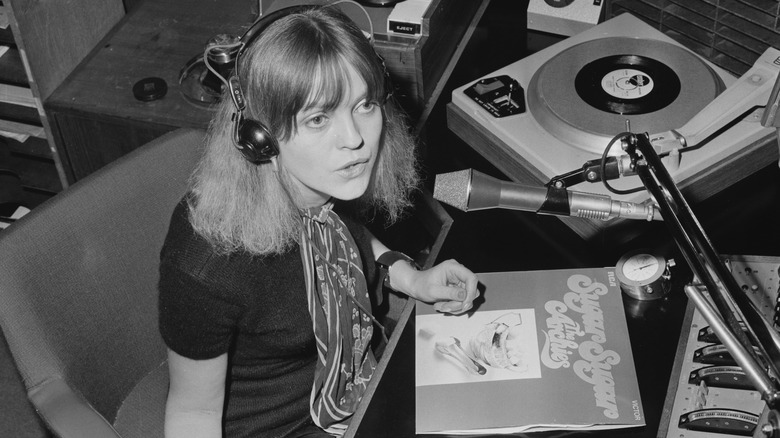
When most people think of bubblegum pop, the very first song they think of is "Sugar, Sugar." Written by genre luminaries Jeff Barry and Andy Kim, this 1969 bubblegum pop No. 1 became one of the defining pieces of music of the '60s, topped Billboard's year-end singles chart, and went on to be covered extensively and used in numerous movies and TV shows. It would be a mighty showing for any song, but it's made even more impressive by the fact that "Sugar, Sugar" was released by a cartoon band — namely, The Archies, another staple of the '60s zeitgeist.
The fictional Archie Comics band made up of characters on CBS' "The Archie Show" had released other music prior to "Sugar, Sugar," but, despite The Archies' trendy, broadly accessible sound, those earlier releases hadn't made much of a dent on charts. When "Sugar, Sugar" went out to radio stations, the group's name was deliberately concealed by manager Don Kirshner so that DJs could focus on the sound of the song itself.
And, sure enough, that sound made a splash: With its chipper, hook-centric rhythm and its unmistakable marimba-and-bass-keys riff, "Sugar, Sugar" swept up the nation in a blaze of sunshine. The voice of lead vocalist Ron Dante (at the time a session singer who mostly worked on commercials and backing vocals) going "Sugar, ah, honey, honey" became one of those musical soundbites so ubiquitous as to be familiar even to those with no knowledge of the artist in question — or, in this case, no knowledge that the Riverdale gang were the Gorillaz of the '60s.
Tracy — The Cuff Links
"Sugar, Sugar" wasn't the only iconic 1969 bubblegum pop song that featured Ron Dante on lead vocals. Released a couple of months later and similarly massive on the Billboard charts, "Tracy" by The Cuff Links stands as an even greater testament to the versatile, chameleonic power of Dante's voice: Despite their rich multi-layered harmony, the song's vocals all come from the same man, as though Dante were somehow all the members of The Turtles bouncing "pa pa pa"s off of each other on "Happy Together."
"Tracy" is perhaps the Cuff Links song that best illustrates the particular operational logic of a singularly '60s industry phenomenon: The creation of so-called studio groups, made up of separate singers and musicians hired to perform parts of a given song at the behest of producers, who then slapped a band name on the resulting record even if none of the musicians had ever met in person. In the case of the Cuff Links, the success of "Tracy" led to the lightning-fast recording of an entire LP, followed by a live show tour and another album in 1970, which makes them more of a "proper" band compared to other studio groups.
Hearing "Tracy" today, it's easy to understand why it prompted that unlikely success story; with its Lee Pockriss and Paul Vance-penned zigzag between a verse-hook and a hook-verse amid fluttering horns, peppy tambourine jingles, and Dante's unbelievable cascade of voice lines, it's an irresistible head-bopper of a song. Having come out smack in the middle of the "Sugar, Sugar" world domination is probably the chief reason why it's not quite as widely remembered.
Hitchin' a Ride — Vanity Fare
Formed in Kent in 1966, the English pop rock band Vanity Fare was among the many acts that benefited from the British Invasion boost, and their 1969 single "Hitchin' a Ride" is a clear example: Following its 1970 release in the U.S., it became a top five Billboard hit, and got certified gold back when it took nothing less than a million sales to achieve. As with many other British Invasion instances, the secret to that crossover success lay in a combination of polished British classicism and universally appealing spunk.
Structurally and melodically a rock-'n'-roll-inflected pop bop in the style of The Beatles' first albums, "Hitchin' a Ride" sets itself apart through its singular, imaginative production. Featuring a woodwind riff that pitches the verse's vocal melody one octave higher, the Mitch Murray and Peter Callander-written song is mostly built around a syncopated piano line that fuses dreamy giddiness with a danceable strut, creating one of those quintessential '60s grooves that seem to yank you right into the clouds.
Then, in the bridge, the instruments and the choir of voices all drop away, and the twinkling piano suddenly plunges down into a low, sassy chromatic buildup that mirrors the narrator's impatience to just score a ride home already. The instrumental and Trevor Brice's raspy lead vocals conspire to communicate the idea that life on the road can be at once ecstatically airy and continually nerve-racking — a resourceful alignment of form and content that suggests what bubblegum might sound like when sieved through the sophisticated arrangements of baroque pop.
Viva Bobby Joe — The Equals
Skipping over the brain's conscious decision-making centers and getting the feet to tap on their own is a bubblegum specialty, and "Viva Bobby Joe" is no exception. Like most songs by trailblazing British quintet The Equals, this 1969 gem was written by lead guitarist Eddy Grant, a brilliant songwriter with a rare knack for blending pop catchiness and socially conscious lyrics. But, unlike many of Grant's compositions, "Viva Bobby Joe" doesn't feature explicit political messages; its power lies primarily in the musicality.
Even though the lyrics to "Viva Bobby Joe" speak only of a musician named Bobby Joe and the stir he is about to cause with his "funk machine," the way the members of The Equals come together to express that simple story gives it the oomph of a full-blown protest anthem. The ascending chorus is euphoric enough on its own — the kind of perfect alignment between rock density and pop cheerfulness that makes bubblegum so special — and then we reach the verses, which make a point of noting that not only will Bobby bring a sensation from Liverpool to Brighton, but he will do it with "an open-air show for free."
It's a deeply clarifying statement on the song's central preoccupation, which is that coming together for the communal catharsis of music is as crucial as anything else to the goal of keeping the human spirit alive and kicking. Of course, for that theme to land, the song itself would need to also be cathartic; thanks to Grant's ear for infectious melody, it very much is.
Mr. Sun, Mr. Moon — Paul Revere & The Raiders
Listen to "Mr. Sun, Mr. Moon" just once, and there's a good chance that its chorus is going to stay in your head for the rest of the week. Written and produced by Mark Lindsay, the lead singer of Paul Revere & the Raiders, this 1969 hit finds the highly off-kilter Idaho band — known in the '60s for chasing the British Invasion with their ostentatious 18th-century attire — donning the garments of a bubblegum act, in a career that also saw them parade through garage rock, hard rock, psychedelic rock, proto-punk, and R&B. In a sense, it's another costume — and, like those tailcoats, they absolutely rock it.
On the surface, "Mr. Sun, Mr. Moon" is as simple a pop song as they come: Verses and a chorus written along the same four chords, with the same general melody given just slight alterations in the hook, and a bridge for good measure. The song would work on that level alone, thanks to a sense of singalong rock zest on par with Lindsey Buckingham-penned Fleetwood Mac.
But this other Lindsay keeps making decisions that throw off the balance ever so slightly: The instrumental fades just before the chorus for a drum-only interlude; the chorus kicks in one semitone higher, only for the second verse to come back down; the bridge takes a long stroll through drumless, reverb-soaked guitar triplets that brush up mysteriously against space rock. The result is a tuneful, joyful pop song about the might of celestial bodies that sneaks in just enough strangeness and surrealism to do justice to its subject matter.