

The 5 Best Debut Albums Written By Solo Female Artists
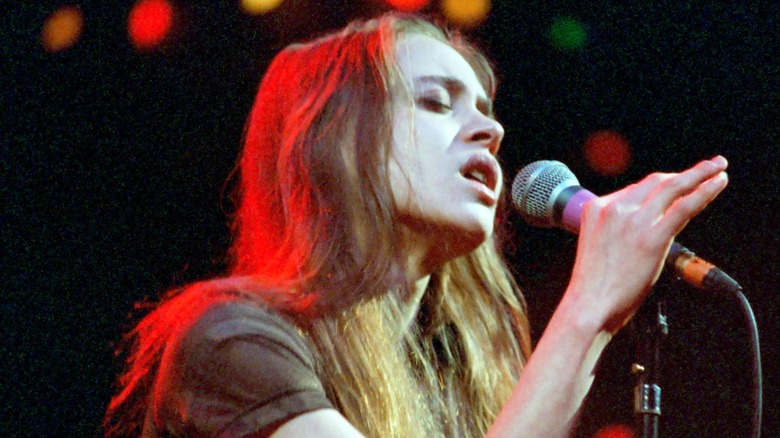
The past four decades of global music have been so rife with brilliant female singer-songwriters that it has become all but impossible to fathom how, not that long ago, it used to be considered outré for a woman to mastermind her own music. Although there were early pen-wielding pioneers like Billie Holiday, Peggy Lee, Maysa Matarazzo, and Nina Simone, it was only from the '60s onward that the figure of the female troubadour began to gain comparable ground to its male counterpart.
And it took even longer than that for fully solo-written albums to become commonplace. Following early English-language breakthroughs like Malvina Reynolds' "Another County Heard From" in 1960, Barbara Lewis' "Hello Stranger" in 1963, and "It's My Way!" by Buffy Sainte-Marie in 1964, entirely self-written female records went into full swing as a musical institution only in the late '60s. From there on out came the emergence of innumerable women singers who also wrote 100% of their own material, including several who did so from the get-go.
On this list, we'll be taking a look at those — namely, at five great debut albums where the woman introducing herself as a singer was also the only person responsible for writing every single song. The genres and themes covered here are varied; the only thing all five records have in common is the blazing creativity, compositional refinement, and unyielding sense of personal expression running through their music.
Tidal — Fiona Apple
The very first words uttered in Fiona Apple's discography are "I tell you how you feel, but you don't care." It was a prophetic introduction for a musician who would soon be placed under a scorching spotlight at the center of '90s pop culture cruelty, and would then spend the next decade jostling her way back to a tolerable spot away from the crowd. Even more prescient than that opening to "Sleep to Dream" is the line that immediately follows it: "I say 'Tell me the truth,' but you don't dare." As early as 1996, Fiona Apple was already loath to open her heart without taking some names.
"Sleep to Dream," somehow written by Apple when she was 14, is but one of the unfathomably precocious jazz dirges that make up "Tidal," the triple-platinum debut that made its then 18-year-old composer an unlikely authority of post-grunge youth. Like many early-period Apple songs, it shows what everyone would come to acknowledge: this classically trained teenage girl could already rival the pen of any living male songwriter. Other songs on "Tidal" — including ironic-contrition megahit "Criminal," written hastily as a pop radio concession to get label execs off Apple's back — showcase a similarly stunning disinterest in playing nice. And yet, next to the melodic and poetic flair of songs like "Sullen Girl" and "Never Is a Promise," her nerve isn't even the most impressive thing about the album.
Tracy Chapman — Tracy Chapman
Even in 1988, the songs on Tracy Chapman's self-titled debut felt vintage. The late '80s were a complicated time for popular music, full of ultra-processed glitz that didn't quite reflect the changing concerns of a youth no longer placated by consumerism and mass entertainment. With her guitar, her political views, and her confidently plaintive voice, Chapman cut through the noise.
Every song on "Tracy Chapman," the album that Chapman recorded after being discovered at Tufts University and signed to SBK and then Elektra, plays like its own timeless folk classic. "Talkin' 'bout a Revolution," the opening track and the song that got her noticed, is so fully formed that, when you hear it today, it seems like it ought to have been scoring protests and marches for much longer than just four decades. On "Fast Car" and the quiet folk rock masterpiece "For My Lover," she colors intimate love stories with the kind of sociological context that had been absent from the Top 40 for years.
Even the album's seemingly non-political cuts, like the timeless ballad "Baby Can I Hold You," feel so raw, so aching, so vulnerable, that their carving out of space for themselves in mainstream American music feels like its own act of defiance. More than any other singer-songwriter of her generation, Chapman had her finger on the pulse of the world outside the confines of existing pop music; the runaway success of "Tracy Chapman" is proof of that.
Song to a Seagull — Joni Mitchell
Maybe it was because she'd already been a songwriter for years — "Both Sides Now" wasn't even originally penned for herself — but when Joni Mitchell finally embarked on a recording career of her own, she was quick to venture away from folk convention and towards jazzier, weirder rhythms. By the early '70s, she scarcely fit into any marketable genre labels anymore. Mitchell's first two records are arguably the only ones that find her doing "straightforward" folk — and her debut, 1968's "Song to a Seagull," is a pristine masterwork of the genre.
It's hard to resist the infectious campfire jig of "Night in the City," the pastoral perfection of the guitar riff on "Sisotowbell Lane," the freeform storytelling of "Marcie," the earnest major-key balladry of "Cactus Tree," and the out-of-time siren's chant of the title track. "Song to a Seagull" is a banquet for enthusiasts of earthy, old-fashioned folk, and only a talent of Mitchell's caliber could have conjured it. But even this early, comparatively accessible record also features inklings of the freakier future Joni. Just listen to how she incantates with rapid-fire musical theater singspeak on "The Pirate of Penance," or musters up danger with a sudden key shift from major to minor in the chorus of "The Dawntreader." By any metric, "Song to a Seagull" was the arrival of a genius.
Little Earthquakes — Tori Amos
String beds, cannon blast drum kicks, cabaret piano lines, electric guitar filigree: "Little Earthquakes" is the pure, distilled sound of '90s baroque pop. Tori Amos had been training as a musician since five years old, and spent the better part of her 20s as the frontwoman of the short-lived synthpop band Y Kant Tori Read, which released a single album in 1988. However, it wasn't until she barreled fully into solo work that the world discovered the depths of what she could accomplish as an artist.
Initially presented to Atlantic in an early version as part of her six-record contract, and later reworked in England across a period of live workshopping before finally dropping in 1992, "Little Earthquakes" finds Amos applying her long-honed musical erudition to pop songs. The 12 tracks on the album freely experiment with instruments, tempos, modal scales, and production styles to give full expression to every shade of Amos' compositions.
The level of consistency is astonishing for a debut, and the highlights run the gamut from frolicky showtunes ("Happy Phantom") to stadium-sized torch songs ("China") to moody dance-adjacent experiments ("Precious Things") to somber acapella singsong ("Me and a Gun"). And although the lyrics grapple with themes as heavy as abashment, patriarchal violence, religious guilt, romantic dysfunction, and PTSD, Amos speaks of it all with the same inquisitiveness, clarity, and creative vigor that she brings to the music.
The Kick Inside — Kate Bush
Of all the instances of young prodigies penning music far beyond their years, there may be none more mind-boggling than Kate Bush writing "Wuthering Heights" at 18 years old. What's even more impressive, though, is that "Wuthering Heights" is just the tip of the iceberg when it comes to the raucous, irrepressible brilliance on display across "The Kick Inside," Bush's multifaceted 1978 breakout.
"The Kick Inside" is often remembered for its commercial ubiquity; it did, after all, become the first entirely solo-written debut album by a woman to sell over one million copies. But speaking of this record in terms of sales would be a disservice to the significance of Kate Bush's impact on British music.
At a time when the country's most prominent acts were negotiating between artistic progress, tradition-honoring, and commercial upkeep, Bush forged ahead with a radically personal and liberated form of popular musicianship. What she did on each track of "The Kick Inside" was exactly what she wanted to do — self-determined artistry colored with traditional pop. And, because Bush was a genius, her claim to freedom argued for itself; there was no listening to "Oh To Be in Love" or "Them Heavy People" or "James and the Cold Gun" — or, indeed, to the enrapturing perfection of "Wuthering Heights"— without inferring that this is what modern auteur-driven songcraft could and should be.