

The Classic Rock Double Album That Defined Teenage Alienation
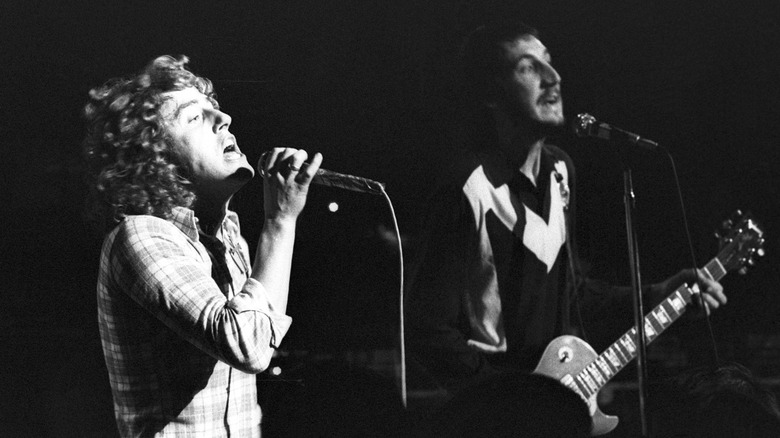
Of all the British bands who emerged in the early 1960s that took rock's rebelliousness, disillusionment, and teenage angst to heart, The Who were near the top with hits like "My Generation" and "Won't Get Fooled Again." But it was a 1973 double album that best put this burning sense of alienation to music. The rock opera "Quadrophenia," which the band's guitarist Pete Townshend composed all the music for, tells the story of Jimmy, a working-class Londoner and mod, and his struggles to find a place in the world.
The story is set to some of The Who's tightest and most creative playing, with all four members at their best on what some consider to be the last truly great album the legendary band released. Townshend rips out fiery power chords (along with supple synth runs), Roger Daltrey's voice roars, John Entwistle's melodic bass lines (and gorgeous horn parts) soar, while Keith Moon explosively keeps time amid sound effects like ocean waves, children playing, and scooters.
All this works to ground the storyline of Jimmy as he struggles with life, staring down the barrel of a seemingly unstoppable and disaffected adulthood. The story takes place after the 1964 summer riots in Brighton and other seaside towns, which saw rival gangs of mods and rockers fight it out on the beaches and promenades, and had given Jimmy a fleeting sense of belonging to something. In the end, Jimmy returns to Brighton hoping to recapture this feeling and reconnect with his friends, only to become further disillusioned.
Townshend's background colored Quadrophenia
Pete Townshend's ability to create a defining tale of teenage alienation came from his own past, with Townshend's tumultuous youth helping to color the story of "Quadrophenia." He fell in love with the mod youth movement, having grown up in a post-war England where many young men felt purposeless. "We felt we could never be as good as our fathers and our grandfathers, who had fought in these magnificent and absurd wars and had both validation and valediction, and so we somehow had [to] prove ourselves at street level," he told The Guardian in 2015. "And I happened to be in a band doing that."
Quadrophenia's palpable sense of alienation is tied to Townshend growing up in a time when young men were expected to hide their emotions and bury their pain. Townshend was writing from the perspective of and for the youth who looked to The Who for answers. "I was trying to write music for the kids that I grew up with," he told Q104.3 New York. "The Who became a band for boys. And Quadrophenia is about boys."
Beyond this, Townshend drew from the personalities of his bandmates and himself to represent the various aspects of Jimmy. Daltrey was his aggressive and determined side; Keith Moon, his insanity and bravado; John Entwistle, the romantic, quiet side of the character, and from Townshend were drawn Jimmy's insecure and searching aspects.
Behind the scenes, The Who faced their own turmoil
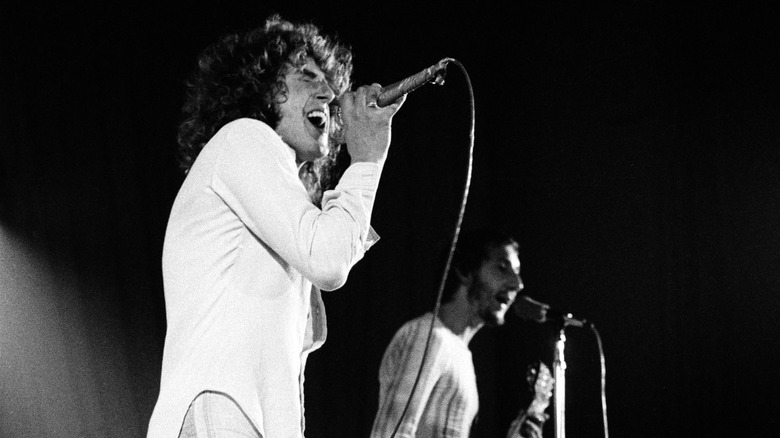
Pete Townshend had another reason for composing "Quadrophenia." He felt The Who had become too far removed from their fanbase, and this was his attempt to get the band back on track and reconnect with them. The recording of the album went well, but things began to fall apart afterward. Roger Daltrey forced the delay of the record due to complaints that his voice wasn't clear enough. Then, during rehearsals for the ensuing tour, an inebriated Townshend got into a spat with Daltrey and threw his guitar at the singer, who then punched Townshend and knocked him out. Later on in the tour, Townshend became frustrated by technical issues and smashed his guitar, destroyed other equipment, and walked off stage.
Even with all the chaos, the album was a success, featuring such classics as "5:15," "The Real Me," and "Love, Reign O'er Me," all of which reached the Billboard Hot 100. The album was well received by both fans and critics, reaching No. 2 on both the Billboard 200 and in the U.K. Over the years, the LP took on a life of its own: In 1979, "Quadrophenia" was turned into a movie — starring Sting – and a ballet followed in 2025, proving this masterpiece of teenage alienation is truly transcendent.