

The '70s Metal Album That Helped Write The Blueprint For Power Metal
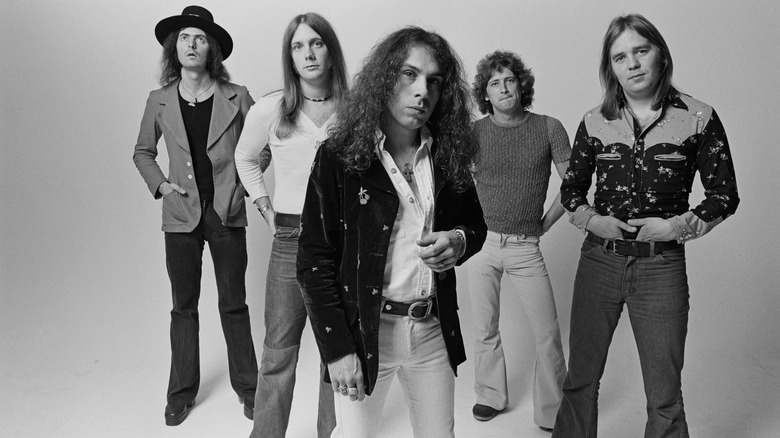
Soaring to the point of cheesy, saccharine to the point of cloying, and melodic to the point of poppy: Power metal stands out from modern metal's other 9,000 sub-genres precisely because of these attributes. Heck, power metal mainstays DragonForce have even done covers of Celine Dion's "My Heart Will Go On" and Taylor Swift's "Wildest Dreams." Ritchie Blackmore, Ronnie James Dio, and the rest of Rainbow might not have had all this in mind when they cut 1976's "Rising" (aka, "Rainbow Rising"), but they wound up paving the path for power metal, anyway.
Power metal fans who flip on "Rising" won't hear the kind of bright, chipper chords, sky-high bpms, and ludicrous solos that have come to characterize the sub-genre — like those found in any random Twilight Force song. They will, however, find high fantasy-inspired lyrics on songs like, "Run with the Wolf" and "Stargazer" ("There's no sun in the shadow of the wizard / See how he glides—why, he's lighter than air"). They'll also find auditory shades of future, lighthearted, power-chorded fare and brash guitar attitude that have come to define power metal.
Other musical elements on "Rising" skew AC/DC and presage '80s hard rock, like on "Do You Close Your Eyes." Such outings bridge the gap between Blackmore's previous band, the early metal pioneers "Deep Purple," and modern power metal, with a big dollop of power pop tossed in the mix.
Rising helped pave the way for power metal's rise
Fantasy-inspired lyrics were nothing new even by 1976, as Led Zeppelin and songs like 1971's "Battle of Evermore" will attest (a song that the band basically made up on the spot): "The Queen of Light took her bow / And then she turned to go / The Prince of Peace embraced the gloom / And walked the night alone." Musically, however, rock in the mid-'70s was shedding its early psychedelic pretentions and complexities for something approaching stadium rock and glam metal. This is the precise juncture into which Rainbow fit, fantastical elements and all.
Rainbow also gets a huge shot in the power-metal arm thanks to the littlest of vocal titans, Ronnie James Dio, who would later go on to join Black Sabbath as a replacement for Ozzy Osbourne before leaving to form his own band, Dio. If you've ever seen the video for Dio's "Holy Diver," which is basically Dungeons & Dragons cosplay in a castle, then you'll get what links Rainbow to formative '80s and '90s power metal legends like Blind Guardian. Dio is so metal that he's the dude who popularized the devil horns gesture, aka, the mal'occhio, an Italian folk gesture meant to ward against the evil eye (but which can also enact a curse). And, Dio was the only member who stayed on from Ritchie Blackmore's first Rainbow album, "Ritchie Blackmore's Rainbow," to its follow-up, "Rising."
"Rising" happened rather organically in the studio, with Blackmore uncorking the creative bottle and letting everyone to run with it. The proto-power metal masterwork "Stargazer," the album's standout track, came from an effortless collaboration between Blackmore and Dio. It foreshadows all power metal to come, from Blind Guardian to DragonForce and everything in between.