

1989 No. 1, Which Made Bad English A One-Hit Wonder, Hit The Top 37 Years Ago Today
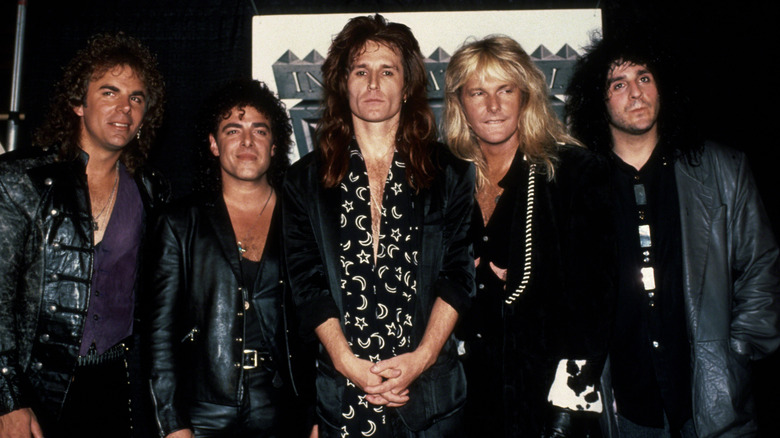
The '80s were full of invigorating power ballads, and the musical trend seemingly peaked when members of Journey and the Babys came together to form the supergroup Bad English. Granted, there were several notable hits from 1989 that helped immortalize the power ballad trend, but the No. 1 song on November 16, "When I See You Smile," had the starpower to take it to the next level.
Journey's Neal Schon and Jonathan Cain had found themselves in a tough spot when their frontman, Steve Perry, stepped away from the group in 1987. Meanwhile, Cain's former bandmate John Waite had grown tired of performing solo, looking to put a new band together after their mutual group, the Babys, had dissolved earlier in the decade. When Cain, Schon, and Waite joined forces with former Babys bassist Ricky Phillips and Wild Dogs drummer Deen Castronovo, all five members of what would become the supergroup Bad English had been assembled.
The name was inspired by their mediocre pool skills, as it had become a ritual to play on the table next door to the studio in between takes while recording their self-titled debut album. The term "english" refers to spinning the cue ball in anticipation of the next shot, which some of the members were not good at — hence, Bad English. "When I See You Smile" was their biggest hit, soaring to the top of the charts 37 years ago today but ultimately solidifying Bad English as a one-hit wonder.
When I See You Smile is pure '80s cheese
The '80s were quite the optimistic decade in general, so it's fitting that even on the cusp of the era of grunge, gangster rap, and neo-soul, audiences were still captivated by the boisterous and cheesy glam rock from years prior.
With Jonathan Cain's twinkling keys, Deen Castronovo's epic drums, and John Waite's earnest delivery, "When I See You Smile" is almost a time capsule of the typical sound of the decade. The lyrics tell a basic yet hopeful story, beginning with the subject feeling hopeless "'cause sometimes it seems like this world is closin' in on me / And there's no way of breakin' free." Yet, "when I see you smile / I can face the world, oh / You know I can do anything." It doesn't do much to develop the emotional themes, and the range of the song doesn't truly kick in until a guitar solo around the three-minute mark.
That's a pretty tepid evaluation, but it's substantiated by writer Diane Warren's own surprise at the song's commercial success. In Fred Bronson's "The Billboard Book of Number 1 Hits," she shared how she "didn't in all honesty think it was that great." However, she ultimately changed her mind following the warm reception from those she tested it on.
Bad English's biggest hit was originally offered to a different artist
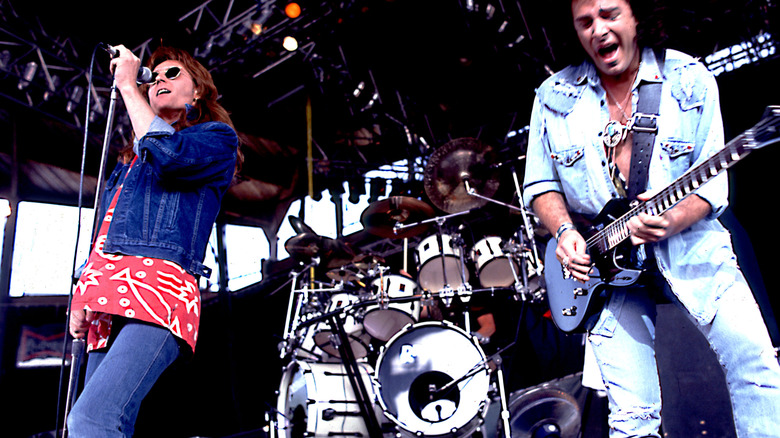
Before the 1987 Journey hiatus, Jonathan Cain had penned a number of the band's most memorable hits. He had a hand in writing classics such as "Don't Stop Believin'," "Open Arms," and "Stone in Love" — however, none of these songs made it to the No. 1 spot on the Billboard pop chart. John Waite had managed to scale the Hot 100 with his solo track "Missing You" in 1984, but it proved to be a tough feat to replicate.
"When I See You Smile" had been written by Diane Warren, a friend of Waite's who had already composed several hits for other artists. She first offered the song to Freddie Curci, lead singer of the defunct Canadian band Sheriff, but when Curci's hold on the song expired, Capitol Records granted the rights to Waite. Although Bad English originally had reservations about recording an outside writer's material, Waite had full confidence in Warren's song — especially following her proven success with No. 1s such as Starship's "Nothing's Gonna Stop Us Now" and Chicago's "Look Away."
Ultimately, Bad English have Curci's procrastination to thank for the song that would come to define their short-lived '80s supergroup. Following the success of "When I See You Smile," they managed to score one last Top 10 hit with "Price of Love" at No. 5. Their second album, 1991's "Backlash," was a major flop, and the band imploded before the album even made it out of production. All things considered, Journey eventually got back together, and Bad English's debut album did manage to go platinum. There are definitely worse ways to spend a hiatus!