

Rock Duos Who Went In Completely Different Musical Directions After Splitting Up
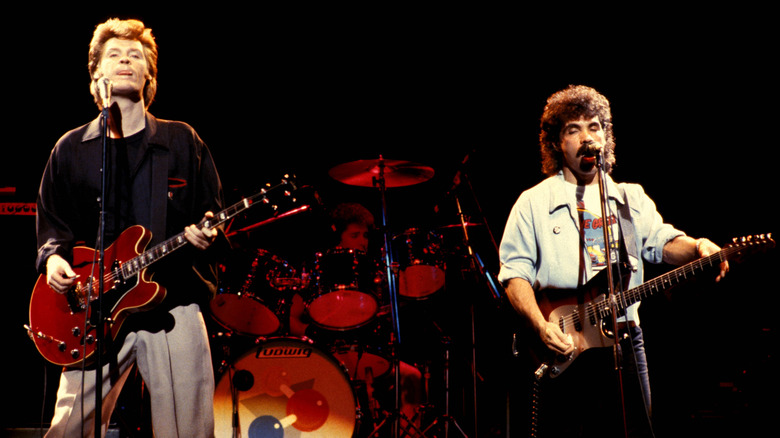
Some of the best rock bands of all time are actually duos; just two people were responsible for all their musical output or together oversaw a lineup of players. As professional partners who work closely with one another, duos may experience a lot of creative tension and endure frequent power struggles — so many that the whole operation might fizzle out despite years of fame and fortune. But then the two mostly equal partners go solo, free to pursue their own wildly different musical paths.
It's often in their separate solo careers that the unique talents and skill sets of each member of a rock duo emerge. It was something of a surprise when those twosomes broke up and each member recorded music that sounded little like that of the duo, or the solo output of their former partner. Here are some duos who went in opposite creative directions, including Daryl Hall and John Oates and Loggins and Messina.
Daryl Hall and John Oates
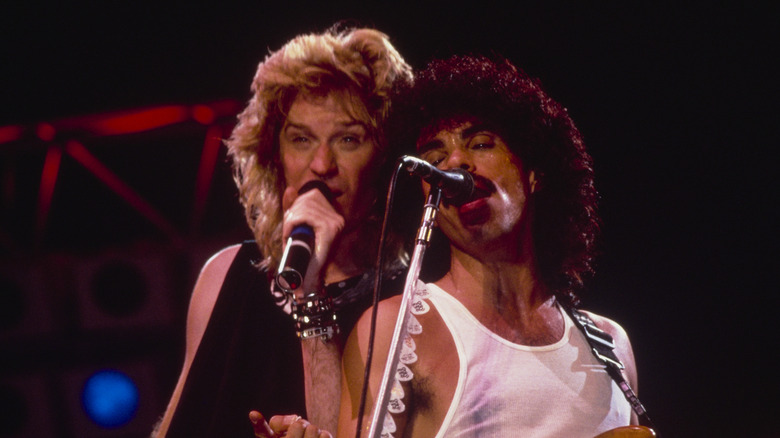
Having not released a proper studio album in about two decades, the duo officially known as Daryl Hall and John Oates ended their musical partnership in 2023, following a business disagreement. The pair performed what they called "rock and soul," and sent six songs to No. 1 in the 1970s and 1980s, including "Rich Girl," "Maneater," and "Private Eyes." Over the years, Hall and Oates took extended hiatuses, and during those de facto break-ups, they pursued their pet projects. In 1980, RCA released Hall's solo debut, "Sacred Songs," an experimental rock LP shepherded by Robert Fripp of the artsy progressive rock band King Crimson. After 1986's poppy, Hall and Oates-aligned "Three Hearts in the Happy Ending Machine," Hall returned with 1993's "Soul Alone," where he leaned into the classic, mid-century Philadelphia soul of which he'd always been an outspoken fan. He followed that muse on three subsequent LPs, including 2024's "D."
Oates issued his first album, "Phunk Shui," in 2002. It served as a vehicle for his strong, sweet voice while exploring Oates' penchants for restrained funk, sophisticated soft rock, and old-fashioned acoustic folk. Oates took heartier, deeper dives into classic forms of Americana on later releases, such as the blues ("Mississippi Mile"), bluegrass ("Arkansas"), and folk again ("Reunion").
Loggins and Messina
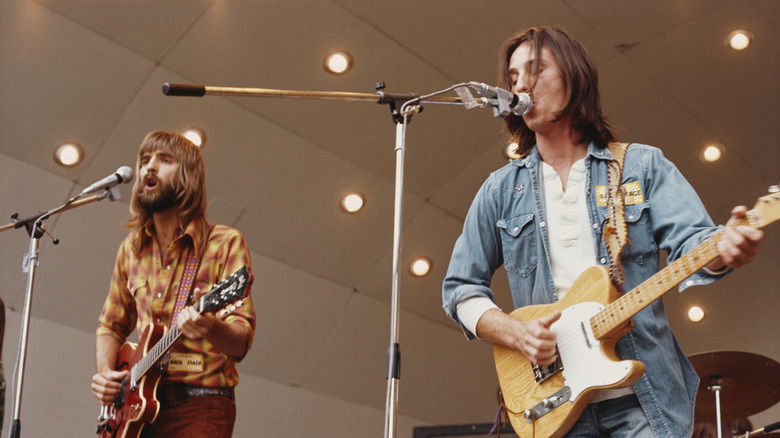
With the '60s protest anthem "For What It's Worth," Buffalo Springfield was a one-hit wonder who deserved more than 15 minutes of fame. Member Jim Messina found some more when he joined Poco, a band that helped invent country rock. Messina left that group at the end of 1970 to produce for Columbia Records, where he was matched with singer-songwriter Kenny Loggins. They worked so well together that they became Loggins and Messina, and between 1971 and 1976, they issued a slew of studio LPs filled with jaunty, amiable pop rock that combined folk rock and early rock 'n' roll.
After the duo's breakup, Loggins became a pioneer in the jazzy, bouncy form of adult contemporary later known as yacht rock. Not only did Loggins co-write "What a Fool Believes" for the Doobie Brothers, a classic single that defines yacht rock, he scored huge hits with sensitive, sophisticated singles like "This Is It" and "Heart to Heart." Loggins learned to rock a little harder in the '80s for Hollywood; he recorded the smash theme songs for movies such as "Footloose," "Caddyshack," and "Top Gun."
Messina took a three-year break and finally brought out three albums in the late '70s and early '80s. He was unmistakably a solo artist, going for the stark singer-songwriter sound that had been so popular a decade earlier. He also embarked on multiple, primarily acoustic concert tours and then reunited with a more muscular-sounding Poco in 1989.
Simon and Garfunkel
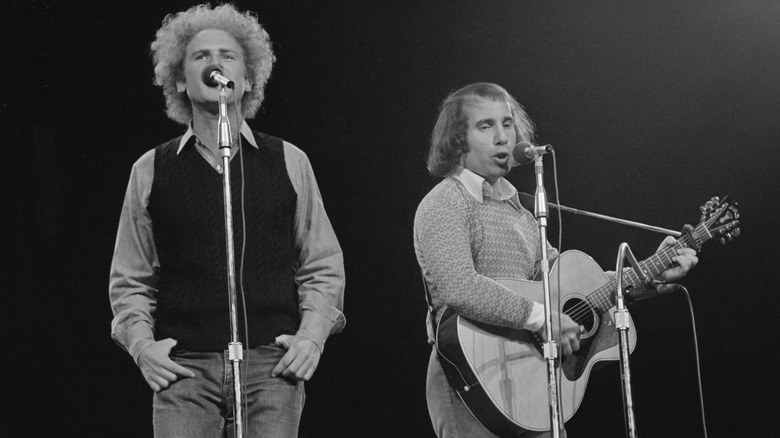
Of the acts who emerged from the early-1960s folk fascination to find mainstream acceptance, Simon and Garfunkel were the biggest. Emphasizing the folk in their folk rock sound, the voices of Paul Simon and Art Garfunkel blended gorgeously and harmoniously, as heard on numerous '60s classics like "Mrs. Robinson," "Cecilia," and "The Boxer." While Simon — the act's guitarist and main songwriter — was the obvious breakout star of Simon and Garfunkel, it's Garfunkel who sang lead on the duo's biggest hit, the moving ballad and 1970 No. 1 smash "Bridge Over Troubled Water." That song represented a stylistic jump for Simon and Garfunkel just before their first lengthy break, and Garfunkel went all in on that sound for his solo career. His high, heavenly voice was suited to dramatic works of soft pop, and the public responded favorably. Garfunkel scored six Top 40 hits in the '70s, including covers of pop standards like "I Only Have Eyes for You" and original adult-oriented fare like "All I Know."
Simon, however, was an ambitious superstar who often changed his sound and expanded the definition of rock 'n' roll. His hits include catchy country rock like "Kodachrome," the organ-drenched love song "Still Crazy After All These Years," and the 1986 "Graceland" album, which incorporated traditional African musical forms and won the Grammy Award for album of the year.
Ween
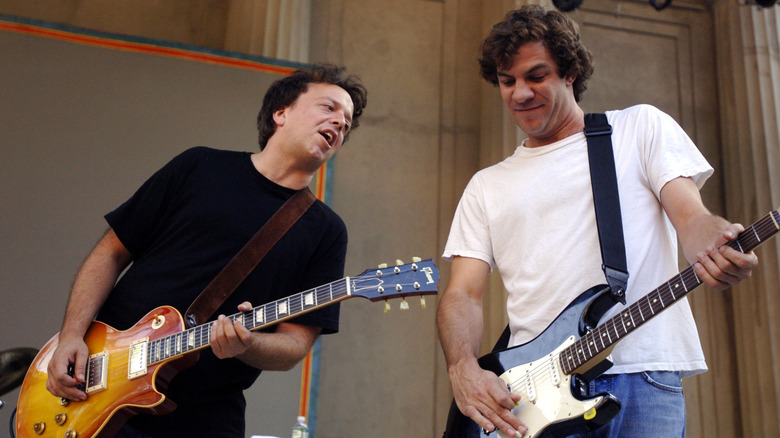
Across dozens of homemade releases, indie albums, and major-label projects, Ween never really stuck to one sound. Fourteen-year-olds Mickey Melchiondo and Aaron Freeman started out by entertaining themselves with bizarre music in 1984 and created Ween, taking on the stage names Dean Ween and Gene Ween. As a duo, they led a band that became a cult favorite in the alternative rock and jam band spheres, although their style varied greatly, incorporating progressive rock, punk, country, and always lots of humor. Ween's last album to date was 2007's "La Cucaracha," and the partnership ended in 2012.
Main singer Freeman, aka Gene Ween, was the first of the pretend brothers in music to release a solo project, and he did it under his real name. In 2012, Freeman recorded "Marvelous Clouds," an achingly earnest and gentle batch of string-backed performances of the poems of emotive poet Rod McKuen. Then came 2014's "Freeman," a mishmash of genre experiments reminiscent of the musician's work in Ween. Guitarist Melchiondo, or Dean Ween, opened a fishing boat excursion company in New Jersey called Mickey's Guide Service and then formed a new band, the Dean Ween Group. In 2016, they unveiled "The Deaner Album," and in 2018, "rock2." Both are quirky records but feature Melchiondo going for whatever he felt like, be it funk, jam band stuff, or lengthy instrumental interludes.